
Audio Effects Processor
5.0Editor score
24-bit digital signal processing
199 pre-programmed effect modes
Standard 19-inch rackmount chassis
Discover the top hardware reverb units for musicians and engineers. This guide compares features, sound quality, and versatility across ten leading models
Hardware reverb units remain essential tools for musicians seeking authentic spatial effects. Unlike software plugins, these devices offer tactile control and consistent performance across various live and studio environments.
We evaluated ten top-rated units based on sound quality, build durability, and feature sets. Our analysis includes classic spring reverbs, modern digital processors, and versatile pedal options for every budget.
Each product selection highlights specific strengths such as algorithm variety, input flexibility, or price efficiency. Please note that availability and pricing may fluctuate based on retailer stock and seasonal promotions.
5.0Editor score

4.9Editor score

4.8Editor score
This side-by-side comparison highlights the key specifications of the top ten hardware reverb units. It helps you quickly identify differences in channel counts, connectivity options, and preset availability.
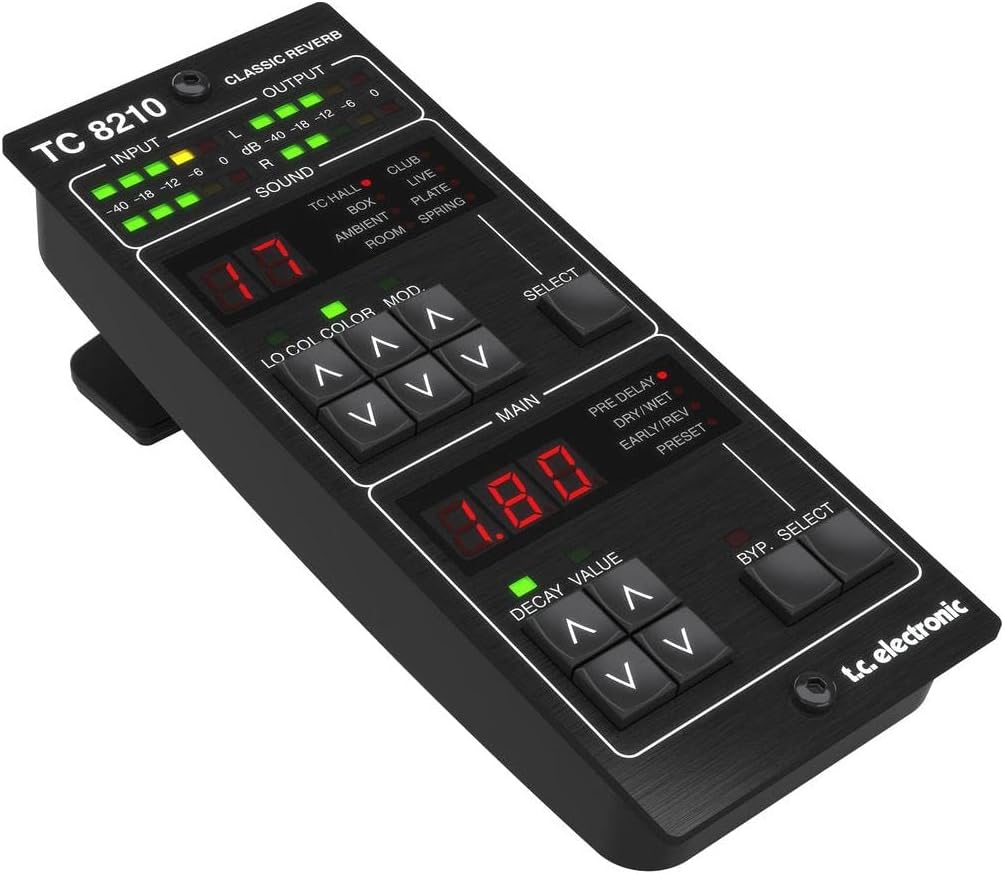




The TC Electronic TC8210-DT bridges the gap between software convenience and hardware tactile control. It delivers classic TC reverb sounds directly into your digital audio workstation with high fidelity.
We may earn a commission when you buy through this link, at no additional cost to you.
Its dedicated desktop interface offers intuitive hands-on control, making it easy to tweak parameters without relying on a mouse. The included signature presets from favorite artists provide instant inspiration and professional results.
While it requires a host computer which limits standalone use, this ensures deep integration with your existing recording workflow. The sound quality remains consistent and preserves the natural characteristics of your source material.
Ideal for studio engineers and producers who want vintage warmth with modern workflow efficiency. This unit stands out for its ability to deliver reliable, professional reverb in any mixing scenario.
Delivers authentic classic reverb sounds that preserve the natural characteristics of your original source material.
Works as a desktop controlled plug-in that brings the signature sound directly into your digital audio workflow.
We may earn a commission when you buy through this link, at no additional cost to you.
The Behringer Spring Reverberation 66 is a dedicated analog module designed for modular synth enthusiasts seeking authentic spring reverb textures. It fits into standard Eurorack cases with a 72HP footprint.
We may earn a commission when you buy through this link, at no additional cost to you.
Its dual-spring reverb system provides the characteristic splashing and boing of vintage analog units. Multiple inputs including mic and line levels allow for flexible routing of diverse audio sources.
The requirement for a Eurorack power supply may be a barrier for standalone users but fits perfectly for modular setups. The mute footswitch jacks offer dynamic control for performance-based sound manipulation.
Best suited for modular system builders looking to add vintage texture to their synth patches. Its analog nature ensures organic movement that digital models often struggle to replicate.
Provides the authentic sound of a spring tank with multiple inputs to suit various audio source types.
Designed specifically for modular setups with standard 72HP width and multiple input output jacks.
We may earn a commission when you buy through this link, at no additional cost to you.
This Audio Effects Processor delivers exceptional value by packing 24-bit digital signal processing into a standard 19-inch rackmount chassis. It is ideal for live and studio use requiring reliable and versatile sound effects.
We may earn a commission when you buy through this link, at no additional cost to you.
With 199 pre-programmed effect modes including reverb, delay, and chorus, you can cover virtually any genre quickly. The dual channel design allows parallel processing to treat different audio sources simultaneously.
While the interface is basic and relies on edit knobs rather than dedicated parameters, the sound quality is surprisingly clear with minimal noise. It preserves every nuance of your audio signal effectively.
Perfect for budget-conscious users or venues needing a versatile unit for karaoke and live bands. The sturdy metal construction ensures it can withstand the rigors of touring environments.
High-precision 24-bit processing delivers clear detailed sound reproduction with minimal noise and artifacts.
Dual channel design supports flexible audio routing to apply different effects to separate sources.
We may earn a commission when you buy through this link, at no additional cost to you.
The Donner Reverb Guitar Pedal is a compact digital unit offering seven distinct modes covering Room, Hall, and Church reverbs. It is designed for guitarists who need reliable sound shaping on a pedalboard.
We may earn a commission when you buy through this link, at no additional cost to you.
Its true bypass design ensures a transparent tone when the effect is off. The aluminium-alloy construction makes it strong and stable enough to withstand stage use without adding significant weight.
While it lacks deep parameter editing it covers all essential reverb types with simple controls. The LED indicator shows the working state clearly so you can engage effects confidently during performance.
Excellent for beginner guitarists or those needing a simple, space-saving reverb option. Its classic design and solid build make it a practical addition to any entry-level rig.
Offers seven modes including room hall and spring to suit various musical styles and guitar tones.
Mini size and sturdy design ensure it fits easily on any board while remaining durable for touring.
We may earn a commission when you buy through this link, at no additional cost to you.
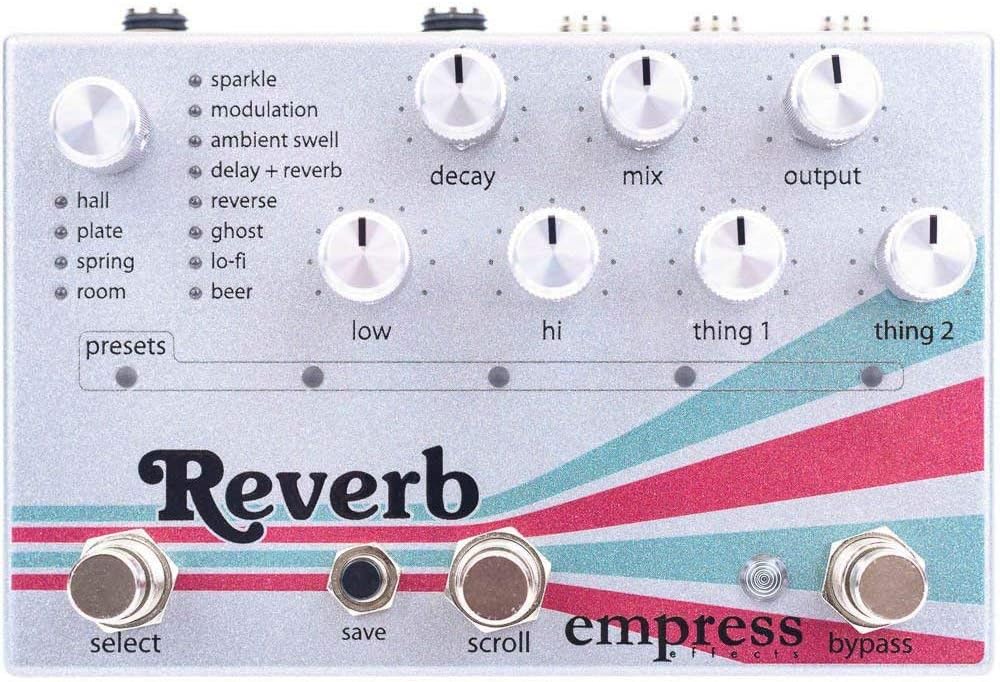
Empress Effects Reverb offers 24 studio quality algorithms that continue to expand. It is designed for guitarists seeking pristine classic sounds alongside modern ambient textures in a single pedal.
We may earn a commission when you buy through this link, at no additional cost to you.
The interface is built for speed allowing you to dial in sounds quickly using the tap functions. Each algorithm delivers high fidelity that stands out in live mix scenarios without masking the dry signal.
While the price is higher than basic pedals the variety and quality justify the investment for professional players. The menu system can be complex for new users but offers deep control for experts.
Ideal for players who need a comprehensive reverb solution for diverse genres. It balances ease of use with advanced capabilities making it a strong candidate for gigging musicians.
Features 24 studio quality algorithms including ambient sounds that provide endless sonic possibilities.
Fast dial-in speed and tap functions ensure you can adjust reverb quickly during live sets.
We may earn a commission when you buy through this link, at no additional cost to you.
The Strymon BigSky is often regarded as the gold standard for reverb pedals. It offers multidimensional processing that allows for complex sound shaping and deep modulation options.
We may earn a commission when you buy through this link, at no additional cost to you.
Its industrial build quality ensures it can handle professional touring environments. The depth of parameter control allows users to sculpt exactly the space they desire for their instrument.
While it comes with a significant price tag the sonic capabilities are unmatched in the pedal category. The learning curve is steep but mastering it offers a lifetime of creative possibilities.
Best suited for professional musicians and audiophiles who demand the highest sound quality. It is a premium investment that provides a comprehensive reverb solution for any rig.
Offers unique multidimensional control over reverb parameters for unprecedented sound shaping.
Industrial construction ensures reliable performance even under the rigors of frequent touring.
We may earn a commission when you buy through this link, at no additional cost to you.
The Strymon blueSky V2 is a refined digital stereo guitar pedal focused on pure reverb tone. It includes dedicated controls for shimmer and decay that allow for rich ambient textures.
We may earn a commission when you buy through this link, at no additional cost to you.
Its high and low EQ knobs help you tailor the brightness of the reverb tail. The pre-delay parameter ensures the reverb sits well behind your instrument for clarity in mix.
While it lacks MIDI or preset saving it offers immediate hands-on control for players who prefer live tweaking. The sound quality is pristine and rivals much more complex units.
Excellent for guitarists who value tone and simplicity over deep programming. It is a versatile unit that excels in both clean and overdriven guitar signal paths.
High and low controls plus pre-delay ensure the reverb tail fits perfectly in your mix.
Dedicated shimmer controls create beautiful ethereal textures suitable for ambient music.
We may earn a commission when you buy through this link, at no additional cost to you.
The Walrus Audio Mako Series MKII R1 High-Fidelity Reverb brings a modern approach to reverb processing. It features rebuilt programs with vast tonal improvements over previous iterations.
We may earn a commission when you buy through this link, at no additional cost to you.
New ducking and swelling features allow for dynamic control that responds to your playing. The feedback EQ control and size parameters ensure you can shape the sound exactly as needed.
Accessing 128 on-board presets via the menu ensures you have plenty of options for different songs. The menu screen simplifies navigation and secondary adjustments for experienced users.
Best for players wanting high fidelity and dynamic control in a pedal format. It balances professional features with usable interface design for studio and stage environments.
Ducking and swelling features allow the reverb to respond dynamically to your playing intensity.
Rebuilt programs deliver vast tonal improvements ensuring pristine audio reproduction.
We may earn a commission when you buy through this link, at no additional cost to you.
Universal Audio Galaxy '74 offers the most authentic emulation of a classic mid-70s analog ambience device. It combines a full tape delay mechanism with spring reverb emulation for unique vintage textures.
We may earn a commission when you buy through this link, at no additional cost to you.
The exacting emulation captures the original hardware's preamp section ensuring warmth and character. Doubled delay times allow for modern applications while keeping the vintage spirit intact.
Silent switching and buffered bypass ensure signal integrity when the effect is off. The USB Type-C port allows for easy updates and control via the UAFX app for further customization.
Ideal for guitarists seeking specific vintage character in their tone. It bridges the gap between classic tape effects and modern reliability with robust connectivity options.
Captures the authentic spirit of mid-70s analog Japanese ambience devices.
USB Type-C for updates and app control ensures the unit remains current.
We may earn a commission when you buy through this link, at no additional cost to you.
The JHS Pedals 3 Series Reverb is a versatile unit made in Kansas City USA. It allows you to achieve any reverberation effect from small rooms to endless ambient washes.
We may earn a commission when you buy through this link, at no additional cost to you.
The EQ lets you perfectly adjust for bright or dark texture ensuring the reverb fits your instrument. A pre-delay knob allows you to select the delay before the reverb begins for clarity.
Running on 9V DC negative center power ensures compatibility with most pedal supplies. The construction is solid and reflects the high standards of US-made audio gear.
Best for guitarists needing a reliable high-quality reverb for a pedalboard. Its simple control set and robust design make it a favorite for professional and hobbyist players.
Adjustable EQ and pre-delay knobs give you precise control over reverb texture and timing.
Made in Kansas City USA ensuring high build standards and reliable performance.
We may earn a commission when you buy through this link, at no additional cost to you.
Selecting the right hardware reverb unit involves considering how you plan to use it. Below are key factors to help you narrow down your options.
Hardware reverb units are generally divided into analog, digital, or hybrid models. Analog spring reverb modules provide organic, unpredictable textures that are perfect for vintage setups. Digital processors offer precision and a wide range of algorithms including hall, plate, and ambient effects. Hybrid units combine both to give you the warmth of analog with the flexibility of digital presets.
Choose analog for classic spring tones or digital for versatility and clean room sound.
Check the input and output types to ensure compatibility with your current gear. Some units feature mic inputs for vocals while others are designed strictly for line level instruments. Stereo inputs and outputs allow for wider spatial imaging which is crucial for modern productions. Consider whether you need MIDI or USB connectivity for preset management and external control.
Ensure the unit supports your specific instrument or vocal input type.
A good hardware unit should offer intuitive control whether it is a rackmount or a pedal. Dedicated knobs for decay, mix, and tone allow you to tweak sounds on the fly. Menu-driven interfaces are great for saving presets but can be slower to access during a performance. Look for tactile interfaces that match your workflow style.
Prioritize dedicated controls if you need quick adjustments during live shows.
If you plan to travel with your unit, durability is critical. Rackmount units should be made of sturdy metal to protect the internal electronics during transport. Pedals benefit from aluminium alloy or steel enclosures that withstand stomping and stage movement. Check power requirements to ensure your power supply can handle the unit without issues.
Invest in robust metal construction for live or touring environments.
The number and type of algorithms determine how versatile the unit is. Basic models offer standard room and hall settings while premium units provide complex ambient and modulation effects. Consider if you need specific sounds like spring, plate, or shimmer reverb for your genre. More presets mean less time tweaking parameters and more time focusing on performance.
Select a unit with algorithms that match your specific musical genre.
Prices for hardware reverb units vary significantly from affordable budget options to premium professional gear. Budget units often lack deep parameter control but cover basic needs well. Premium models offer advanced signal processing and build quality that justify the higher cost for professionals. Always weigh the features against your specific needs to avoid overpaying for unused capabilities.
Set a budget that balances your performance needs with your financial constraints.
Connect your audio source to the input jack and the output to your mixer or amp. Ensure power is supplied via the correct adapter to prevent damage to the internal circuitry.
Use the EQ controls to balance the reverb tail with your dry signal so it does not overpower the mix. Start with low decay settings and increase until the desired space is achieved.
Keep the unit in a cool, dry place when not in use to protect the electronics. Avoid placing pedals on wet grass or damp surfaces to prevent moisture damage over time.
Hardware units offer tactile control and consistent sound independent of your computer or software updates. They are also preferred for live performance where computer latency can be an issue. Plugins may offer more features but hardware ensures a reliable signal path.
Spring reverb uses metal coils to create a bouncy, vintage sound often found in guitar amps. Plate reverb uses a large metal sheet to create a dense, smooth sound ideal for vocals and snares. Hardware units often emulate both characteristics for versatility.
Yes, many hardware units have dedicated mic inputs and levels suitable for vocals. Ensure the unit supports XLR or 1/4 inch mic inputs and has the dynamic range for voice. This allows you to treat vocals separately from instruments on stage.
Most units require a standard 9V DC power supply but polarity and amperage can vary. Always check the manual to ensure you use the correct adapter to avoid damaging the unit. Using a high-quality isolated power supply helps prevent noise in your signal path.
Secure the unit into a standard 19-inch rack using the mounting screws. Route your cables through the rear jacks carefully to avoid bending pins during transport. Rackmount units are ideal for studios where space is optimized and gear stays stationary.
MIDI connectivity allows you to control reverb parameters via footswitches or external controllers. This enables seamless changes during a song without touching the pedal. It is essential for performers who need precise preset management during live shows.
We have reviewed ten exceptional hardware reverb units ranging from budget-friendly rackmounts to premium pedals. Each offers unique strengths whether you prioritize classic spring sounds or modern ambient algorithms.
Consider your specific environment and instrument when choosing a unit. A modular synth player will benefit from analog spring modules while a guitarist may prefer a stereo pedal.
Always check current prices and stock availability before purchasing as these items can fluctuate based on demand. This guide provides a solid foundation for selecting a unit that enhances your audio production.