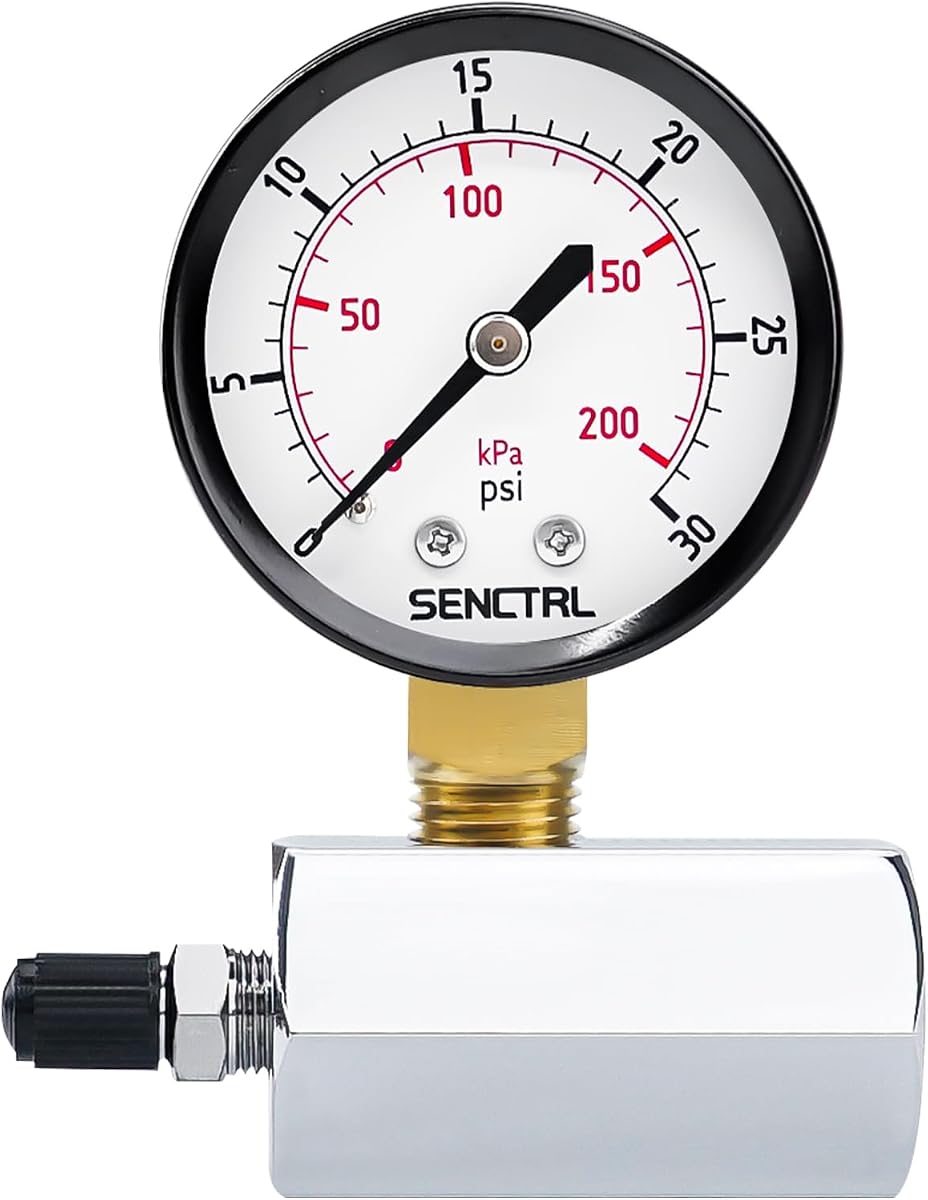
SENCTRL 0-30 Psi Gas Pressure Test Gauge
4.5Editor score
3/4 FNPT connection
Dual scale display
Corrosion resistant case
Finding the right gas line pressure gauge is essential for ensuring safety and efficiency in any natural gas or propane system. These tools allow homeowners and professionals to detect leaks, verify regulator performance, and maintain optimal pressure levels without guesswork.
We evaluated ten top-rated models based on accuracy, durability, connection types, and user feedback. Each product offers unique features suited for different testing scenarios, from simple household checks to complex manifold diagnostics.
Our picks highlight standout options for budget shoppers, precision seekers, and heavy-duty users. Note that availability and pricing may fluctuate, so checking current listings helps you secure the best deal for your needs.
4.5Editor score

4.5Editor score

4.7Editor score
As an Amazon Associate we earn from qualifying purchases.
This side-by-side comparison highlights key specifications across all ten products to help you quickly identify the right fit for your testing requirements.


The SENCTRL 0-30 Psi Gas Pressure Test Gauge is an accessible option for basic gas line checks. With a 4.5 star rating from users, it balances cost and functionality effectively for home maintenance tasks.
We may earn a commission when you buy through this link, at no additional cost to you.
Its 3/4 inch FNPT connection attaches directly to most household gas lines, eliminating the need for extra adapters. The 2 inch gauge features dual scales for PSI and kPa, making it versatile for different measurement preferences.
While it lacks the extended hose found in manifold kits, its compact design reduces leak points during testing. The chrome plated steel body ensures longevity even in humid or outdoor storage environments.
Budget-conscious users seeking a straightforward tool for quick leak detection will find this model ideal. It provides reliable readings without unnecessary complexity or premium pricing.
The 3/4 inch FNPT thread allows immediate attachment to gas line test points without extra fittings or tape adjustments.
Readings are clearly marked in both PSI and kilopascals, catering to users familiar with either imperial or metric units.
We may earn a commission when you buy through this link, at no additional cost to you.
The Uharbour 30psi Brass Gas Line Pressure Tester emphasizes robust construction for long term use in gas line testing scenarios. Users value its natural gas resistance and adherence to industry standards for accuracy.
We may earn a commission when you buy through this link, at no additional cost to you.
Its forged brass cup shaped design ensures the measuring device withstands wear and tear over time. The 2 inch transparent steel gauge offers clear visibility, while dual scale bar and PSI markings help diverse users interpret readings easily.
Attention to connection sealing is advised; wrapping PTFE tape around threads minimizes leakage risks during pressure checks. This precaution is standard for most inline gauges but worth noting for first time buyers.
Those prioritizing material quality and reliability over cost will appreciate this tester. It fits well in tool kits for technicians or homeowners managing underground or indoor gas line inspections.
Forged brass construction provides superior resistance to corrosion and oxidation, extending the operational lifespan of the device.
Accuracy meets ASME B40.100 specifications, ensuring trustworthy measurements for critical safety checks and maintenance schedules.
We may earn a commission when you buy through this link, at no additional cost to you.
This Gas Test Pressure Gauge offers a 60 PSI range, suitable for systems requiring higher pressure verification than typical household lines. Its robust forged steel body and brass valve contribute to durability in demanding environments.
We may earn a commission when you buy through this link, at no additional cost to you.
The 2 inch gauge features a non-fading glass lens that maintains clarity over time. Dual scale markings in PSI and kPa ensure readability for different professional standards, while the bell shape provides structural stability.
While the higher range might exceed needs for simple natural gas leak checks, it adds versatility for compressed air or mixed gas applications. The 3/4 FNPT connection remains compatible with standard fittings.
Buyers needing a wider pressure window or extra physical resilience will find this model practical. It balances performance and cost for users who want room to grow beyond basic residential testing.
With a 60 PSI maximum, this gauge accommodates higher pressure systems without requiring an immediate upgrade to industrial equipment.
The non-fading glass lens ensures long-term readability, protecting the dial from sun exposure and physical damage during transport.
We may earn a commission when you buy through this link, at no additional cost to you.
The MEASUREMAN 2 Brass Gas Pressure Test Gauge Assembly brings brand reliability to gas line testing tasks. With a 4.3 star rating, it delivers consistent performance through its large dial and precise brass components.
We may earn a commission when you buy through this link, at no additional cost to you.
Its 2.5 inch dial provides easy reading from a distance, reducing eye strain during detailed inspections. Brass wetted parts prevent corrosion from gas exposure, while the dry interior maintains accuracy over repeated use.
The 3/4 NPT female adapter allows straightforward hookup to test points without additional tools. Accuracy within 3-2-3 percent meets general industry expectations for residential and commercial maintenance checks.
Users seeking a balance of brand trust and functional design will appreciate this assembly. It serves well for routine checks where portability and quick setup matter more than extended hose reach.
A larger 2.5 inch dial face allows technicians to read pressure values clearly without needing to closely inspect the gauge.
Brass wetted parts resist gas-induced corrosion, ensuring the internal mechanism remains reliable through years of service.
We may earn a commission when you buy through this link, at no additional cost to you.
While primarily labeled as a fuel pressure kit, the BETOOLL model offers a broad 0-100 PSI range applicable to various pressure testing needs. Users find its adaptability valuable when gas and automotive diagnostics overlap in a single toolkit.
We may earn a commission when you buy through this link, at no additional cost to you.
It includes three size adapters for different fuel line configurations, plus corrosion resistant rubber hoses. High quality brass connectors ensure secure fits and leak-free testing across diverse system types.
Note that this kit is not intended for diesel engines or high pressure gas mains. Its strength lies in diagnosing low pressure issues in gasoline systems where precise PSI feedback is critical.
Professionals needing a single tool for multiple fluid systems will find this kit cost effective. Just ensure compatibility with your specific gas line requirements before purchasing for non-fuel applications.
Included adapters for 6.30mm, 7.89mm, and 9.49mm lines allow compatibility with various system configurations without extra purchases.
This kit helps identify low pressure, faulty regulators, and clogged filters, making it useful for troubleshooting performance issues.
We may earn a commission when you buy through this link, at no additional cost to you.
This MEASUREMAN Manifold Pressure Test Kit stands out as a top choice for precise appliance and gas line diagnostics. Its 0-35 W.C range and 40 inch hose make it ideal for checking manifold pressures across hard-to-reach connections.
We may earn a commission when you buy through this link, at no additional cost to you.
The beryllium diaphragm capsule ensures stable and accurate readings even with minor pressure fluctuations. All components fit neatly in a molded plastic box, keeping tools organized and protected during transport or storage.
While the water column measurement might require conversion for PSI users, it is the industry standard for low pressure gas testing. The snap-on acrylic window protects the dial without hindering readability.
Homeowners and pros needing a complete, reliable solution for manifold checks will find this kit exceptional. It combines accuracy, convenience, and durability in a package designed for real world use cases.
Tailored for appliance manifolds, this kit delivers accurate low pressure readings critical for safe and efficient gas flow regulation.
The molded plastic box keeps the gauge, hose, and fittings secure and easy to transport, reducing the risk of lost components.
We may earn a commission when you buy through this link, at no additional cost to you.
The DANCO Gas Test Gauge focuses on detailed readings with 1/10th increments up to 15 psi. This precision helps users detect minor pressure drops that indicate small leaks in gas tank or line systems.
We may earn a commission when you buy through this link, at no additional cost to you.
Its chrome plated body offers safety and durability, while the clear facing makes it simple to view measurements from various angles. The brass material ensures internal resistance to corrosion from gas exposure.
While the plastic face is less premium than glass, it resists breaking better under impact. The 3/4 inch MPT thread allows direct attachment to standard tank valves or line test ports.
Users needing high-resolution feedback for low pressure systems will value this design. It is particularly useful for tanks where small fluctuations matter for safety or regulatory compliance.
1/10th psi increments reveal subtle pressure changes that broader scale gauges might miss during critical leak detection.
A durable plastic face protects the dial during handling, reducing the risk of cracks from accidental drops in rough environments.
We may earn a commission when you buy through this link, at no additional cost to you.
This MEANLIN MEASURE Manifold Gas Pressure Test Kit delivers premium features for advanced diagnostics. With a 4.7 star rating, it leads in flexibility and ease of use for complex gas line and manifold setups.
We may earn a commission when you buy through this link, at no additional cost to you.
The 40 inch hose provides ample reach, while included hex bushings ensure solid connections across varied systems. A zero adjustable setting allows calibration for higher accuracy when exact readings are critical.
Barbed connections add versatility for tubing setups that require quick secure fittings without extra tools. The 1/8 NPT fitting is nominal, so users should verify actual diameters for perfect compatibility.
Professionals prioritizing adjustability and extended reach will find this kit worth the investment. It sets a high bar for performance and user satisfaction among manifold testing solutions.
The 40 inch hose accommodates distant appliance connections, reducing the need to move gauges during multi-point testing.
Adjustable zero settings enable precise baseline calibration, improving accuracy for critical pressure checks in sensitive systems.
We may earn a commission when you buy through this link, at no additional cost to you.
The Boltigen Fuel Pressure Gauge uses glycerin filling to stabilize readings against vibration, making it effective in dynamic automotive or industrial environments. Its 0-15 PSI range fits low pressure systems needing consistent monitoring.
We may earn a commission when you buy through this link, at no additional cost to you.
Constructed from stainless steel and brass, it resists corrosion while offering a durable inline mount for center back visibility. Barb fittings for 3/8 and 5/16 inch lines simplify installation across different fuel configurations.
While marketed for fuel systems, the gauge's reliability extends to gas lines requiring stable visual feedback. The glycerin damping prevents needle flutter, aiding accurate reading in moving or vibrating setups.
Buyers needing vibration-resistant stability will appreciate this specialized design. It works well where steady pressure readings are necessary despite external movement or operational noise.
Glycerin filling minimizes needle oscillation, ensuring clear readings even when installed on vibrating engines or machinery.
The center back mount allows direct viewing while operating, simplifying real time pressure monitoring during system use.
We may earn a commission when you buy through this link, at no additional cost to you.
The OTC 5630 Fuel Pressure Test Kit is built for heavy duty reliability with impact resistant rubber casing and professional grade fittings. Its 0-100 PSI range and built-in relief valve ensure safe, comprehensive testing.
We may earn a commission when you buy through this link, at no additional cost to you.
High quality solid brass components resist wear, while the gauge housing protects internal parts from drops or rough handling. The relief valve allows for safe pressure release after testing, preventing sudden bursts.
Though designed for automotive fuel diagnostics, its durability and range suit robust gas line testing needs where safety and accuracy are paramount. It supports locating malfunctions without removing components from the system.
Users requiring industrial strength tools will find this kit valuable for long term use. It offers peace of mind through proven reliability and safety features that protect both user and equipment.
A dedicated pressure relief valve enables safe, controlled testing, preventing accidental surges during setup or removal.
Rubber encased housing shields the gauge from physical damage, extending its useful life in demanding workshop conditions.
We may earn a commission when you buy through this link, at no additional cost to you.
Selecting the right gas line pressure gauge depends on application type, pressure range, connection style, and material quality. These factors ensure accurate readings and long term reliability for your specific needs.
Match the gauge's maximum range to your gas system's operating pressure. Residential lines often need 0-30 PSI or 0-35 W.C, while industrial setups might require higher PSI limits.
Choose a range that covers your needs without excessive capacity that reduces precision at low readings.
Check thread sizes like 3/4 NPT or 1/8 NPT to ensure compatibility with existing test ports or valves. Incorrect threads can lead to leaks or unsafe connections.
Standardized fittings reduce adapter needs and simplify setup for quick and safe testing procedures.
Brass and steel bodies resist corrosion from gas exposure and environmental factors. Brass wetted parts prevent internal damage that could affect accuracy over time.
Invest in durable materials to extend the gauge's lifespan and maintain consistent performance in various conditions.
Look for accuracy ratings like 3-2-3 percent or ASME B40.100 compliance to ensure trustworthy measurements. Precision is critical for detecting small leaks.
Higher accuracy models are worth the cost when safety and regulatory compliance are primary concerns for your testing.
Larger dials and clear scales reduce reading errors during inspections. Dual units like PSI and kPa help different users interpret results without conversion errors.
Select a gauge with visible markings and protective lenses for accurate results in varied lighting conditions.
Features like hose length, storage cases, or zero adjustment add convenience and precision. Manifold kits often include hoses for appliance testing.
Evaluate if extra components justify the price based on your frequency and scope of testing tasks.
Distinguish between gas line, manifold, or fuel testing requirements. Some kits target specific pressure types like water column versus PSI.
Ensure the product matches your exact application to avoid measurement errors or incompatible setups.
Protective housing and impact resistance safeguard both the gauge and user during routine testing. Reliable construction prevents sudden failures.
Prioritize models with safety valves or rugged cases when working in industrial or high risk environments.
Before connecting, inspect the gauge and hose for cracks or wear. Wrap PTFE tape on threads to prevent leaks, then tighten connections securely by hand or with a wrench.
Open the gas valve slowly to let pressure stabilize, then read the gauge once the needle stops fluctuating. Record values to track changes over time and detect gradual leaks.
After testing, release pressure through the relief valve if available, then disconnect carefully. Store the gauge in its case away from extreme temperatures to preserve accuracy and function.
Most residential natural gas systems operate between 0-7 inches water column or around 0.25 PSI. LP propane systems often run higher at 10-12 inches water column. Always verify local codes before testing.
Wrap PTFE tape around male threads before screwing into female ports. Tighten fittings securely but avoid over-torquing brass parts. Check for leaks with soapy water after connecting.
While some fuel gauges share similar PSI ranges, gas specific units often have better corrosion resistance for natural gas or propane. Verify the manufacturer's compatibility recommendations before repurposing tools.
W.C stands for water column, a unit used for low gas pressure. One PSI equals roughly 27.7 inches W.C. Many residential gas lines use W.C for precise low pressure measurements.
Perform checks annually or after maintenance work on gas lines. Immediate testing is recommended if you suspect leaks or notice appliance performance issues like weak flames.
Fluctuations may come from leaks, regulator issues, or gas flow changes. Ensure all connections are tight and let the system stabilize before taking readings.
Our top picks span budget to premium options, ensuring you find a tool that matches your accuracy needs and system types. Each offers reliable readings and durable construction for everyday safety tasks.
Prioritize connection compatibility and pressure range when selecting a gauge. Investing in quality materials and safety features pays off in long-term reliability and user protection.
Prices and availability can change quickly, so review current listings before purchasing. Verify compatibility with your specific gas system to ensure safe and effective testing results.