Compare top heated beds for 3D printers including Ender, Voron, and CR10 models. We analyze power, size, material, and compatibility to help you choose.
As an Amazon Associate we earn from qualifying purchases. We may earn a commission when you buy through links on this page, at no additional cost to you. Read our affiliate disclosure.As an Amazon Associate we earn from qualifying purchases.Purchases through our links may earn us a commission, at no extra cost to you. Read our affiliate disclosure.
Selecting the right heated bed for your 3D printer is crucial for print success. A quality bed ensures adhesion, reduces warping, and maintains consistent temperatures across the build volume.
This guide evaluates ten real products based on voltage, wattage, dimensions, and user ratings. We compare official replacements and third-party upgrades to find the best options for your machine.
Each pick highlights key specs and features to help you decide quickly. Note that prices and availability fluctuate regularly, so check current listings before making your final purchasing decision.
Top 3 Picks for Best Heated Bed for 3D Printer
Best Budget
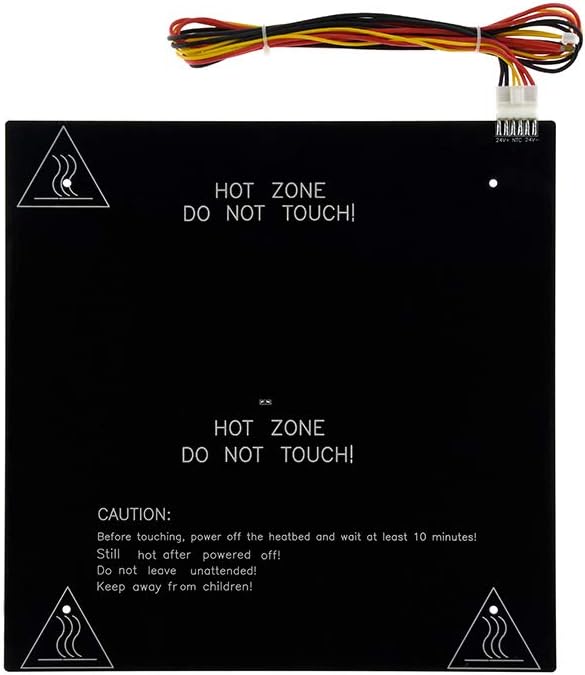
HICTOP Ender 3 Heated Bed with Cable 24V 220W Compatible with Creality Ender 3, Ender 3 Neo, Ender 3 pro, Ender 3 V2, Endder 3 V2 Neo, Voxelab Aquila X2 3D Printers
Official Ender 3 V2 Heated Bed 3D Printer Replacement Hot Bed 220W 24V with Cable Compatible for Creality Ender 3, Ender 3 Pro, Ender 3 V2, Ender 3 Neo, Ender 3 V2 Neo…
Top 10 Best Heated Bed for 3D Printer in 2026 Compared
This table compares key specifications across all ten heated bed options to help you quickly identify the right fit for your printer model and printing needs.
This official Creality heated bed is the top choice for users seeking reliability and perfect compatibility with Ender 3 V2 and related models. It holds a solid 4.5 rating from verified buyers who appreciate its authentic construction and consistent heat distribution across the 235mm build surface.
Pros
Original OEM quality assurance
Perfect fit for Ender V2
Reliable heating performance
Easy plug and play install
Durable aluminum platform
Cons
Higher price than third party
Limited to Creality models
We may earn a commission when you buy through this link, at no additional cost to you.
The standout quality lies in its OEM pedigree, ensuring that the power output and thermal characteristics match factory specifications exactly. This reduces the risk of thermal issues or controller errors that often plague generic replacements. The included cable is pre-assembled which simplifies installation significantly compared to kits requiring soldering.
While it costs slightly more than third-party alternatives the longevity and guaranteed fit justify the investment for most users. The trade-off is that it lacks universal compatibility meaning it will not work with non-Creality printers without significant modification to mounting holes or power systems.
Anyone owning an Ender 3 V2 Neo Pro or compatible model should prioritize this part for replacements to maintain original print quality. It is the safest bet for ensuring your machine performs as intended without introducing new variables into your printing workflow.
Perfect OEM Compatibility
Designed specifically for Ender 3 V2 series ensuring exact fit and electrical specs.
Reliable Performance
Consistent 220W power delivery maintains stable temperatures for successful prints.
The HICTOP heated bed offers an affordable entry point for users needing a replacement without breaking the bank. It matches the official Ender specs at 24V 220W and maintains the standard 235x235x3mm form factor making it a versatile drop-in solution for many common printers.
Pros
Very affordable price point
Wide model compatibility
Includes cable included
Aluminum heat distribution
Max 110C temperature
Cons
Third party quality varies
Cable may need adjustment
We may earn a commission when you buy through this link, at no additional cost to you.
Its key strength is the broad compatibility list which includes Ender 3 Neo V2 V2 Neo as well as Voxelab Aquila X2 models. The aluminum material ensures even heat transfer which is critical for preventing warping on larger or flat prints like ABS or PETG.
Budget pricing often means minor tolerances might differ slightly from OEM parts but users report acceptable performance for daily printing tasks. The included cable simplifies setup though some may find minor wire length adjustments necessary depending on your power supply location.
This is an excellent choice for hobbyists or those on a tight budget who still require reliable heating performance. It balances cost and function effectively making it a strong contender for standard Ender class printer upgrades.
Wide Compatibility
Works with Ender 3 Neo V2 V2 Neo and Voxelab Aquila X2 printers.
Affordable Value
Delivers solid 220W heating at a fraction of OEM pricing.
This Tosuny silicone heating pad stands out with a perfect 5.0 rating due to its superior heating speed and durability. While it is technically a pad rather than a full rigid bed it serves as a premium upgrade for those willing to install it on an existing aluminum frame or base.
Pros
Perfect 5.0 user rating
Silicone flexible heating pad
Fast heating performance
High thermal efficiency
Long life construction
Cons
Requires separate aluminum plate
Slightly lower wattage
We may earn a commission when you buy through this link, at no additional cost to you.
The silicone material allows for faster heating cycles and more uniform temperature distribution compared to traditional wire-wrapped beds. Users report reliable high-temperature resistance which is essential for printing with materials like ABS or Nylon that demand consistent surface heat.
The main trade-off is that it lacks the rigid aluminum substrate of full bed replacements so you may need to pair it with a metal plate to ensure mechanical stability. Additionally the 200W rating is slightly lower than 220W options but still sufficient for most build volumes.
Enthusiasts seeking peak thermal performance should consider this pad for custom builds or repairs. It is particularly valuable for those needing rapid heat-up times and consistent surface temperatures across large prints.
Superior Thermal Efficiency
Silicone material ensures fast heat-up and uniform temperature distribution.
High Temp Resistance
Designed to withstand elevated temperatures for advanced printing materials.
This heated bed is designed specifically for the larger format Creality CR-10 printer which requires a 310mm build surface. The aluminum material provides substantial mass for thermal stability and the 3mm thickness ensures rigidity during printing operations.
Pros
Larger build surface area
Specifically for CR-10
3mm aluminum thickness
Includes power wire kit
Standard mounting holes
Cons
Lower user rating
Requires film removal
We may earn a commission when you buy through this link, at no additional cost to you.
Its primary benefit is the exact sizing and hole placement required for CR-10 chassis which can be difficult to find in standard Ender-sized replacements. The included power wire kit ensures you have everything needed for installation right out of the box.
The lower 3.8 rating suggests quality inconsistencies or installation hurdles reported by some users. The product notes a protective film on the back that must be removed before use which if overlooked can cause heat trapping or adhesion issues.
Owners of the CR-10 should prioritize this part for maintaining their original machine geometry. It remains a functional solution for large-scale printing provided installation instructions are followed carefully.
CR-10 Specific Fit
Engineered for 310x310mm build volume of Creality CR-10 printers.
Thermal Stability
3mm aluminum thickness helps maintain consistent bed temperatures.
This massive 500x500mm heated bed is designed for large-scale industrial or hobbyist printers needing exceptional print capacity. The 350W power output ensures rapid heating across the large surface area which is critical for maintaining adhesion on big parts.
Pros
Massive 500x500mm size
High 350W power output
Integrated heating structure
Countersunk hole design
Reduces printing defects
Cons
Lowest user rating
Requires specific large frame
We may earn a commission when you buy through this link, at no additional cost to you.
The integrated heating and aluminum substrate structure helps reduce warping and edge curling by maintaining consistent temperature distribution. The countersunk hole design keeps the surface flat preventing nozzle collisions during high-speed or complex prints.
The low 2.8 rating indicates potential quality or reliability issues that buyers should consider carefully. While the specs look impressive in theory real-world performance may vary depending on your specific printer frame and electronics capabilities.
Only choose this if you have a confirmed 500x500mm machine that requires this specific size and wattage. Verify compatibility thoroughly before purchase to avoid fitment issues.
Large Build Capacity
500x500mm size enables printing of massive or multiple parts.
High Power Output
350W power ensures rapid heat-up for large surface areas.
This FYSETC heating plate is specifically upgraded for Voron 2.4 R2 and Trident projects requiring higher wattage and AC control systems. The 750W AC rating provides exceptional heat capacity allowing for fast preheating and sustained temperature during long prints.
Pros
High 750W AC power
Includes sensor and fuse
Perfect Voron 2.4 R2 fit
Thermal protection included
5.0 user rating
Cons
Requires AC control board
High wattage needs safety
We may earn a commission when you buy through this link, at no additional cost to you.
Safety is prioritized with an included thermistor sensor and bimetal thermal fuse that disconnects current in case of overload or temperatures exceeding 120C. This protection is critical for high-voltage AC setups to prevent damage or fire hazards.
Users note the perfect fit for 300mm Voron builds which often require custom heating solutions. The 5.0 rating reflects satisfaction with the quality and performance of this specialized accessory among Voron enthusiasts.
Ensure your printer control board supports AC high voltage before purchasing. This product is ideal for advanced builders seeking rapid heat-up times and reliable thermal management for large builds.
AC High Voltage Power
750W AC 110V delivers rapid heating for large build volumes.
Safety Features
Includes thermal fuse and sensor to protect against overheating.
This heated bed is optimized for Anet A8 A6 and similar printers using 12V power systems. It offers a reliable upgrade path for users experiencing adhesion issues or inconsistent heating on their older machines.
Pros
Designed for Anet A8
Standard 12V 120W power
Includes wire cable
Aluminum heat spreader
Easy installation
Cons
Limited to Anet models
12V standard may be slower
We may earn a commission when you buy through this link, at no additional cost to you.
The aluminum substrate helps spread heat evenly across the 220x220mm build area reducing cold spots that can cause warping. The included wire cable simplifies the replacement process allowing you to swap out damaged units quickly.
Rating of 4.5 reflects solid performance for entry-level printers. While the 12V 120W power is lower than modern 24V systems it remains adequate for PLA and PETG printing on smaller builds.
If you own an Anet printer this part is the most straightforward fix for bed issues. Just ensure your power supply matches the 12V requirement before installation.
Anet Compatibility
Tailored for Anet A8 A6 and similar 12V 3D printers.
Stable Base
Aluminum substrate ensures even heat distribution across surface.
This 400x400mm heated bed fills a niche for medium-large builds that exceed Ender 3 but fall short of industrial sizes. The 280W power rating ensures it can handle larger surface areas without significant temperature drops.
Pros
Mid-size 400mm platform
280W power output
Aluminum alloy build
Countersunk design
Compatible with Ender 3 Pro
Cons
No user rating available
Limited compatibility info
We may earn a commission when you buy through this link, at no additional cost to you.
The aluminum alloy construction provides durability and heat retention. The countersunk hole design maintains flatness and prevents nozzle collisions which is vital for precise printing on larger platforms.
While the rating is listed as N/A the specs suggest a solid design for printers needing more space than standard 220mm beds offer. It may require custom mounting depending on your specific machine.
Consider this option if you are building a custom frame or upgrading a printer to support larger parts. Verify hole spacing and frame compatibility before purchasing.
Mid-Size Capacity
400x400mm surface accommodates larger prints than standard beds.
Durable Alloy
Aluminum alloy ensures strength and thermal efficiency.
This professional-grade heated bed offers a massive 500x500mm surface with 350W power suitable for heavy-duty printing. The aluminum alloy substrate supports consistent heat distribution which is essential for large format parts.
Pros
500x500mm large area
350W 24V power
3800W silicone pad option
Countersunk hole design
Enhanced heating stability
Cons
No user rating available
High power requires robust wiring
We may earn a commission when you buy through this link, at no additional cost to you.
The mention of a 3800W silicone heating pad option suggests versatility for extreme heating needs though users should confirm voltage and controller compatibility before using such high wattage components.
The design focuses on reducing warping and curling through stable power output. Countersunk holes help maintain surface flatness and prevent nozzle interference during complex prints.
This product is ideal for industrial users or makers needing large build volumes. Ensure your power supply and wiring can safely handle the 24V 350W load.
Professional Build Size
500x500mm area supports production-level or industrial parts.
Stable Heating
Aluminum alloy and 350W output ensure consistent thermal performance.
This silicone heating pad is compatible with Voron 2.4 R2 and Trident printers offering high voltage AC heating capabilities. The 220V 750W or 1000W options provide fast preheating which is beneficial for high-volume printing environments.
Pros
220V AC power option
750W/1000W high wattage
Perforated design
Voron and Trident fit
Reduces preheat time
Cons
No user rating available
Requires AC SSR controller
We may earn a commission when you buy through this link, at no additional cost to you.
The perforated design allows for easier installation and heat dissipation while maintaining structural integrity. It balances convenience with performance for users upgrading their stock heating elements.
The stable power supply design helps minimize temperature fluctuations which supports consistent printing quality. Ensure your control board includes a solid state relay before connecting high wattage AC components.
Advanced builders will appreciate the flexibility of this pad for custom builds. Confirm compatibility with your printer frame and electronics before purchase.
AC High Wattage
220V 750W/1000W allows rapid heating for large builds.
We may earn a commission when you buy through this link, at no additional cost to you.
Buying Guide – How to Choose the Best Heated Bed for 3D Printer
Selecting the right heated bed requires matching size voltage material and compatibility to your specific printer model and material needs.
Printer Compatibility
Always verify that the heated bed dimensions and mounting hole patterns match your printer's existing frame. Using incompatible parts can lead to installation failure or uneven mounting pressure.
Check manufacturer specs for exact fitment before purchasing to avoid unnecessary returns or modifications.
Voltage Requirements
Heated beds come in 12V 24V or AC 110V/220V configurations. Ensure the voltage matches your power supply and control board to prevent electrical damage.
Mismatched voltages can burn out heaters or trip safety circuits so double-check your machine's electrical specs.
Power Output (Wattage)
Wattage determines how quickly the bed heats up. Higher wattage beds like 350W or 750W are better for large builds but require stronger power supplies.
For standard 220mm printers 220W is typically sufficient while larger beds benefit from increased wattage.
Build Surface Size
Choose a heated bed that matches your desired print volume. Standard beds are 220x220mm or 235x235mm but larger printers need 310mm or 500mm options.
Oversizing the bed without proper frame support can lead to instability during printing.
Material and Construction
Aluminum beds offer rigid thermal mass while silicone pads provide flexibility and faster heat-up. Consider if you need a complete unit or just the heating element.
Aluminum is standard for durability while silicone may require additional mounting hardware.
Thickness and Rigidity
Thicker beds like 3mm aluminum resist warping and provide more stable flatness. This is important for maintaining consistent layer adhesion over large prints.
Check thickness specs to ensure mechanical stability especially for high-temperature materials.
Included Accessories
Some kits include power wires connectors or cables which simplify installation. Others require you to source these parts separately.
Verify what is included in the package to avoid missing components during setup.
Safety Features
Look for thermal fuses or temperature sensors especially for high-wattage AC beds. These protect against overheating and electrical faults.
Safety components are vital for reliable long-term operation and reducing fire risks.
How to Use and Care for Your Heated Bed for 3D Printer
Begin by ensuring the heated bed is securely mounted to your printer frame using the correct screws and mounting points. Verify electrical connections are tight and match the voltage specifications of your power supply.
Perform a surface level test after installation to confirm the bed is flat. Clean the surface with isopropyl alcohol before printing to remove oils or residues that could affect adhesion.
Regularly inspect cables and connectors for wear. Avoid exceeding maximum temperature limits especially for silicone beds. Keep the surface clean and protected with a cover when not in use to prolong its lifespan.
Frequently Asked Questions
What voltage heated bed do I need for my 3D printer?
Check your printer's power supply and controller specifications. Most modern printers like Ender 3 V2 use 24V while older models may use 12V. AC beds require controllers with solid state relays. Always match voltage exactly to avoid damage.
How do I know if a heated bed fits my printer model?
Compare the dimensions and mounting hole patterns with your printer's current bed. Most listings specify compatible models like Ender 3 or CR10. Measuring your existing bed before purchasing ensures a proper fit.
Why does my heated bed not heat up properly?
Common causes include loose wiring incorrect voltage or a blown thermal fuse. Check connections and verify voltage matches your supply. For AC beds ensure you have a compatible SSR controller installed.
Can I use a silicone heating pad instead of an aluminum bed?
Yes many users upgrade to silicone pads for faster heating. However you usually need an aluminum substrate plate underneath for structural stability and even heat distribution. Confirm compatibility with your printer frame.
What is the difference between 220W and 350W beds?
Higher wattage beds heat faster and are better for larger build surfaces. A 350W bed maintains temperature more effectively on larger areas than a 220W bed. Ensure your power supply can handle the extra draw.
How often should I replace my heated bed?
Heated beds last for years with proper care but replace them if you notice uneven heating or physical damage. Regular maintenance like cleaning prevents premature failure. High use environments may require more frequent checks.
Final Thoughts on Choosing the Best Heated Bed for 3D Printer
We reviewed ten heated bed options ranging from official replacements to high-performance AC upgrades. The Official Ender 3 V2 bed stands out for reliability while Tosuny offers premium silicone performance.
Prioritize matching voltage and dimensions to your printer model before purchasing. Consider whether you need larger capacity or faster heating based on your material needs.
Prices and availability change frequently so verify current listings before ordering. Check compatibility and specifications carefully to ensure a smooth upgrade experience.
This guide compares the top extension cord with reel models for power and safety, featuring retractable reels, circuit breakers, and durable cables for every
This comprehensive guide compares the top Digital Picture Frame Screen Protector options to help you protect your display from scratches, glare, and fingerprint