
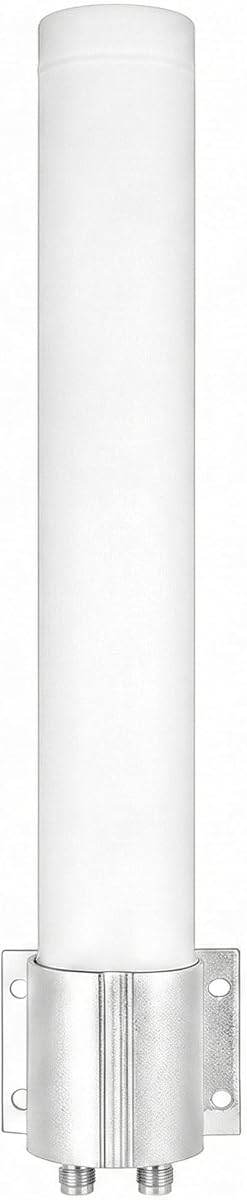
ALFA AOA-2458-59-TF 2.4/5 GHz 9 dBi Dual Band Outdoor WiFi Omni Antenna
4.2Editor score
Lightweight fiberglass construction
9 dBi signal boost
N-Female connector
Discover the top marine WiFi antennas for boats and RVs. This guide compares dual-band, omni-directional, and rugged models for reliable connectivity.
Staying connected on the water or in remote areas requires a reliable signal. A high-quality marine WiFi antenna extends your network range significantly. It ensures smooth streaming and communication even when far from shore.
We evaluated ten top-rated options based on durability, gain, and weather resistance. Each model offers unique features for different maritime and outdoor needs. Our analysis focuses on real-world performance and installation ease.
This list highlights the best picks for budget, premium, and overall performance. Each entry includes detailed specs and pros and cons. Note that prices fluctuate so check current listings before buying.
4.2Editor score

5.0Editor score
5.0Editor score
The following table compares all ten selected models side by side. It highlights key specifications like frequency bands, gain, and connector types to help you choose quickly.


This antenna stands out as the top choice for serious mariners needing reliable connectivity. With a perfect five-star rating it delivers consistent performance across multiple bands. Its robust design handles harsh marine environments effortlessly.
We may earn a commission when you buy through this link, at no additional cost to you.
The dual-band capability supports everything from 2.4 GHz to 7.2 GHz ensuring compatibility with modern routers. The IP68 rating means it is fully protected against water ingress. The marine adapter fits standard poles for easy setup.
While it costs more than basic options the durability justifies the investment. You may need to source specific low-loss cables for optimal results. This ensures you get the full 8 dBi gain potential.
Buy this if you need the best performance and reliability on the water. It is ideal for boats facing frequent salt spray and storms. The professional grade build ensures long-term service without degradation.
The IP68 rating ensures complete protection against water and salt spray. This makes it perfect for harsh marine conditions.
Supporting 2.4 GHz to 7.2 GHz covers all modern WiFi standards. Future proofing your setup against new technology.
We may earn a commission when you buy through this link, at no additional cost to you.
This premium antenna offers exceptional performance for remote offices and off-grid living. Its high gain and MIMO technology support multiple devices simultaneously. It ensures stable 4K streaming even in challenging terrains.
We may earn a commission when you buy through this link, at no additional cost to you.
The VSWR of under 1.8 minimizes signal reflection for efficient power transfer. Construction uses UV-resistant fiberglass to withstand extreme temperature swings. This makes it suitable for both marine and RV applications.
The weight and price are higher than standard models. You need to pair it with quality cables for best results. However the installation guide helps simplify the setup process significantly.
Choose this for enterprise-grade reliability and robust signal strength. It is perfect for remote industrial operations or large vessels. The durability ensures it lasts in any climate condition.
Designed to deliver consistent speeds for video calls and streaming. Optimizes SINR for reliable connectivity.
Operates from -40F to 150F with robust fiberglass construction. Resists salt spray and UV degradation.
We may earn a commission when you buy through this link, at no additional cost to you.
A cost-effective option from a trusted brand without sacrificing essential quality. It provides robust connectivity for coastal areas with reliable signal strength. The price point makes it accessible for more boaters.
We may earn a commission when you buy through this link, at no additional cost to you.
This model supports 2.4 to 6.0 GHz covering most common WiFi bands. The IP68 rating ensures it handles rain and salt spray effectively. Installation is straightforward with the feed-through marine mount.
It lacks the L-bracket which adds a small extra cost. The gain is slightly lower than top premium models. But for general use it performs exceptionally well for the price.
Ideal for budget-conscious buyers needing reliable marine connectivity. It works well for standard WiFi extenders on boats. The brand reputation ensures quality and support if needed.
Delivers trusted Poynting performance at a lower price. Accessible for more boaters.
IP68 rating handles harsh weather conditions. Resists salt spray and rain.
We may earn a commission when you buy through this link, at no additional cost to you.
This 3-in-1 antenna combines cellular and WiFi capabilities in one unit. It is ideal for small boats needing multiple connections without clutter. The compact puck design blends easily on a deck.
We may earn a commission when you buy through this link, at no additional cost to you.
The through-hole mount requires drilling but ensures a secure seal. It comes with 24-inch leads for connection flexibility. The weatherproof build protects against rain and splashes.
Range and gain are not as high as dedicated omni antennas. It serves best as a supplementary device rather than primary. The price reflects its compact and versatile nature.
Select this if you need combined cellular and WiFi signals. It is great for RVs or small boats. The included cables simplify the setup process.
Combines 4G and WiFi in one puck. Reduces cable clutter.
Includes pre attached leads for easy connection. Weatherproof design ensures protection.
We may earn a commission when you buy through this link, at no additional cost to you.
An excellent budget choice for extending WiFi range affordably. Its 9 dBi gain is impressive for the low price. The lightweight design makes installation on any boat easy.
We may earn a commission when you buy through this link, at no additional cost to you.
The fiberglass construction handles weather better than plastic options. An integrated N-Female connector simplifies cable connection. You will need to buy a coaxial cable separately.
While it lacks official marine rating it performs well outdoors. It might not survive constant salt spray as well as specialized units. But it is a strong upgrade for casual use.
Perfect for DIY setups on a tight budget. It works well with standard routers and access points. The gain boost significantly extends your wireless range.
9 dBi gain boosts signal strength significantly. Best value in budget category.
Easy to mount on masts or poles. Fiberglass resists weather damage.
We may earn a commission when you buy through this link, at no additional cost to you.
This antenna focuses on cellular data performance for LTE and 5G. It is designed for demanding public safety and IoT applications. The heavy-duty housing ensures reliability in extreme conditions.
We may earn a commission when you buy through this link, at no additional cost to you.
Includes two leads for MIMO configurations for better speeds. The L-Bracket mount simplifies attachment to poles or walls. Approved by agencies for nationwide use in critical scenarios.
It does not support WiFi directly only cellular networks. You need a cellular router to utilize this unit fully. The price reflects its industrial and enterprise grade quality.
Choose this for reliable cellular connectivity on mobile assets. Ideal for boats needing stable internet via SIM cards. The federal approval ensures strict quality standards.
Designed for public safety and industrial use. Federal approval ensures quality.
Works with 4G LTE CBRS 5G. Compatible with all major carriers.
We may earn a commission when you buy through this link, at no additional cost to you.
These compact antennas are ideal for internal WiFi adapters. The 2-pack offers a spare or dual antenna setup. Perfect for laptops or routers inside a cabin.
We may earn a commission when you buy through this link, at no additional cost to you.
3dBi gain provides slight improvement over stock antennas. The RP-SMA connector fits many network cards easily. They are lightweight and easy to route inside a boat.
They are not designed for external weather exposure. The gain is low so they are for short range. Best used indoors or protected areas only.
Great for upgrading a PC or router inside. They offer a simple fix for weak internal signals. The price allows buying both without extra cost.
Works with routers adapters and cameras. Fits standard RP-SMA ports.
Best for internal WiFi needs. Not weatherproof for outdoor.
We may earn a commission when you buy through this link, at no additional cost to you.
This unit combines cellular and WiFi signals for comprehensive coverage. It is designed for IoT devices and routers needing multiple antennas. The IP67 rating ensures protection against rain.
We may earn a commission when you buy through this link, at no additional cost to you.
Includes two 4G antennas and one dual-band WiFi antenna. The RG174 cables provide standard lengths for connection. Mounting is straightforward with standard SMA connectors.
User feedback suggests lower reliability compared to top brands. Not all routers support the specific pinout. Check your router specs before buying to ensure compatibility.
Good for IoT setups needing both cellular and WiFi. It offers a simple solution for single roof mount. The price makes it a low-risk upgrade.
Combines 2x 4G and 1x WiFi. Simplifies roof installations.
IP67 rating handles outdoor conditions. Reliable in wet environments.
We may earn a commission when you buy through this link, at no additional cost to you.
High gain of 9dBi extends range for routers and cameras. It works well for outdoor security systems on a boat. The design is versatile for various wireless devices.
We may earn a commission when you buy through this link, at no additional cost to you.
Built to withstand outdoor conditions including rain and sun. It replaces standard antennas to improve existing setups. No complex tools are required for installation.
The mounting mechanism is basic compared to marine specific units. You may need a custom bracket to secure it on a boat. But the performance gain is significant for the price.
Ideal for upgrading outdoor routers needing long range. It is a good choice for security cameras. The high gain ensures stable connection over distances.
9dBi gain boosts distance significantly. Works well with routers.
Compatible with many wireless devices. Good for cameras and routers.
We may earn a commission when you buy through this link, at no additional cost to you.
This is a dedicated VHF marine antenna for radio communication. It covers standard marine bands and NOAA weather frequencies. The 43.3-inch fiberglass rod is durable and lightweight.
We may earn a commission when you buy through this link, at no additional cost to you.
Includes a 22.9ft cable with PL-259 connector for radios. The ratchet mount allows folding for bridge clearance easily. It improves distress and safety signal quality on water.
It does not handle WiFi data but ensures safety communication. The cable and connector are standard for marine radios. Great for boats needing reliable radio coverage.
Buy this for safety communication on the water. It works with all standard marine VHF radios. The foldable mount saves space when docking.
Covers Channel 16 and NOAA weather. Essential for safety on water.
Ratchet mount allows quick folding. Saves space and protects antenna.
We may earn a commission when you buy through this link, at no additional cost to you.
Selecting the right antenna requires considering your specific connectivity needs and environmental conditions. We have analyzed key factors to help you make an informed decision for your vessel.
Ensure the antenna supports the frequency bands used by your router. Most modern routers use 2.4 GHz and 5 GHz bands. Some high-end models support 5G or 6 GHz frequencies for future proofing.
Always check your router specifications and match them to the antenna range. Mismatched bands will result in connection failure or poor performance.
Gain measured in dBi indicates how well the antenna focuses signal. Higher gain antennas like 8dBi or 9dBi provide longer range. This is critical when far from coastal networks.
Balance gain with coverage patterns. Omni antennas provide 360-degree coverage while directional antennas focus on one source. Choose based on your primary connection source.
Marine environments expose antennas to salt, UV rays and moisture. Look for IP68 rating for full immersion protection. UV resistant materials prevent degradation over time.
Choose units with marine grade plastics or fiberglass. Salt spray can corrode cheap metals quickly. Proper housing extends the lifespan of the antenna.
Connectors must match your router and cables for proper signal transfer. Common types include N-Type, RP-SMA, and PL-259. Ensure you have the correct mating connectors.
Adapters are available but signal loss may occur. Ideally use direct match connections to preserve performance. Check your equipment ports before purchasing.
Mounting brackets determine how easily you can install the antenna. Marine adapters fit standard poles or masts. Some units include L-brackets for flat surfaces.
Consider flexibility for storage. Ratchet mounts allow folding to avoid bridge strikes. Ensure the mount is secure against high winds and movement.
Prices range from budget friendly to premium industrial models. Determine your usage level and expected performance. High gain options cost more but offer better range.
Invest in quality if you rely on connectivity for work. Budget units work for occasional browsing. Consider total cost including cables and adapters.
Some antennas require complex wiring and specific tools. Others come with plug-and-play solutions. Check if cables are included or must be purchased separately.
Professional installation may be needed for high-end units. Simple setups save time and money. Review the included documentation for steps.
Determine if you need WiFi, cellular, or VHF. Some antennas combine multiple functions. Pure WiFi antennas are better for high-speed data.
If safety communication is a priority choose a VHF antenna. Hybrid units exist but may compromise specialized performance. Match the tool to your primary need.
Start by identifying the correct connector type on your router or modem. Use the appropriate cables to link the antenna securely. Ensure all connections are tight to prevent water ingress.
Mount the antenna as high as possible on your mast or pole. This improves line of sight with the signal source. Use provided brackets to secure it against movement.
Regularly inspect the antenna for salt buildup or corrosion. Rinse it with fresh water after saltwater exposure. Check cables for wear and replace if insulation is damaged.
Marine WiFi antennas capture wireless signals from coastal networks and transmit them to your router. They use gain and directional patterns to extend range over the water. This allows devices on board to connect to the internet.
Most marine antennas require coaxial cables to connect to the router. Some units include cables while others do not. Ensure the cable length matches your installation distance to avoid signal loss.
For marine use, 8dBi to 9dBi offers excellent range. Higher gain extends signal further from shore. However, balance this with installation height and weather resistance for optimal results.
Standard antennas lack weatherproofing and corrosion resistance. Marine specific units are built for salt and UV exposure. Using a standard antenna will likely lead to failure in marine environments.
Use the included marine adapter or L-bracket to attach the antenna to a pole. Tighten the hardware to prevent loosening from vibrations. Ensure the mount can withstand high wind conditions.
This depends on the specific product. Some include cables while others do not. Check the package contents before buying. Buying compatible cables separately ensures a complete setup.
The Poynting Omni-496 stands out as the top overall choice for its robust build and wide frequency support. It handles the harshest conditions with ease ensuring consistent connectivity for serious mariners.
For budget conscious buyers the ALFA AOA-2458-59-TF provides impressive gain at a low price. While it lacks specific marine ratings its weather resistance is solid for general outdoor use.
Remember to check current prices and availability before purchasing. Technology and pricing change regularly so verify compatibility with your equipment. Choose the model that fits your specific needs for best results.