
SOLPERK 20W Solar Kit
4.5Editor score
20W Monocrystalline A+ Solar Cell
Includes 8A Smart Charge Controller
360 Degree Angle Adjustable Bracket
This guide compares the top 10 marine solar panels for 2026, evaluating efficiency, durability, and features to help you choose the best power solution for
Marine solar panels provide reliable renewable energy for boats, helping you maintain batteries and power electronics while off the grid. Choosing the right panel involves considering efficiency, durability against saltwater, and compatibility with your vessel's electrical system to ensure long-lasting performance.
We compared ten top-rated solar solutions based on cell technology, waterproof ratings, anti-shading capabilities, and overall user satisfaction. Our analysis focuses on how well each panel performs in marine environments, balancing power output with ease of installation and maintenance requirements for various boat sizes.
Each pick highlights specific strengths like flexible mounting, high wattage output, or smart charging controllers tailored for marine use. Keep in mind that prices fluctuate due to availability and promotions, so check current listings before making your final decision to get the best value for your investment.
4.5Editor score

4.8Editor score
4.6Editor score
The following table provides a side-by-side comparison of all ten selected marine solar panels, highlighting key specifications such as wattage, efficiency ratings, and unique features to help you quickly identify the best match for your boating needs.


The Callsun 200W Bifacial panel stands out as the top choice for boaters seeking maximum efficiency and reliability. With a stellar 4.8 rating from users, it combines advanced N-type cells with bifacial technology to maximize energy harvest even in varied light conditions.
We may earn a commission when you buy through this link, at no additional cost to you.
Its standout feature is the bifacial design, which captures reflected light from the rear, boosting total output significantly. The TwinCell anti-shading design ensures that partial shading from rigging or masts does not cripple the entire panel's performance, maintaining consistent power generation throughout the day.
While the investment is higher than basic panels, the long-term energy gains and durability justify the cost. The low temperature coefficient ensures it performs well in hot climates, reducing power loss during peak summer months when solar potential is highest.
Boaters with limited roof space looking to maximize wattage should choose this panel. It is ideal for those who need dependable power for house banks or electric motors and value cutting-edge technology that delivers more energy per square foot.
Captures sunlight from both front and rear sides to increase total energy production by utilizing reflected light.
Divides the panel into two sections so one side can keep generating power even if the other is shaded.
We may earn a commission when you buy through this link, at no additional cost to you.
The SOLPERK 20W kit is an excellent starting point for small boats or those needing basic battery maintenance. Rated 4.5 stars, it offers a complete solution with a panel, controller, and mounting hardware in one easy package.
We may earn a commission when you buy through this link, at no additional cost to you.
Its main strength is simplicity and value. The included 8A controller is smarter than basic trickle chargers, preventing overcharging while the adjustable mount helps optimize sun angle. The panel is weatherproof and designed to last with a corrosion-resistant aluminum frame.
However, at 20 watts, it is not suitable for powering heavy loads or large battery banks on its own. It excels as a maintainer for keeping batteries topped off between trips or for small vessels with minimal electrical demands.
If you need a cost-effective way to keep your battery healthy without a complex system, this kit is perfect. It is best suited for sailors with small boats, tenders, or as a secondary trickle charger for storage periods.
Includes all necessary components like controller and bracket so you do not need to buy parts separately.
Built with tempered glass and aluminum to withstand wind, hail, and storms during marine operations.
We may earn a commission when you buy through this link, at no additional cost to you.
SUNER POWER's 20W PRO brings premium MPPT technology to small solar charging. With a 4.4 rating, it ensures efficient battery charging by tracking the maximum power point, converting more sunlight into usable energy than standard controllers.
We may earn a commission when you buy through this link, at no additional cost to you.
The visual indicators allow you to see charge status at a glance, while the selectable modes optimize performance for lithium or AGM batteries. This makes it versatile for different vessel battery types without requiring manual adjustments or complex setups.
The main limitation remains the low wattage; it is designed for maintenance rather than powering large loads. However, the intelligent charging algorithm significantly extends battery life by preventing over-discharge and managing absorption phases automatically.
Choose this if you want smarter charging management for small battery banks or backup systems. It is ideal for boaters using lithium batteries who need precise charging profiles without investing in a full inverter system.
Delivers 99% tracking efficiency to extract more energy from the panel especially in partial sun conditions.
Switch between 12V, AGM, and Lithium modes to safely charge different battery chemistries on your boat.
We may earn a commission when you buy through this link, at no additional cost to you.
The Renogy 100W N-Type panel offers a sweet spot between power and cost. Rated 4.7 stars, it uses advanced 16BB technology to boost efficiency to 25%, providing more power than traditional panels of the same size.
We may earn a commission when you buy through this link, at no additional cost to you.
Its low temperature coefficient ensures stable performance in hot conditions, which is crucial for exposed deck installations. The IP67 rating protects against rain and dust, making it suitable for marine environments where weather varies constantly.
While it is rigid and requires separate mounting hardware, the long-term reliability and warranty support make it a solid investment. It delivers consistent power for mid-sized battery banks without the premium price of top-tier bifacial models.
Select this for standard cabin roofs or flat mounting areas. It is a great choice for boaters who need reliable daily charging for lights and electronics and prefer a trusted brand with strong customer support.
Uses 16BB busbars to reduce resistance and increase power conversion compared to older solar cell designs.
Backed by a 25-year performance guarantee ensuring it retains at least 80% output after decades of use.
We may earn a commission when you buy through this link, at no additional cost to you.
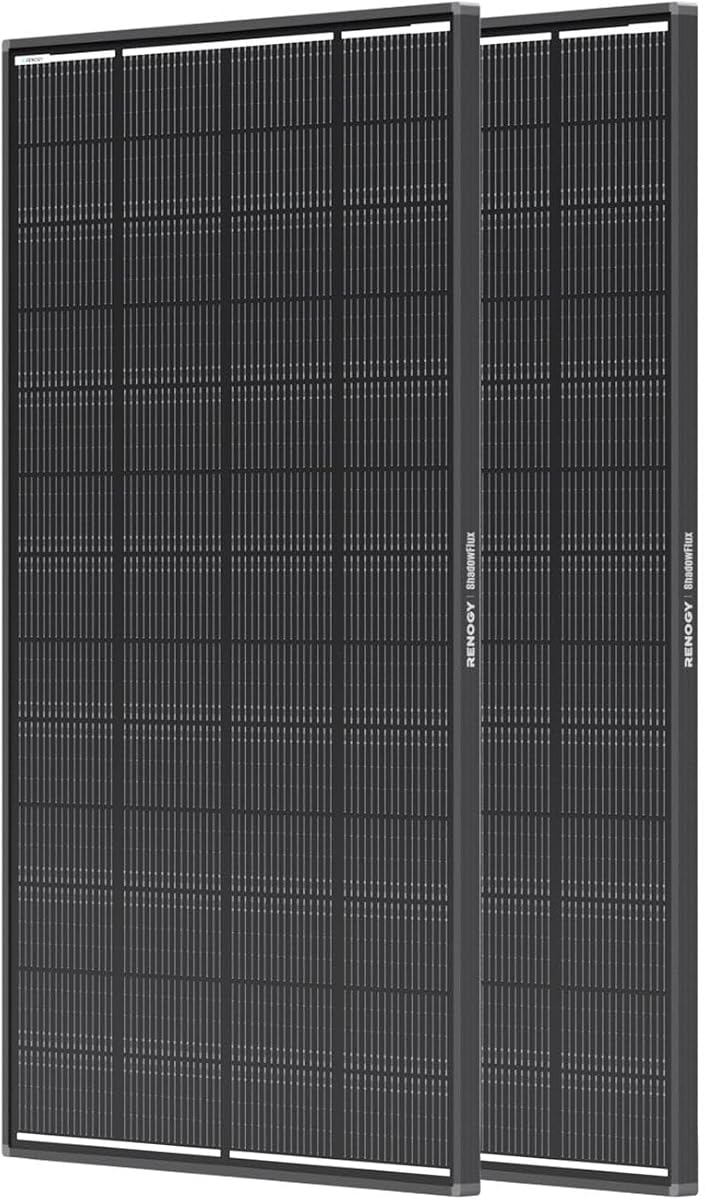
Renogy's ShadowFlux technology shines here with a 4.5 rating. This 200W panel is designed to maintain output even when parts are shaded by sails or masts, a common issue on sailing vessels with complex rigging.
We may earn a commission when you buy through this link, at no additional cost to you.
It uses N-type cells to minimize hot spots and micro-cracks, ensuring a longer lifespan. The compact design saves valuable deck space, which is critical on smaller boats where every square foot counts for solar installation.
The trade-off is cost; it is pricier than standard panels. However, for boats that experience frequent shading, the ability to generate power consistently justifies the investment and prevents battery depletion during cloudy or obstructed periods.
Buy this if you sail with tall masts or dock under trees. It is ideal for those needing reliable power generation in less than perfect sun conditions without losing significant output due to obstacles.
Reduces power loss from shading by optimizing cell connections to keep the rest of the panel active.
10% smaller footprint allows fitting more wattage on limited deck or roof space for better energy harvest.
We may earn a commission when you buy through this link, at no additional cost to you.
This flexible panel solves installation challenges on curved boat surfaces like flybridges or cabin tops. With a 4.5 rating, it bends up to 240 degrees, allowing seamless integration where rigid panels would not fit or require complex framing.
We may earn a commission when you buy through this link, at no additional cost to you.
Weighing half as much as rigid options, it is easier to handle and mount with adhesive. The all-black design reduces glare, which is beneficial for navigation and visibility on deck while maintaining a sleek aesthetic.
It is generally less durable than rigid glass panels over decades of direct exposure, but the installation versatility is unmatched. It is perfect for vessels with limited flat space needing high wattage without structural modifications.
Choose this for curved surfaces where drilling is difficult or unwanted. It is best for sailboats or yachts with aerodynamic designs requiring flexible solar solutions to maximize area usage.
Adapts to curved decks or roof lines to fit more panels where rigid ones cannot be installed securely.
Features an all-black glare-free appearance that improves visibility and aesthetics for marine safety.
We may earn a commission when you buy through this link, at no additional cost to you.
The 120W model provides a balanced middle ground for smaller vessels or supplemental power. Rated 4.5, it uses the same ShadowFlux anti-shading tech as larger models, ensuring reliability even when partially obstructed.
We may earn a commission when you buy through this link, at no additional cost to you.
Its compact size makes it easy to integrate into existing setups without overwhelming available deck space. The N-type cell construction ensures longevity and high conversion rates, maintaining power generation in challenging weather conditions.
While not enough to run high-draw appliances alone, it is excellent for topping off house batteries. The robust build quality ensures it withstands marine elements reliably over long periods of daily use.
Ideal for those needing supplemental charging rather than a full off-grid system. It works well as an add-on to existing setups to increase reliability during low sun periods.
Smaller 10% footprint than standard panels fits more easily on limited deck space for flexible layouts.
Maintains energy output when shaded by reducing hotspot risks and keeping the rest of the array active.
We may earn a commission when you buy through this link, at no additional cost to you.
This high-wattage panel delivers massive power for large vessels needing substantial charging. With a 4.6 rating, it combines dual 200W setups in one package, featuring advanced anti-shading technology to ensure consistent energy production.
We may earn a commission when you buy through this link, at no additional cost to you.
It provides 400 watts in a compact footprint, maximizing limited roof space for high-energy demands. The IP67 rating ensures reliability in heavy rain and storms, making it suitable for blue-water sailing or long cruising seasons.
Installation requires compatible high-voltage controllers to handle the combined input, which adds to the cost. However, the output allows for powering larger loads and faster charging of deep-cycle batteries during limited daylight.
Best for serious cruisers or liveaboards with high power needs. It is the right choice for those who need to charge large lithium banks quickly or run high-draw inverters.
Delivers 400 watts total to handle high energy loads like air conditioning or large battery banks.
Uses 10% less space than standard panels to fit more capacity on large cruising vessels.
We may earn a commission when you buy through this link, at no additional cost to you.
The 50W PRO model offers higher power than basic maintainers for larger small boats. Rated 4.4, it features the same smart MPPT controller found in smaller models but scales output for more consistent charging of deeper battery banks.
We may earn a commission when you buy through this link, at no additional cost to you.
Visual indicators and selectable modes allow for precise management of different battery types, ensuring safety and longevity. The controller handles the logic for you, preventing overcharge while maximizing harvest from the available sunlight.
It is slightly more complex than simple plug-and-play kits due to higher voltage requirements. However, the added power and intelligence make it a reliable choice for vessels needing more than minimal maintenance.
Select this for larger recreational boats needing steady power for electronics. It is ideal for keeping large batteries charged during storage or low-sail periods without needing full inverter systems.
Provides 50 watts to charge larger batteries faster than smaller 20 watt trickle maintenance chargers.
Integrated smart charge controller manages charging stages automatically to ensure battery health and safety.
We may earn a commission when you buy through this link, at no additional cost to you.
The POWOXI 7.5W is the most accessible entry point for solar battery protection. Rated 4.4, it is designed for basic trickle charging to prevent discharge during storage or extended periods without engine use.
We may earn a commission when you buy through this link, at no additional cost to you.
It includes smart protection circuits to prevent overcharging, ensuring safety even if left connected for weeks. The lightweight design and included alligator clips make installation incredibly simple without permanent mounting requirements.
While output is minimal, it effectively prevents battery drain on smaller 12V systems. The ABS frame is durable and resistant to scratches, suitable for temporary placement on dashboard or cockpit areas.
Buy this for small tenders or temporary maintenance. It is perfect for anyone needing a no-fuss solution to keep starter batteries healthy without significant investment or complexity.
Built-in smart protection prevents overvoltage and short circuits ensuring safe charging for your battery.
Includes clips for direct connection so you can start charging immediately without tools or wiring.
We may earn a commission when you buy through this link, at no additional cost to you.
Selecting the right marine solar panel involves balancing power output, durability, and installation requirements specific to your vessel. Below are key factors to consider.
Determine your daily power consumption by adding up the wattage of all electronics and appliances you plan to run. A good rule is to size your array to produce 20% more power than your daily average to account for cloudy days.
Choose higher wattage panels like 200W or 400W for liveaboards and lower wattage options like 20W for simple battery maintenance.
Look for panels with high efficiency ratings, ideally 20% or above, to maximize power output in limited space. N-type cells generally offer better temperature resistance and longevity compared to standard PERC cells.
Prioritize high efficiency models for smaller boats where every square foot of deck space counts towards power generation.
Marine environments are harsh with salt spray, UV radiation, and heavy winds. Ensure the panel has an IP67 or IP68 rating for protection against dust and water immersion. Tempered glass and corrosion-resistant frames are essential.
Select panels with robust weather ratings to ensure they withstand harsh ocean conditions without degradation over time.
Decide between rigid, flexible, or foldable panels based on your boat's structure. Rigid panels are durable but require flat surfaces and framing, while flexible panels can bend to fit curved hulls or rooflines.
Choose flexible panels for curved surfaces and rigid panels for flat roofs or decks where maximum durability is preferred.
Always pair your panels with a compatible charge controller. MPPT controllers are more efficient especially with higher voltage panels. Ensure the controller supports your battery type such as Lithium or AGM.
Invest in an MPPT controller to maximize charging efficiency and protect your battery from overcharging or voltage drops.
If your boat has rigging or structures that cast shadows, look for panels with bypass diodes or anti-shading tech like ShadowFlux. This prevents a small shadow from shutting down the entire panel array.
Prioritize anti-shading features if you sail with masts that frequently block sunlight from hitting the panels.
Check for warranty length and coverage. Look for at least a 5-year material warranty and a 20-25 year performance guarantee. Good customer support can be vital for resolving issues while at sea.
Select brands offering long warranties to ensure peace of mind and replacement options if panels fail prematurely.
Install panels securely using appropriate marine-grade hardware to withstand wind and vibration. Ensure electrical connections are waterproof and routed away from areas prone to chafing against metal edges.
Clean panels regularly with fresh water and a soft cloth to remove salt deposits and debris. Avoid harsh chemicals that can damage the anti-reflective coating or seals around the panel edges.
Inspect wiring and connectors monthly for signs of corrosion or wear. Check the charge controller indicator lights regularly to ensure your system is functioning correctly and charging batteries as expected.
Yes, a charge controller is recommended even for small panels to prevent battery overcharging. Modern small kits often include built-in controllers for safety, but separate units offer better management for larger battery banks.
Use fresh water and a soft cloth or sponge to wipe away salt and dirt. Avoid high-pressure washers which might damage seals and never use abrasive chemicals that could scratch the glass surface.
Yes, most high-quality flexible panels are rated IP67 for waterproofing and can handle wind and rain. However, they may degrade faster than rigid glass panels so regular inspection for wear is important.
Solar panels can still generate power in cloudy conditions but output may drop by up to 80%. High efficiency panels help mitigate this loss, so consider sizing your system slightly larger for cloudy regions.
MPPT controllers convert excess voltage into amperage, offering higher efficiency especially with larger arrays. PWM controllers are simpler and cheaper but less efficient, suitable only for basic small systems.
Most sailboats need between 200W and 400W to power electronics and house batteries comfortably. A single 200W panel often suffices for small boats, while larger vessels should aim for 400W combined output.
It is possible to connect panels of different wattages in parallel but they should have similar voltage ratings. Mismatched panels can cause the lower wattage panel to limit the performance of the higher one.
Solar panels require direct or indirect sunlight to generate electricity so they do not produce power at night. The energy generated during the day must be stored in batteries for use during the dark hours.
We reviewed ten top marine solar solutions ranging from basic trickle chargers to high-output flexible arrays. The Callsun 200W stands out for efficiency while the Renogy 400W offers massive power for larger vessels.
Prioritize durability and efficiency when making your choice to ensure your investment lasts through years of saltwater exposure. Selecting the right controller is just as important as the panel itself for safe battery management.
Prices for solar equipment fluctuate frequently so check current listings before purchasing to get the best value. Consider your specific power needs and space constraints before finalizing your order to ensure compatibility.