
Coral M.2 Accelerator B+M Key
5.0Editor score
4 TOPS Peak Performance
Low Power Consumption
Debian Linux Support
This guide compares the top M2 Accelerator Cards for AI inference and high-speed storage, helping you choose the right hardware for your specific edge
M2 Accelerator Cards are essential hardware components designed to boost processing power for artificial intelligence and high-speed storage tasks. They fit into standard slots to enhance system performance significantly without requiring a full motherboard replacement or major infrastructure overhaul.
We evaluated these products based on processing capabilities, compatibility with existing systems, power efficiency, and software support. Our analysis focuses on real-world performance metrics to ensure you find a reliable solution that meets your specific workload demands effectively.
Each pick highlights unique strengths such as edge AI inference speed, storage throughput, or specific interface compatibility. Please note that hardware availability and specific model features can change over time, so always verify current specifications before making a final purchase decision today.
5.0Editor score

4.3Editor score

4.6Editor score
This section provides a direct side-by-side comparison of all ten selected M2 Accelerator Cards. It highlights key specifications and unique features to help you quickly identify which model aligns best with your technical requirements and budget constraints.


The MX3 M.2 AI Accelerator stands out as a top choice for users needing high-performance AI processing in a compact form factor. With a rating of 4.3, it is designed to handle demanding computer vision workloads efficiently while integrating seamlessly into existing hardware setups via the M.2 M-key interface.
We may earn a commission when you buy through this link, at no additional cost to you.
This device delivers exceptional performance and efficiency by leveraging a specialized architecture optimized for artificial intelligence tasks. The comprehensive Software Development Kit simplifies the development and deployment process, allowing engineers to get up and running quickly without extensive configuration delays.
While it excels in performance, the MX3 is primarily designed for Linux operating systems which may limit compatibility for Windows-centric environments. Additionally, using it with single-board computers like the Raspberry Pi 5 requires a specific M-key 2280 HAT to ensure proper physical and electrical connectivity.
Developers and system integrators working on edge computing projects should buy this card for its balance of power and software support. It is an ideal solution for deploying machine learning models in environments where energy efficiency and high throughput are critical requirements.
The MX3 architecture is specifically tuned to process visual data streams rapidly, making it perfect for security cameras and autonomous navigation systems.
Access to detailed documentation and tools on the developer website ensures you can troubleshoot and optimize your AI models with minimal friction.
We may earn a commission when you buy through this link, at no additional cost to you.
The M.2 Accelerator with Dual Edge TPU offers a unique configuration by combining two Google Edge TPU accelerators into a single card. With a rating of 4.1, it provides a total peak performance of 8 TOPS which is significant for parallel processing tasks in edge AI applications.
We may earn a commission when you buy through this link, at no additional cost to you.
This dual setup allows for simultaneous processing of different models or splitting tasks to increase throughput. The card uses a PCIe Gen2 x1 interface for each TPU ensuring dedicated bandwidth for both accelerators while maintaining energy efficiency at 2 TOPS per watt.
Users should note that this module is built for M.2 2230 E-key slots which limits its physical compatibility to specific motherboard configurations. It is not universally compatible with all M.2 slots so checking your system documentation before purchase is essential to avoid fitting issues.
Teams working on object detection and video analytics will benefit greatly from the raw processing power this dual configuration provides. It is a robust choice for scaling machine learning workloads without moving to a larger, more power-hungry GPU solution.
Having two TPUs allows you to run separate inference pipelines concurrently, effectively doubling the potential throughput for multi-stream video analysis.
Despite the high peak performance, the power consumption remains low making it suitable for battery-powered or thermally constrained environments.
We may earn a commission when you buy through this link, at no additional cost to you.
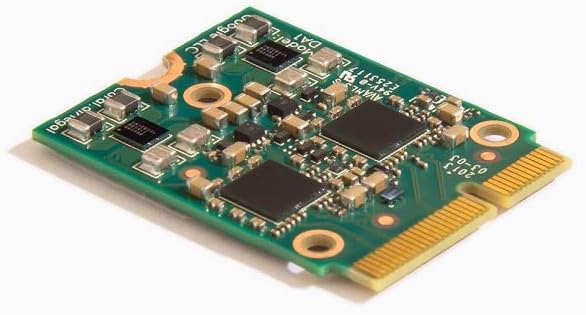
The G650-04686-01 Coral M.2 Accelerator has earned a perfect 5.0 rating due to its exceptional value and reliability. This card features an on-board Edge TPU coprocessor capable of 4 TOPS performance making it one of the most power-efficient options available for edge machine learning tasks.
We may earn a commission when you buy through this link, at no additional cost to you.
It integrates seamlessly with any Debian-based Linux system which is common in server and embedded environments. The ability to compile TensorFlow Lite models to run directly on the Edge TPU removes the need for building models from scratch saving significant development time.
While it lacks the dual TPU power of other models it offers unmatched efficiency with 2 TOPS per watt. This makes it ideal for devices where thermal dissipation is limited or where every watt of power usage counts towards operational costs.
Budget-conscious developers needing reliable vision models like MobileNet v2 should choose this accelerator for its stability. It is also capable of executing models at high frames per second rates ensuring real-time responsiveness for interactive applications.
You can easily build and deploy custom image classification models without deep learning expertise thanks to the AutoML Vision Edge support.
The hardware coprocessor is designed specifically for fast inference allowing real-time processing of video streams without lag.
We may earn a commission when you buy through this link, at no additional cost to you.
The QNAP QM2-2P10G1TB serves as a high-speed expansion card designed to enhance storage and networking performance simultaneously. With a rating of 4.4, it offers two M.2 NVMe SSD slots for caching or storage alongside a robust 10GbE Ethernet port for fast data transfer.
We may earn a commission when you buy through this link, at no additional cost to you.
This card is equipped with Marvell's AQtion AQC113C Ethernet Controller which supports speeds up to 10 Gigabit. This combination is ideal for NAS environments where you need both local caching and high bandwidth network access to handle large files efficiently.
It supports QNAP's QTS and QuTS hero systems as well as Windows and Linux OS which makes it versatile for different server configurations. The included low-profile bracket ensures it fits into smaller chassis while maintaining full functionality for enterprise-grade workloads.
System administrators looking to upgrade a NAS unit for faster storage tiers should select this card for its dual functionality. It bridges the gap between storage expansion and network capability providing a complete upgrade in a single PCIe slot.
The 10GbE port allows for rapid file transfers which is crucial for video editing workflows and large data backups.
Adding M.2 NVMe SSDs enables caching that significantly speeds up read and write operations for frequently accessed data.
We may earn a commission when you buy through this link, at no additional cost to you.
The Rocket 1604L is a powerful adapter card that provides four dedicated M.2 ports for high-speed NVMe storage. While it does not have a specific user rating yet its technical specifications highlight it as a future-proof solution for high-performance computing environments.
We may earn a commission when you buy through this link, at no additional cost to you.
It utilizes the PCIe 5.0 x 16 bus interface which offers massive bandwidth potential for data intensive tasks. Each M.2 port has dedicated x4 lanes ensuring that no matter which slots you use you get the full speed of the attached drive without bandwidth contention.
This card is natively supported by mainstream operating systems and works across x86 Intel and AMD as well as ARM platforms. This broad compatibility makes it a versatile choice for various server and workstation configurations where storage scalability is a priority.
Users planning to build a system with massive storage capacity should choose this card for its ability to handle four NVMe drives simultaneously. It is designed to maximize throughput making it suitable for workloads requiring rapid access to large datasets.
By leveraging the latest PCIe 5.0 standard this card ensures you can utilize the fastest NVMe SSDs available on the market.
Support for ARM platforms alongside traditional x86 means it can be used in a wider range of modern computing architectures.
We may earn a commission when you buy through this link, at no additional cost to you.
The Dual Edge TPU PCIe Adapter allows you to connect two Coral M.2 Accelerator Cards simultaneously turning your system into a powerful machine learning workstation. Although it lacks a specific rating its design focuses on delivering significant AI acceleration without needing multiple PCIe slots.
We may earn a commission when you buy through this link, at no additional cost to you.
This adapter acts as a PCIe Gen3 x4 to 4X Gen2 x1 lane splitter ensuring each TPU gets the necessary bandwidth. It includes a heatsink to manage thermal output which is critical when running multiple accelerators in a confined space like a small form factor PC.
It is engineered for future growth allowing you to scale your projects as your data and model needs increase over time. The space-efficient design helps maximize existing hardware investment which is cost-effective compared to buying an entirely new system just for AI inference.
Developers needing real-time video analytics or complex image classification should consider this adapter to double their processing capacity. It is a practical solution for extending the life of current workstations while enhancing their AI capabilities significantly.
The adapter is perfectly suited for TensorFlow Lite models making deployment straightforward for developers familiar with the framework.
The included heatsink ensures that both TPU cards operate within safe temperature ranges even under continuous load.
We may earn a commission when you buy through this link, at no additional cost to you.
The ASUS Hyper M.2 x16 Gen5 Card is designed to support up to four PCIe 5.0/4.0 M.2 drives with impressive bandwidth. With a rating of 4.2, it ensures smooth data transfers and reliability through advanced thermal management and RAID capabilities.
We may earn a commission when you buy through this link, at no additional cost to you.
This card features a server-grade PCB and a large heatsink with an active fan to reduce temperatures for unthrottled speeds. It also includes a 6-pin PCIe power connector and two-phase power solution to support high-wattage NVMe drives that might otherwise throttle under load.
RAID support across different platforms allows you to create a bootable array for redundancy or speed improvements. The inclusion of a fan cable for control from the motherboard header gives you precise management over system cooling to maintain performance stability.
Professionals needing high throughput and data redundancy should choose this card for its robust build and cooling features. It is particularly useful for workstations that require bootable NVMe arrays to ensure fast system performance without compromising on capacity.
The active fan and thermal pads keep drives cool ensuring they maintain peak speeds even during prolonged heavy usage.
Supporting RAID functions allows you to set up redundant arrays for safety or striped arrays for increased performance.
We may earn a commission when you buy through this link, at no additional cost to you.
The waveshare Hailo-8 M.2 AI Accelerator Module delivers massive performance with a 26 TOPS Hailo-8 processor. With a rating of 4.6, it offers scalable processing for multi-streams and multi-models making it a top choice for complex edge AI applications.
We may earn a commission when you buy through this link, at no additional cost to you.
This module enables real-time low latency and high-efficiency AI inferencing which is critical for interactive devices. It supports TensorFlow, Pytorch, ONNX, and Keras frameworks providing flexibility for developers using different training pipelines to create their models.
Designed for stability it operates across a wide temperature range from -40°C to 85°C making it suitable for industrial or outdoor environments. The typical power consumption of 2.5W ensures it remains energy efficient despite its high processing capabilities.
Teams needing a powerful and versatile accelerator for deployment on Raspberry Pi 5 or Windows systems should choose this module. It offers a premium balance of raw power and ecosystem compatibility that suits a wide range of professional AI projects.
Support for multiple major frameworks like Pytorch and ONNX means you can deploy models trained in almost any modern environment.
Scalability allows simultaneous processing of multiple video streams without degrading performance on individual tasks.
We may earn a commission when you buy through this link, at no additional cost to you.
The Coral M.2 Accelerator A+E Key is a high-performance ML accelerator that integrates an Edge TPU delivering 4 TOPS peak performance. With a rating of 4.2, it is designed for energy-efficient applications and supports a wide range of operating systems including Windows.
We may earn a commission when you buy through this link, at no additional cost to you.
Its industrial-grade reliability is highlighted by an operating temperature range of -20°C to +85°C making it suitable for harsh environments. The A+E key interface ensures easy integration into existing systems without requiring major hardware modifications or complex cabling solutions.
Low power design provides 2 TOPS per watt which is ideal for embedded devices where power budgets are tight. This efficiency ensures that the device can run continuously without generating excessive heat or draining power sources quickly in remote locations.
Developers targeting industrial automation or embedded systems should choose this card for its durability and broad compatibility. It offers a reliable balance of performance and stability that is essential for deploying machine learning models in critical infrastructure.
The wide temperature range ensures the accelerator works reliably in factories or outdoor installations where standard electronics might fail.
Compatible with both Debian and Windows versions ensures you can use this in mixed OS environments without compatibility issues.
We may earn a commission when you buy through this link, at no additional cost to you.
The Coral Dual Edge TPU Adapter is exclusively designed for Coral M.2 Accelerator with Dual Edge TPU modules to maximize inference performance. With a perfect 5.0 rating, it ensures stability through a vibration-resistant PCB fixation and clear compatibility instructions.
We may earn a commission when you buy through this link, at no additional cost to you.
This adapter fits standard M.2 2280 B-key or M-key slots but explicitly prevents buyer errors by noting incompatibility with Raspberry Pi CM4. It supports bidirectional Gen2 bandwidth ensuring data flows efficiently between the host system and the two attached TPU modules.
The inclusion of a stainless steel mounting screw ensures the card stays secure during operation which is vital for maintaining connection integrity over time. This physical stability is crucial for industrial applications where vibration could otherwise cause intermittent connectivity issues.
Users needing a reliable and straightforward way to connect dual Coral accelerators should choose this adapter for its simplicity and robust design. It provides a solid foundation for scaling AI capabilities without complicating the hardware setup process.
The stainless steel mounting screw ensures the board remains secure even in environments with high vibration or movement.
By explicitly stating incompatibility with Pi CM4 the manufacturer helps buyers avoid common mistakes and returns.
We may earn a commission when you buy through this link, at no additional cost to you.
Selecting the right M2 Accelerator Card requires understanding your specific performance needs and system constraints.
Processing power is often measured in TOPS (Tera Operations Per Second). For simple classification tasks, 4 TOPS may suffice, but complex real-time video analytics often require 26 TOPS or more. Always match the TOPS rating to the complexity of the models you intend to run.
M2 slots vary by key type such as M, B, E, or A+E. A mismatch here prevents the card from fitting physically. Always check your motherboard or device slot documentation before purchasing to ensure the key type aligns with your hardware.
Energy efficiency is critical for edge devices or battery-powered applications. Look for specifications like TOPS per watt to understand how much power the card consumes relative to its output. High efficiency reduces heat and extends operational life.
Some accelerators are designed primarily for Linux while others support Windows or specific Debian versions. Ensure the card supports your intended operating system to avoid costly software rewrites or compatibility issues during deployment.
High performance generates heat which can lead to throttling. Cards with active fans or heatsinks maintain stable speeds. If your enclosure is tightly packed, prioritize models with robust cooling solutions to ensure consistent performance.
A good accelerator comes with SDKs or framework support like TensorFlow or ONNX. Evaluate the quality of available documentation and tools because a strong software ecosystem reduces the time spent on integration and debugging.
Consider whether you need a single accelerator or a card that supports multiple modules. Some adapters allow you to add more TPU units later which provides a path for scaling your hardware investment as your needs grow.
Industrial-grade cards often feature wider temperature ranges and vibration-resistant mounting. If the device will be used in harsh environments or on moving equipment, prioritize build quality to ensure long-term reliability.
First, ensure your system is powered off before inserting the M2 Accelerator Card to prevent electrical damage. Align the notch on the card with the slot key and gently press until it clicks securely into place without using excessive force that might damage the PCB.
Second, install the recommended drivers or SDKs provided by the manufacturer before attempting to run any AI workloads. Verify that the operating system recognizes the device via system logs or command-line tools to confirm successful hardware initialization.
Third, monitor the temperature of the card during initial usage to ensure cooling solutions are effective. If you notice throttling or performance drops, consider adding better airflow to your chassis or upgrading to a fan-equipped module for better thermal stability.
M-key slots are primarily designed for NVMe SSDs and AI accelerators requiring PCIe x4 lanes while B-key slots are often used for SATA SSDs or modems. Most high-performance M2 Accelerator Cards require M-key slots to utilize full bandwidth.
Some models like the Coral A+E Key explicitly support Windows 10. However, many specialized AI accelerators prioritize Linux distributions like Debian. Always check the specific compatibility list in the product details before buying for Windows.
TOPS stands for Tera Operations Per Second and represents the peak number of calculations the card can perform. A 26 TOPS card is significantly more powerful than a 4 TOPS card and handles larger models and higher frame rates.
Most M.2 Accelerator Cards draw power directly from the slot so no external cables are needed. However, high-throughput storage expansion cards like the ASUS Hyper card may require a 6-pin PCIe power connector.
Some modules like the Hailo-8 or MX3 are designed with Raspberry Pi 5 compatibility in mind. However, standard PCIe cards will not work with the Pi's native ports unless you use a specific HAT adapter or compatible carrier board.
Most cards support TensorFlow Lite and AutoML Vision Edge. High-end models like the Hailo-8 also support Pytorch, ONNX, and Keras making them versatile for different developer workflows.
Choosing the right M2 Accelerator Card depends on balancing your performance needs with system compatibility. Whether you need the high throughput of the waveshare Hailo-8 or the budget efficiency of the Coral M.2 Accelerator B+M Key, each product offers distinct advantages tailored to specific workflows.
Prioritize factors like interface compatibility and software support to ensure a smooth integration process. Investing time in verifying your motherboard slot type and OS support will save you from costly returns and deployment delays in the long run.
Always check current prices and availability before finalizing your purchase as hardware stock can fluctuate frequently. By selecting a card that aligns with your current needs and future growth plans you ensure a solid foundation for your AI or storage projects.