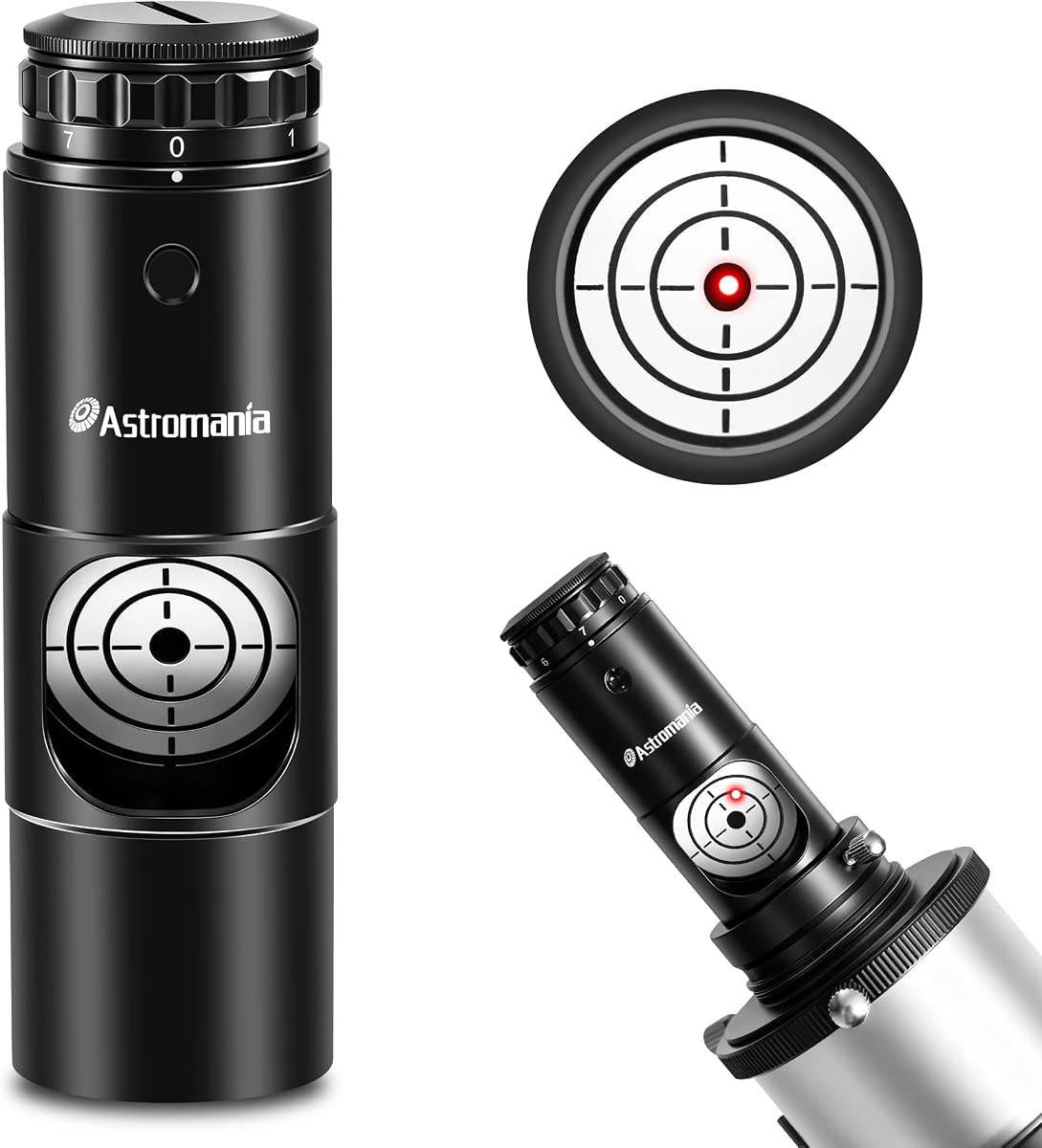
Astromania Laser Collimator 1.25" for Newtonian Marca Telescope Alignment
4.5Editor score
Compact metal body design
Adjustable brightness levels
Includes 1.25 inch focuser fit
Achieving sharp views through your telescope requires precise optical alignment. A laser collimator for telescope alignment is the essential tool that helps you center mirrors quickly. This guide explores the best options available for amateur and professional astronomers.
We evaluated ten top-rated models based on build quality, beam accuracy, and ease of use. Our analysis covers budget-friendly units and high-end precision tools. Each product offers unique features to suit different telescope types and user needs.
Every review highlights specific strengths and potential trade-offs for informed decisions. Prices and availability change frequently so check current listings before purchasing. Use this guide to select the right laser collimator for your setup.
4.5Editor score
4.7Editor score

As an Amazon Associate we earn from qualifying purchases.
This side-by-side comparison highlights key specifications and features across all ten selected products. Review the table below to identify which model offers the best value and performance for your specific telescope setup needs.


The Astromania Laser Collimator 1.25/2" earns our top spot for balancing performance and affordability. With a rating of 4.5 stars it is highly regarded for its reliable beam and sturdy build. This tool is designed to simplify the alignment process for Newtonian telescopes.
We may earn a commission when you buy through this link, at no additional cost to you.
Its standout feature is the removable 2 inch adapter which allows it to fit standard 1.25 inch and 2 inch diameter focusers. The laser beam offers seven brightness levels ensuring visibility in various lighting conditions. The metal body resists wear making it a reliable long-term investment.
One trade-off is the weight which may be slightly more than lighter plastic options but this adds to the stability. The instructions are detailed but might require careful reading for absolute beginners. However the results speak for themselves in improved image clarity.
This collimator is ideal for hobbyists who own multiple telescopes or plan to upgrade to larger focusers. It provides the precision needed for optimal performance without the high cost of professional equipment. We recommend it for most Newtonian telescope users.
The removable adapter ensures you can use this tool on both standard and larger telescopes without buying multiple devices.
Seven brightness levels let you tailor the laser output to your environment preventing glare while maintaining visibility.
We may earn a commission when you buy through this link, at no additional cost to you.
For budget conscious astronomers this Astromania model offers exceptional value without sacrificing core functionality. It carries a 4.5 star rating reflecting consistent user satisfaction with its collimation capabilities. The design focuses on simplicity and reliability for reflector telescopes.
We may earn a commission when you buy through this link, at no additional cost to you.
The collimator is built with a premium metal construction that resists wear and tear during regular use. It features a 1.25 inch diameter fit making it perfect for standard focusers. The 7 brightness levels allow you to adjust the intensity to match your environment.
The main limitation is that it is designed only for 1.25 inch focusers so it is not compatible with 2 inch upgrades. The battery is not included which means you must purchase a CR2032 separately. These are minor issues given the low price.
This tool is best for beginners or casual observers who do not own larger telescopes. It provides a straightforward way to achieve sharp views without complex setup. We suggest it for anyone starting their journey in Newtonian telescope use.
The lightweight body fits comfortably in your hand making it easy to transport to dark sky sites.
Anodized aluminum ensures the unit stays intact even with regular handling in outdoor observing conditions.
We may earn a commission when you buy through this link, at no additional cost to you.
The SVBONY Laser Collimator combines robust build quality with practical features for reflecting telescopes. It has earned a 4.5 star rating due to its ability to deliver accurate collimation quickly. This model is designed to make alignment less boring and more efficient.
We may earn a commission when you buy through this link, at no additional cost to you.
A key feature is the triple cemented lens which improves the stability of the red dot beam. It includes a removable 2 inch adapter so you can upgrade your focusers without buying a new tool. The metal body ensures long-term use even in rough conditions.
One limitation is that battery replacement might require checking for the correct CR2032 cell as it is not included. The instructions are straightforward but beginners might appreciate more visual guides. Despite this it remains a solid choice for performance.
This collimator is suitable for both beginners and experienced observers looking for a reliable workhorse. Its versatility with focusers makes it a smart buy for those planning to upgrade their equipment. We recommend it for its balance of price and performance.
This lens design keeps the laser beam stable so you get consistent alignment results every time.
The removable adapter allows you to use this tool on both standard and upgraded telescope systems.
We may earn a commission when you buy through this link, at no additional cost to you.
This bundle offers a complete solution for alignment with the added benefit of a high quality eyepiece. It targets users who want both collimation and enhanced viewing capabilities in one purchase. The collimator is user adjustable to fit your specific needs.
We may earn a commission when you buy through this link, at no additional cost to you.
The standout feature is the SVBONY 62 degree aspheric eyepiece which provides maximum detail across the field of view. The collimator itself works with 1.25 inch focusers and includes a 2 inch adapter. The laser beam offers 7 brightness levels for different conditions.
The price is higher than single unit options but the addition of the eyepiece adds significant value. It may not be suitable for those who already own a preferred eyepiece or do not need the wide angle feature. However the optical quality is impressive.
This bundle is perfect for observers who want to upgrade their entire viewing experience. It is ideal for those targeting deep sky objects or wide field lunar observation. We suggest it for users looking for a comprehensive optical package.
The 62 degree field of view gives you a lost in space feeling for deep sky objects.
You get both the alignment tool and an eyepiece ensuring you are ready for your next session.
We may earn a commission when you buy through this link, at no additional cost to you.
The Alstar Laser Collimator is designed for simplicity and ease of use with standard focusers. It has a 4.5 star rating reflecting consistent performance for collimating reflector telescopes. The design emphasizes clarity and convenience for the user.
We may earn a commission when you buy through this link, at no additional cost to you.
A key strength is the side window which allows you to see the reflected laser beam easily. This helps ensure accurate alignment without needing extra tools. The metal construction ensures the unit is sturdy enough for regular use.
The collimator is limited to 1.25 inch focusers so it may not suit those with 2 inch adapters. The battery is not included which is a common oversight but easily fixed. These are minor drawbacks for an otherwise solid tool.
This tool is best for casual observers who own standard Newtonian scopes and want a reliable collimator. It is easy to carry and use on the fly. We recommend it for those seeking a straightforward alignment solution.
The side window with a central hole lets you confirm the laser is reflecting back correctly.
A rear screw cap allows you to swap the battery quickly without removing the whole unit.
We may earn a commission when you buy through this link, at no additional cost to you.
This Alstar model offers versatility with its ability to fit both 1.25 and 2 inch focusers. It has a 4.0 star rating indicating solid performance with room for improvement. The collimator is built to handle different telescope configurations.
We may earn a commission when you buy through this link, at no additional cost to you.
The design includes a standard 1.25 inch fit with an included 2 inch adapter. This makes it a great choice for users who upgrade their equipment over time. The laser is pre-calibrated to ensure immediate use.
One minor issue is that some users find the instructions less detailed than competitors. The battery must be purchased separately which adds a small extra step. However the build quality remains strong and reliable for regular use.
This tool is suitable for observers who own multiple telescopes or plan to upgrade focusers. It provides a stable and reliable solution for collimation tasks. We recommend it for its universal compatibility.
The included 2 inch adapter lets you use this on standard or upgraded scopes easily.
The pre-calibrated beam saves you time and ensures accurate optical alignment right away.
We may earn a commission when you buy through this link, at no additional cost to you.
This bundle is designed for observers who want to capture images through their telescopes. It includes a phone adapter that supports a wide range of devices. The collimator itself fits both 1.25 and 2 inch focusers.
We may earn a commission when you buy through this link, at no additional cost to you.
The standout feature is the phone adapter which supports devices from iPhone to various Samsung and Sony models. This allows you to take photos easily after aligning your scope. The locking mechanism ensures your phone stays secure.
The price is higher than the standalone collimator but the adapter adds value for photographers. Some users might not need the phone accessory. However for astrophotographers it provides a complete setup.
This bundle is ideal for those starting out in astrophotography who need alignment and imaging tools. It removes the hassle of buying separate adapters. We recommend it for photographers looking for an all-in-one kit.
The included adapter lets you snap photos of the night sky right after collimating your scope.
A steel bolt keeps your phone in place so it does not shift during use.
We may earn a commission when you buy through this link, at no additional cost to you.
This bundle offers both a laser collimator and a Cheshire eyepiece for comprehensive alignment. It has a perfect 5.0 star rating reflecting exceptional quality and user satisfaction. This is a complete kit for serious telescope maintenance.
We may earn a commission when you buy through this link, at no additional cost to you.
The Cheshire eyepiece allows you to align optics during the day without batteries. The laser collimator handles night alignment with a 7 brightness beam. Both tools are built to high standards with precision machined aluminum.
The price is higher than buying one tool but the versatility is unmatched. It might be overwhelming for absolute beginners who only need one tool. However for those who want the best it is worth the investment.
This kit is perfect for advanced users who want reliable tools for all lighting conditions. It ensures you can align your telescope anytime. We recommend it for serious observers.
The Cheshire eyepiece works without batteries so you can align your scope during daylight hours.
Having both tools lets you choose the right method for any situation without buying more gear.
We may earn a commission when you buy through this link, at no additional cost to you.
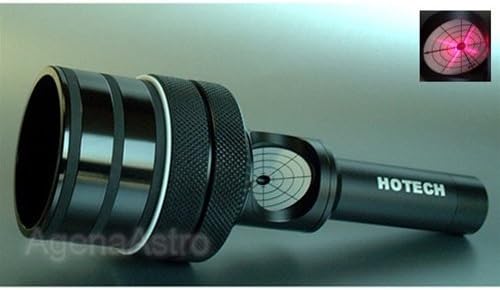
The HoTech SCA Laser Collimator stands out for its innovative self-centering adapter technology. It has a 4.7 star rating indicating it is a top choice for those seeking exact precision. This unit solves common issues with standard collimators.
We may earn a commission when you buy through this link, at no additional cost to you.
The patented SCA adapter ensures precise and repeatable installation in any focuser. This eliminates the slop that ruins precision in standard units. It fits both 1.25 and 2 inch focusers making it versatile.
The main drawback is the high price which may be overkill for casual users. It is also specialized which means it requires learning a new method. However the precision it offers is unmatched in the market.
This tool is perfect for serious amateurs or professionals who demand the highest accuracy. It ensures your optical axis is perfect every time. We recommend it for those who value precision over cost.
The SCA adapter ensures your collimator sits perfectly centered every time without slop.
The system guarantees consistent results making it ideal for demanding telescope users.
We may earn a commission when you buy through this link, at no additional cost to you.
This electronic collimator uses smartphone technology to guide you through alignment. It is designed for Newtonian and Schmidt Cassegrain telescopes. The device comes factory centered to pixel-level precision ensuring you start with optimal accuracy.
We may earn a commission when you buy through this link, at no additional cost to you.
The standout feature is the built-in software-guided calibration circles which simplify the process. This makes it easy to adjust axes quickly and accurately. The portable design allows you to use it in the field.
The main limitation is the price which is higher than most standard collimators. It also relies on a smartphone so you must bring your device along. However the guidance and precision are superior.
This tool is ideal for tech-savvy users who want software assistance. It is perfect for those who want the most advanced tool available. We recommend it for anyone seeking high-tech alignment.
Calibration circles and software help you make adjustments without guesswork.
Every unit starts with optimal accuracy so you trust the baseline data.
We may earn a commission when you buy through this link, at no additional cost to you.
Selecting the right laser collimator involves understanding your telescope type and alignment needs. Below are key factors to consider before making a purchase to ensure optimal optical performance.
Ensure the collimator fits your focuser diameter which is often 1.25 inches or 2 inches. Some models come with adapters to handle both sizes while others are restricted to one type. This is the first step in choosing a viable tool.
Always check if your telescope requires a specific adapter before buying to avoid compatibility issues.
Adjustable brightness lets you change the intensity based on ambient light. Models with multiple settings allow you to reduce glare in a room or increase visibility outside. This feature is essential for working in various conditions.
Look for collimators with 5 to 7 brightness settings for maximum flexibility in any environment.
Metal bodies resist wear better than plastic and stay aligned longer. Look for aluminum or steel housings that can handle regular use and transport. A sturdy build ensures the tool remains accurate over years.
Opt for units with anodized finishes to protect against corrosion and scratches.
Some collimators include a battery while others require you to buy one separately. Common types include CR2032 or CR123A. Ensure the battery is easily replaceable and the unit has a clear access cap.
Check if a battery is included to avoid unexpected costs when you start using the tool.
User-friendly designs feature clear instructions and intuitive layouts. Tools with side windows or front openings help you visualize the alignment process easily. This reduces frustration especially for new users.
Choose models with step-by-step manuals and clear indicators for alignment status.
Lasers must meet safety standards to prevent eye damage. Look for Class 3R or Class 1 certifications that limit output power. These standards ensure the laser is safe for normal use.
Always verify the laser class to ensure it is safe for your viewing environment.
Budget models offer basic functionality while premium units provide higher precision. Consider how often you will use the collimator when deciding. If you own multiple scopes a versatile tool may be worth the cost.
Balance your budget with the level of precision you need for your specific goals.
Some collimators offer bundles like smartphone adapters or Cheshire eyepieces. These extras can add value but may not be needed for everyone. Evaluate if you actually need these add-ons before paying extra.
Prioritize core alignment features over accessories unless you have a specific need.
Insert the collimator into your telescope focuser securely without forcing it. If using an adapter ensure it fits tightly to prevent movement during use. Adjust the brightness to match your viewing conditions.
Turn on the laser and observe the beam through your telescope. Use the provided screws to adjust the mirrors until the beam centers on the target point. Follow the instructions included with your specific model for best results.
Store the collimator in a protective case when not in use to prevent dust buildup. Remove the battery if you plan to store it for a long period. Regular calibration checks ensure it remains accurate over time.
A laser collimator for telescope alignment is a tool that emits a laser beam to help align the optical components of your telescope. It ensures the mirrors are centered so you get a clear image.
Yes if you own a Newtonian telescope you need a collimator to align the mirrors. It is essential for getting sharp views and optimal performance from your scope.
No laser collimators are designed for reflector telescopes like Newtonians. Refractors and catadioptric scopes may require different alignment tools like Cheshire eyepieces.
You should collimate your telescope after any transport or impact. Regular users should check alignment before each observing session to ensure accuracy.
Yes most collimators meet Class 3R safety standards. However you should never look directly into the laser beam or point it at people or aircraft.
Most models use a CR2032 or CR123A lithium battery. Always check the product specifications to confirm the required battery type.
We reviewed ten top laser collimators for telescope alignment offering various features and price points. The Astromania and SVBONY models provide great value while the HoTech and Ocal Pro offer premium precision for advanced users.
Prioritize compatibility with your focuser and ease of use when selecting a tool. A sturdy metal body and adjustable brightness are essential features for long-term reliability.
Prices and availability change frequently so check current listings before purchasing. Use this guide to select the right laser collimator for your setup and enjoy sharper views.