
Uniden Bearcat SR30C
4.0Editor score
500 analog channels
Close Call RF capture
PC programmable design
Monitoring radio frequencies requires reliable hardware capable of capturing diverse signals across multiple bands. A good handheld scanner for monitoring frequencies should offer broad coverage, intuitive controls, and solid build quality for field use in various environments.
We evaluated ten leading models based on their scanning capabilities, digital support, battery life, and ease of programming. Each device was reviewed for performance in analog and digital environments, ensuring you receive accurate data for safety or hobbyist interests.
Each pick highlights specific strengths like close call detection, trunking support, or spectrum analysis features. Prices and availability change frequently, so please verify current details before purchasing to ensure you get the best value for your specific monitoring needs.
4.0Editor score
4.0Editor score

4.4Editor score
As an Amazon Associate we earn from qualifying purchases.
This side-by-side comparison outlines the key specifications of ten top handheld scanners to help you identify the right device for your monitoring requirements and budget constraints.


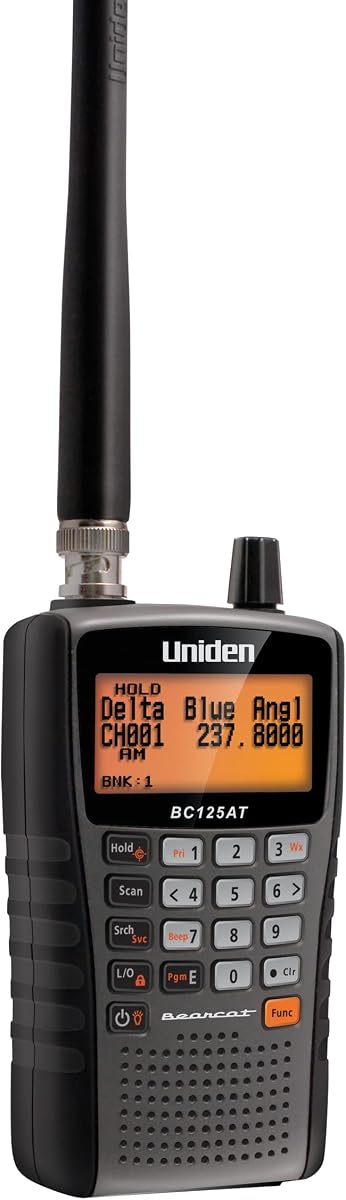
The Uniden Bearcat BC125AT stands out as a versatile analog handheld scanner for monitoring frequencies with 500 alpha-tagged channels. It offers a lightweight design suitable for travel and features Close Call RF capture technology to find nearby signals quickly.
We may earn a commission when you buy through this link, at no additional cost to you.
Its standout quality is the organization of channels into ten storage banks with alpha tagging. This allows users to assign names to channels for easy identification. The orange backlight ensures readability in low light conditions during critical monitoring situations.
While it lacks digital capabilities, which limits its use for modern trunking systems, the simplicity of the analog interface makes it accessible for beginners. Users should note that it does not support Project 25 or DMR systems found in some agencies.
This scanner is ideal for hobbyists tracking aviation, marine, or rail communications without needing complex digital decoding. It balances features with portability, making it a reliable choice for those focused on analog signal monitoring.
This feature tunes instantly to signals from nearby transmitters, helping you discover active frequencies without manual scanning.
Alpha tagging allows you to name channels, so you know exactly which department or service you are listening to.
We may earn a commission when you buy through this link, at no additional cost to you.
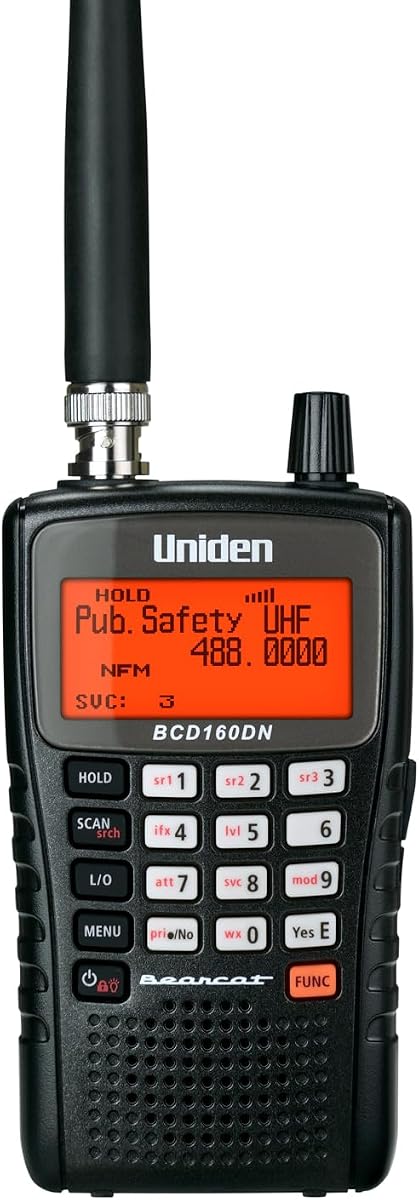
The Uniden BCD160DN sets a standard for entry-level digital scanning by supporting DMR and NXDN systems. It includes exclusive features like Band Scope and rapid system tagging to help detect signals faster than older models.
We may earn a commission when you buy through this link, at no additional cost to you.
Its key strengths include preloaded digital protocols that let you start listening immediately. The narrow-band reception improves clarity for modern signals. Users can manage profiles and updates using free PC software for better control over channel lists.
However, the lack of trunking and APCO P25 support limits its use in major cities where those systems are common. The rating reflects mixed user experiences with signal stability in complex RF environments compared to higher-end units.
Choose this scanner if you need basic digital capabilities without a high price tag. It serves well for users tracking specific digital repeaters in rural areas where trunking is less prevalent.
Supports DMR and NXDN formats, allowing you to listen to digital communications without complex setup.
Instantly detects and displays sub-audible tones so you can quickly determine system settings for accurate scanning.
We may earn a commission when you buy through this link, at no additional cost to you.
The Uniden Bearcat SR30C is an affordable 500-channel handheld scanner that offers significant features for its price. It includes Close Call RF capture and turbo search to help you find active signals efficiently across various service bands.
We may earn a commission when you buy through this link, at no additional cost to you.
Its standout quality is the flexibility in power options, allowing USB, alkaline, or Ni-MH battery use. PC programming lets you manage channels easily without tedious manual entry. The compact design makes it easy to carry during outings.
While it does not support digital communications like Project 25, it excels in traditional analog environments. The memory backup keeps frequencies stored if power is lost, though you should note it may not survive long-term power outages.
This device is perfect for budget-conscious users needing a portable analog scanner. It provides reliable performance for monitoring police, fire, or weather in areas where digital systems are not mandatory.
Supports USB, alkaline, or rechargeable batteries, giving you multiple ways to keep it running in the field.
Instantly tunes to signals from nearby transmitters so you can locate active frequencies without complex searching.
We may earn a commission when you buy through this link, at no additional cost to you.
The Uniden SDS100 True I/Q Digital Handheld Scanner delivers superior performance in weak-signal and simulcast areas. It includes a rugged, weather-resistant design and a True I/Q receiver that captures complete signal waveforms for better digital error correction.
We may earn a commission when you buy through this link, at no additional cost to you.
Its key strengths include location-based scanning via zip code or GPS coordinates. The HomePatrol database provides known radio systems in the US and Canada, updated weekly via software. The customizable color display enhances readability.
While expensive, the investment is justified by its ability to handle complex digital environments effectively. Users needing precise system selection while traveling will appreciate the auto-locate feature that adjusts scanning based on location.
This scanner is best for professionals or serious enthusiasts requiring reliable digital trunking and weak signal performance. It offers advanced features that ensure you stay informed even in challenging RF conditions.
Captures the complete signal waveform in three dimensions for improved digital error correction and signal recovery.
Connect to an external GPS for precise system selection and automatic reselection as you travel to new areas.
We may earn a commission when you buy through this link, at no additional cost to you.
The Whistler WS1040 Handheld Digital Scanner supports P25 Phase I and trunking systems, offering robust tools for monitoring complex public safety networks. It features a menu-driven programming interface with context-sensitive help for easier navigation.
We may earn a commission when you buy through this link, at no additional cost to you.
Its key strengths include scan list functionality to arrange group and scan objects flexibly. The Skywarn storm spotter function gives instant access to specific frequencies for severe weather tracking. Digital AGC helps compensate for low audio levels.
However, the free form memory organization differs from traditional banks, which may confuse users familiar with older scanners. The PC interface is essential for advanced configuration, making it more suitable for tech-savvy individuals.
Choose this scanner if you need to track trunked systems without breaking the bank. It provides essential trunking features and weather alerts for those monitoring public safety and emergency response in specific regions.
Each menu item provides help text to guide you through setup and usage without needing extensive manuals.
Skywarn functionality gives instant access to frequencies used by storm spotter networks for immediate weather updates.
We may earn a commission when you buy through this link, at no additional cost to you.
The Uniden BCD436HP HomePatrol Series Digital Handheld Scanner brings ease of use to the handheld form factor. Simply enter your zip code and TrunkTracker V handles the rest, eliminating the need for complex programming.
We may earn a commission when you buy through this link, at no additional cost to you.
Its key strengths include instant replay that plays back up to 240 seconds of recent transmissions. Custom alerts let you set tones or colors for specific IDs or emergency alerts. The extra large display improves readability.
The user-friendly interface reduces barriers to entry, making it ideal for those new to digital scanning. However, performance depends heavily on the accuracy of the radio system database, so updates are essential for best results.
Select this scanner if you want a powerful digital solution that works out of the box. It balances advanced features like GPS connectivity with a simple setup process for efficient monitoring.
No programming needed; simply turn it on and enter your zip code for instant system reception.
Plays back up to four minutes of recent transmissions so you do not miss critical conversations.
We may earn a commission when you buy through this link, at no additional cost to you.
The SeeSii TinySA Ultra+ ZS406 is a spectrum analyzer covering 100kHz to 5.4GHz, offering deep insights into RF environments. It features a 4-inch touchscreen and includes a 32GB card for direct data recording.
We may earn a commission when you buy through this link, at no additional cost to you.
Its key strengths include the ability to act as a signal generator for testing. The built-in LNA provides extra gain for low-level signals. PC control via USB allows advanced management of measurement data.
While not a traditional scanner, it excels at identifying specific RF signals across a vast range. Users interested in technical analysis will appreciate the detailed visualization and calibration tools for accurate measurement.
This device is best for technical users needing to visualize spectrum usage or test equipment. It provides high precision for monitoring interference or signal strength in specific frequency bands.
Covers 100kHz to 5.4GHz with ultra mode extending performance for diverse RF testing scenarios.
Acts as a 2-in-1 analyzer and generator for verifying RF testing workflows and electronic troubleshooting.
We may earn a commission when you buy through this link, at no additional cost to you.
The AURSINC Tinysa Ultra+ ZS407 extends frequency analysis to 7.3GHz with an integrated LNA for improved weak signal reception. It features a 4-inch IPS display and supports extensive data management via USB and SD card.
We may earn a commission when you buy through this link, at no additional cost to you.
Its key strengths include excellent phase noise performance for signal purity analysis. The built-in LNA offers up to 20dB gain for accurate measurements. It serves as both an analyzer and a signal generator.
While powerful, it requires technical knowledge to utilize effectively compared to standard scanners. Users looking for advanced RF testing capabilities will find the visualization and calibration features highly valuable for field work.
Choose this analyzer if you need to monitor high-frequency signals beyond standard scanner limits. It delivers high-precision performance for evaluating communication system stability and interference.
Covers 100kHz to 7.3GHz to handle diverse complex RF testing scenarios across MF HF VHF and UHF bands.
Provides up to 20dB gain to improve weak signal reception during spectrum analysis in challenging environments.
We may earn a commission when you buy through this link, at no additional cost to you.
The Portable Tinysa Spectrum Analyzer offers a lightweight solution for basic frequency analysis up to 960MHz. It includes a 2.8-inch touchscreen and ESD protection for stability. The unit is updated via firmware for improved accuracy.
We may earn a commission when you buy through this link, at no additional cost to you.
Its key strengths include PC control for easy data capture and firmware updates. The calibration signal generator helps with automatic self-test. It is a cost-effective entry point into spectrum monitoring for hobbyists.
While it lacks the range of ultra models, it covers most VHF and UHF bands used in common communications. Users needing a portable tool for simple interference checks will find it sufficient for field work.
Select this device if you need an affordable analyzer for basic spectrum checks. It balances functionality with portability, making it suitable for quick RF assessments without extensive setup.
Improved stability and longevity with a diode to protect against static discharge during field operations.
Connect via USB for data transfer and device control using the TinySA-APP for advanced monitoring.
We may earn a commission when you buy through this link, at no additional cost to you.
The AURSINC TinySA Ultra+ ZS406 is a powerful spectrum analyzer designed for technical users needing precise RF measurement. It features a 4-inch touchscreen and covers 100kHz to 5.4GHz with adjustable resolution bandwidth for clear signal separation.
We may earn a commission when you buy through this link, at no additional cost to you.
Its key strengths include low phase noise performance for detecting weak signals. The LNA provides extra gain for low-level signals. PC control enables data transfer and firmware updates for ongoing improvements.
This device is ideal for engineers or hobbyists needing detailed spectrum analysis. It offers tools for SSB intermodulation testing and full-band monitoring in a single sweep for efficient troubleshooting.
Choose this if you need advanced diagnostics beyond standard scanning. It provides high-precision measurements for evaluating communication systems and identifying interference sources with confidence.
Switchable resolution bandwidth enables fast and accurate measurements for separating adjacent signals clearly.
The 800MHz maximum frequency eliminates switching ranges, enabling full-band monitoring in a single sweep.
We may earn a commission when you buy through this link, at no additional cost to you.
Choosing the right handheld scanner requires understanding your monitoring needs and the types of signals you expect to encounter.
Ensure the device supports the signal types used in your area. Many agencies have moved to digital systems like P25, DMR, or NXDN, which require a capable digital scanner.
If your region relies on analog, a basic analog model may suffice. Verify compatibility with trunking and encryption protocols for accurate monitoring.
Check the frequency range to ensure it covers aviation, marine, or emergency bands. Some scanners exclude specific bands like aviation for legal reasons.
Select a model with the full range required for your interests to avoid missing key signals.
Consider the programming method. Options range from manual entry to zip-code based setup using GPS. PC software can simplify channel management.
Look for intuitive menus and helpful features like alpha tagging to keep your channel lists organized and easy to use.
Battery performance affects field usability. Models vary between alkaline, rechargeable Ni-MH, or USB power. Check if the unit supports USB charging.
Choose a scanner with long battery life and flexible power sources to ensure continuous monitoring during extended outings.
A clear display is vital for reading channel names and signal data. Look for backlit screens or color displays for better visibility.
Opt for models with readable fonts and adjustable brightness to ensure the display is legible in low-light environments.
Close Call technology helps detect nearby active signals quickly without manual scanning. This feature is helpful for discovering local frequencies.
Verify that the model includes this feature and understand its limitations in terms of range and accuracy.
If you use the scanner outdoors, look for rugged or weather-resistant designs. Check for ratings like IPX4 or similar protection standards.
Select a build that suits your environment to prevent damage from rain or accidental drops in the field.
For digital scanners, regular database updates are crucial for tracking changing radio systems. Ensure the device supports easy updates via USB or internet.
Choose a model with active manufacturer support to keep your system information current for accurate monitoring.
Start by charging the battery fully and installing any required software updates to ensure optimal performance.
Use alpha tagging to name channels clearly and organize them into banks for quick access during scanning.
Store the device in a protective case when not in use to prevent damage from dust or moisture.
In the United States, it is generally legal to use a scanner for receiving radio signals, but you cannot transmit on frequencies you do not have a license for. Some states have specific restrictions for law enforcement frequencies.
No, most consumer scanners cannot decrypt encrypted transmissions. You will need specialized professional equipment to decode these secure signals legally.
Close Call technology detects nearby active radio signals quickly. It helps you find active frequencies without manually searching across the entire band.
Not always. Some models allow direct programming via keypad or zip code entry. Others require PC software for advanced configuration and database updates.
Rechargeable Ni-MH batteries are ideal for frequent use, offering cost savings and convenience. Alkaline batteries are suitable for occasional use.
Update your database whenever you notice missing channels or when local agencies change frequencies. Manufacturers typically release weekly updates for digital models.
Missed calls can result from weak signals, rapid transmission speeds, or limited system support. Ensure your device covers all required digital formats.
Scanner models vary by region due to frequency regulations. Check if the device supports international bands and local laws before use outside your home country.
We reviewed ten top handheld scanners for monitoring frequencies ranging from budget analog units to advanced digital and spectrum analysis tools.
Prioritize digital support and database updates if you need to monitor modern emergency services. For hobbyists, simple analog scanners with Close Call detection offer reliable performance.
Always check current prices and availability before buying since costs fluctuate frequently. Ensure the device matches your specific monitoring needs for the best experience.