
Surecom SF401 Plus
4.1Editor score
Wide frequency range
Portable handheld design
Included antennas and power
This guide compares the top frequency counter for ham radio models for precise signal measurement and tuning across various bands and technical requirements.
Selecting the right frequency counter for ham radio is essential for enthusiasts who need precise signal measurement and tuning capabilities. These devices help operators verify transmit frequencies and ensure compliance with regulatory standards while optimizing station performance.
We evaluated ten leading models based on accuracy, portability, frequency range, and user-friendly features. Our analysis highlights devices that offer reliable readings across HF, VHF, and UHF bands, making them suitable for both field operations and fixed station use.
Each pick showcases specific strengths such as built-in decoders or touchscreen interfaces to match different operational needs. Note that product availability and pricing may fluctuate, so verify current details before purchasing to ensure you get the best value.
4.1Editor score

4.4Editor score

5.0Editor score
The following table provides a side-by-side comparison of all ten featured frequency counters to help you quickly identify the best match for your specific radio operations and technical requirements.


The Surecom SF401 Plus is a budget-friendly frequency counter designed for portable use across various ham radio bands. It features a reliable TCXO for temperature compensation and provides clear frequency readings for continuous carrier signals.
We may earn a commission when you buy through this link, at no additional cost to you.
Its wide measurement range covers 27MHz to 3000MHz making it suitable for most two-way radio applications. The device includes necessary antennas and a power adapter ensuring you can start measuring immediately without extra purchases.
While the interface is straightforward it lacks advanced features found in premium models. The focus on essential functionality keeps costs down while still delivering accurate readings for typical amateur radio operations.
This unit is ideal for hobbyists seeking an affordable tool for basic frequency verification. It balances portability and performance effectively for those who do not require specialized laboratory-grade precision.
The TCXO ensures stable readings even when ambient temperatures fluctuate during outdoor field operations.
Comes with VHF and UHF antennas plus an AC adapter for versatile connectivity options.
We may earn a commission when you buy through this link, at no additional cost to you.
This variant of the SF401 Plus offers consistent performance with a strong focus on portability and ease of use. The frequency meter includes a signal strength indicator which helps users assess transmission quality alongside frequency data.
We may earn a commission when you buy through this link, at no additional cost to you.
The device is designed to count continuous wave signals from two-way radios efficiently. Its small form factor allows it to fit easily in a toolbox or field kit for immediate access during operations.
Although it covers most common ham radio frequencies it may not be suitable for wide bandwidth signals. Users should verify their specific needs against the technical specifications before purchase to ensure compatibility.
For those needing a straightforward and reliable counter this model delivers solid value. It remains a popular choice for technicians and hobbyists who prioritize functionality over complex extra features.
Visual feedback on signal strength helps in antenna alignment and tuning adjustments.
Lightweight construction and ergonomic design make it ideal for field use.
We may earn a commission when you buy through this link, at no additional cost to you.
The FC-2800M stands out for its high accuracy and support for digital modes like DMR. It features a low PPM crystal time base which enhances precision during critical frequency measurements for ham radio and CB applications.
We may earn a commission when you buy through this link, at no additional cost to you.
This device includes built-in DCS and CTCSS decoders allowing users to identify specific sub-audible tones easily. The user-friendly interface with four buttons ensures quick access to essential functions without complex menus.
A notable advantage is the two-year warranty which provides peace of mind for purchasers. This long-term support reflects confidence in the build quality and reliability of the unit.
Ideal for serious operators this counter delivers professional-grade features in a handheld package. It is particularly useful for those who need reliable data across multiple frequency bands.
Handles DMR signals effectively making it future-ready for modern communication systems.
Integrated CTCSS and DCS decoders save time during channel identification.
We may earn a commission when you buy through this link, at no additional cost to you.
The TinySA offers more than basic frequency counting by providing full spectrum analysis capabilities. Its touchscreen interface allows for intuitive navigation through signals making it ideal for detailed RF troubleshooting tasks.
We may earn a commission when you buy through this link, at no additional cost to you.
Users can generate sine or square wave signals directly from the device for calibration purposes. This dual functionality reduces the need for separate tools saving space and cost in a radio technician kit.
The ability to connect to a computer via USB expands its utility for logging and advanced analysis. This feature supports remote operations and data retention which is valuable for long-term monitoring projects.
While it requires a bit of learning this analyzer is powerful for its size. It is best suited for users who need visual feedback on signal presence beyond simple numerical frequency readings.
Built-in generator allows for self-testing and equipment calibration without external sources.
Responsive display makes zooming and paning through spectrum data effortless.
We may earn a commission when you buy through this link, at no additional cost to you.
This compact frequency counter focuses on essential VHF and UHF bands commonly used in amateur radio. It features CTCSS and DCS decoding capabilities which are critical for identifying specific channel usage.
We may earn a commission when you buy through this link, at no additional cost to you.
Operation is simplified with a single button for power and testing. The mini dimensions make it easy to keep on a workbench or carry in a pocket for quick checks without setup.
Powered by a standard 9V battery it offers independence from wall power sources during field work. The included antenna ensures immediate usability upon unboxing for basic testing needs.
Users with limited budgets will appreciate the straightforward design. It is best suited for basic verification tasks rather than advanced frequency analysis or broad band scanning.
Simplifies workflow by reducing the need for multiple inputs during rapid testing.
Extremely small footprint ensures it never gets left behind during mobile operations.
We may earn a commission when you buy through this link, at no additional cost to you.
The Anysecu SF-103 serves as an enhanced version of the popular SF401 model. It covers frequencies from 2MHz to 2.8GHz which accommodates most two-way radio maintenance and hobbyist requirements effectively.
We may earn a commission when you buy through this link, at no additional cost to you.
Like its predecessor it includes a signal strength indicator to help assess transmission quality. The four-button interface remains intuitive ensuring that users can navigate functions quickly during active use.
This unit is designed for counting continuous wave signals from various radios. Its portable form factor allows for easy transport between different testing locations or service sites.
For those upgrading from older equipment this model offers a balance of performance and cost. It is a practical choice for field technicians needing consistent readings without high-end features.
Coverage of 2MHz to 2.8GHz ensures compatibility with legacy and modern radios.
Ergonomic design supports comfortable handling during extended field sessions.
We may earn a commission when you buy through this link, at no additional cost to you.
This model features TCXO technology for temperature compensation to ensure accuracy in varying climates. It supports DMR signals making it suitable for modern digital radio systems alongside traditional analog units.
We may earn a commission when you buy through this link, at no additional cost to you.
The GUI includes a battery level warning which is helpful for ensuring the device stays operational during long tasks. The range covers 2m HAM radio and most VHF UHF bands effectively for general use.
Users should note that direct input signals must be managed carefully to avoid damage. The manufacturer advises against direct access to radio antenna outputs to protect the frequency meter internals.
It is a solid option for those needing a reliable handheld unit with some digital support. The combination of temperature compensation and wide coverage makes it versatile for various environments.
Maintains ±2 to ±4ppm accuracy even across temperature ranges of -45C to 65C.
On-screen warnings prevent unexpected shutdowns during critical measurements.
We may earn a commission when you buy through this link, at no additional cost to you.
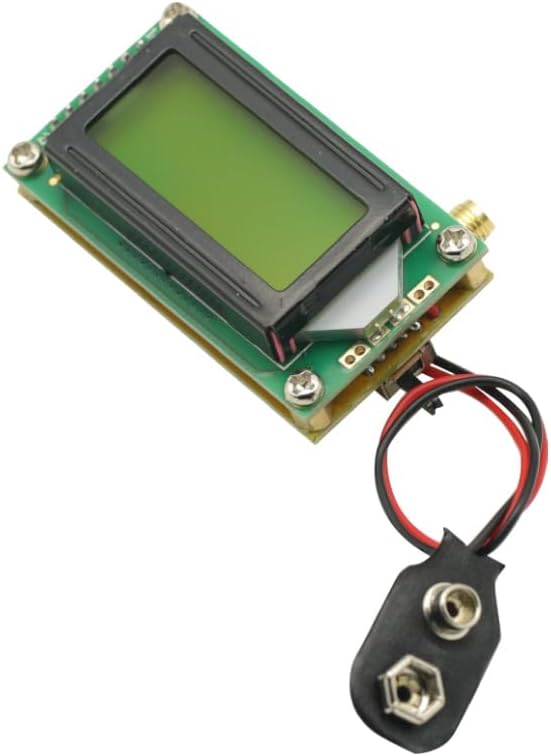
The Acxico module provides a basic frequency counting solution for those building custom test equipment. It uses an LCD display to show readings across a range of 1 to 500 MHz suitable for specific projects.
We may earn a commission when you buy through this link, at no additional cost to you.
Materials include PCB and FR4 which are standard for hobbyist electronics. The design prioritizes low cost making it accessible for experiments where high accuracy is not the primary concern.
Users should note that the decimal precision is limited compared to commercial standalone units. It is best used for general estimation rather than precise calibration or regulatory compliance checks.
This product is ideal for DIY enthusiasts who need a simple component for their own setups. It offers a straightforward way to integrate frequency checking into custom radio projects.
Compact PCB form factor allows integration into custom enclosures and builds.
Standard 0802 LCD provides clear numeric output for basic monitoring.
We may earn a commission when you buy through this link, at no additional cost to you.
This board offers a low-power solution for frequency measurement in ham radio kits. It features an LCD display for visual feedback and operates effectively within the 1 to 500 MHz range.
We may earn a commission when you buy through this link, at no additional cost to you.
Designed as a new component it is suitable for those building their own test tools or integrating it into larger systems. The emphasis on low power consumption helps extend battery life during portable use.
The functionality is basic without advanced calibration options or complex signal processing. It serves well for verifying oscillator outputs or checking simple RF signals in homebrew projects.
For hobbyists who need a straightforward board this unit provides essential capabilities. It is best suited for educational or experimental contexts where detailed data logging is not required.
Efficient design minimizes battery drain during extended measurement sessions.
Visual display ensures easy reading of frequency values without additional tools.
We may earn a commission when you buy through this link, at no additional cost to you.
The TinyGTC is a high-precision dual-channel counter featuring a built-in GPS-disciplined oscillator for exceptional stability. It achieves 40ps resolution for accurate frequency phase and time interval measurements essential for advanced RF work.
We may earn a commission when you buy through this link, at no additional cost to you.
Users can perform real-time charting and histograms directly on the device. The inclusion of SD card storage and SCPI remote control allows for long-running measurements and data analysis on computers.
This unit supports battery power making it fully portable for field use. The 4-inch touchscreen provides an intuitive interface for navigating complex settings and viewing detailed charts.
It is an ideal choice for serious engineers needing reference-grade performance. The advanced features justify the higher cost for those requiring precise calibration and comprehensive signal analysis.
Automatically locks to GPS for excellent long-term frequency stability without manual intervention.
Built-in FFT and FM deviation analysis supports deep signal inspection.
We may earn a commission when you buy through this link, at no additional cost to you.
Selecting the ideal frequency counter involves evaluating range accuracy and usability to match your operational needs effectively.
Ensure the device covers the bands you use most such as HF VHF and UHF. Check specific limits to confirm compatibility with your radio equipment.
Select units that span your required frequencies to avoid needing multiple tools.
Look for TCXO or GPSDO features that maintain precision despite temperature changes. High accuracy is vital for regulatory compliance and signal clarity.
Prioritize models with temperature compensation for reliable field results.
A clear display ensures easy reading during field operations. Touchscreens offer more flexibility while physical buttons remain reliable in gloves.
Choose an interface that fits your comfort level and environment needs.
Battery power and compact designs are essential for field testing. Ensure the unit is light enough to carry easily between sites.
Select handheld models with long battery life for mobile use.
Built-in CTCSS and DCS decoders help identify specific sub-audible tones. This simplifies channel identification during complex operations.
Ensure decoder availability if you work with private or sub-band channels.
Consider extras like signal generators spectrum analysis or USB logging. These tools expand utility beyond simple frequency counting.
Assess whether added functionalities justify the extra cost for your workflow.
Durable materials protect the device during transport and use. Check for warranty support to ensure long-term reliability.
Invest in units with solid construction and clear warranty terms.
Prices vary widely based on features and precision. Balance your needs with cost to find the best value.
Compare options within your budget to maximize performance per dollar.
Connect the device to a power source or ensure the battery is charged before starting. Place the antenna near the signal source while avoiding direct high-power outputs to prevent damage.
Use the range selector to choose the appropriate band for your test. Press the button to lock in the reading and verify the signal strength indicator is active.
After use store the unit in a protective case to prevent physical damage. Keep firmware updated if the device supports it to maintain accuracy and features.
Most operators need coverage from 2MHz to 3000MHz to handle HF VHF and UHF bands effectively. Ensure your model supports all bands you plan to monitor or transmit on regularly.
Yes a Temperature Compensated Crystal Oscillator helps maintain accuracy when temperatures fluctuate. Without it readings may drift significantly in extreme weather conditions.
Advanced models support digital modes including DMR and packet data. Basic counters may only handle continuous wave analog signals so check specifications for digital support.
Avoid connecting directly to high-power antenna outputs. Use attenuators if measuring strong signals to protect the internal components of the meter.
Spectrum analyzers provide visual signal distribution but are often pricier. Counters give precise frequency readings quickly which may be sufficient for many ham radio tasks.
Regularly update firmware and check battery health. Keep the antenna clean and store the device in a dry environment to preserve sensor accuracy.
The FC-2800M offers the best balance for ham radio users with reliable decoders and high accuracy. Budget-conscious buyers may prefer the SF401 Plus for its wide range and portability.
Prioritize units with TCXO or GPSDO if you need extreme precision for calibration. Ensure the device supports your required frequency bands and digital modes before purchasing.
Check current stock and pricing on Amazon as these details change often. Choosing the right tool ensures accurate signal analysis for your radio operations.