
10Gb PCIe NIC Network Card
4.5Editor score
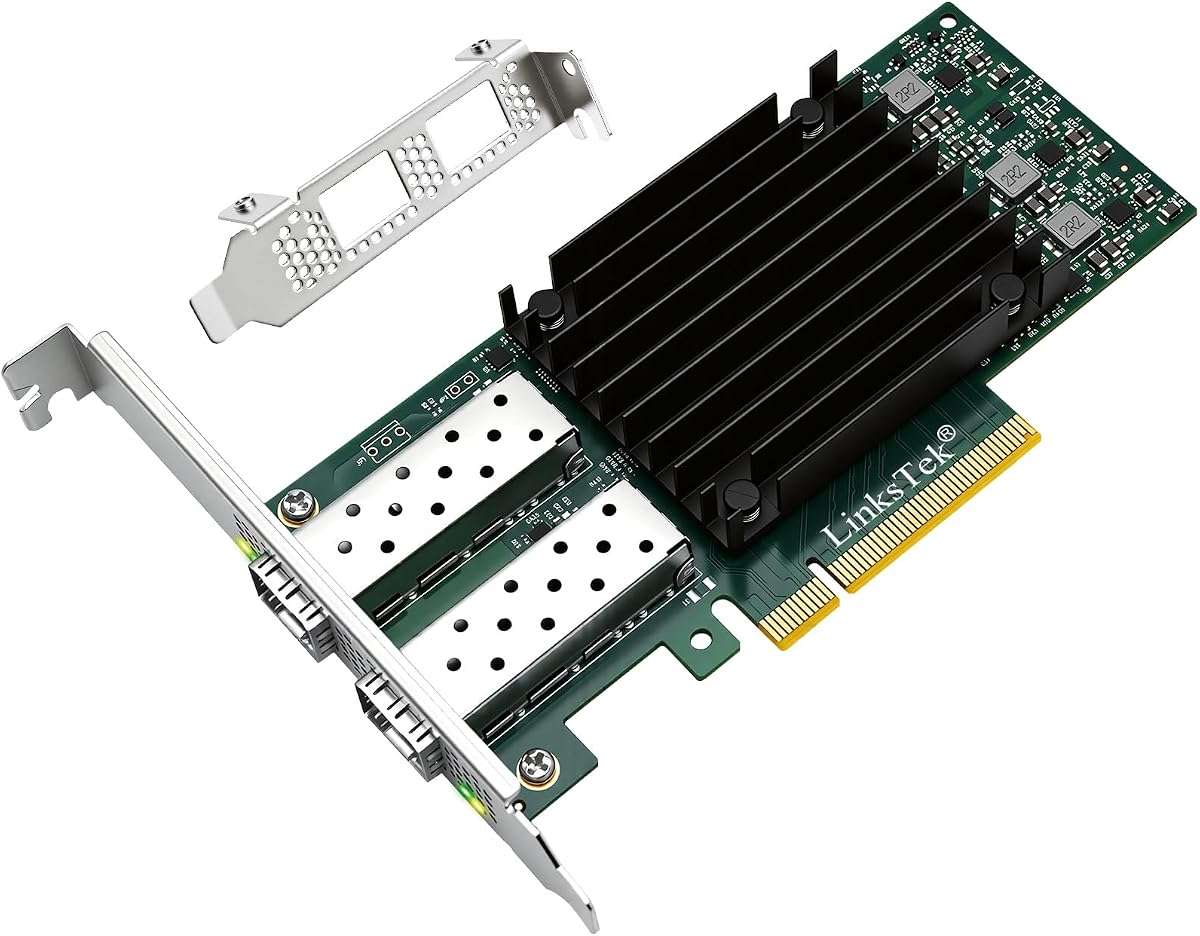
Intel 82599EN Silicon
No Vendor Lock In
Plug And Play Linux
This guide compares the top ten fiber optic network interface cards for enterprise servers and home labs, focusing on speed, compatibility, and value for
Finding the right fiber optic network interface card is essential for modern networking needs. These cards enable high speed data transfers over long distances with minimal signal loss. Choosing the correct model ensures your server or desktop can handle demanding workloads efficiently.
We have analyzed ten top models based on chipset quality, port configuration, and system compatibility. Each option offers unique strengths for data centers, home labs, or professional workstations. Our list covers a range of speeds from one gigabit to twenty five gigabit Ethernet solutions.
Each pick highlights key specifications and real world performance traits. Prices fluctuate often so always verify current offers before purchasing. This guide helps you match the right network interface to your specific infrastructure requirements and budget constraints.
4.5Editor score
4.9Editor score

5.0Editor score
This table provides a quick side by side overview of all ten selected fiber optic network interface cards. Compare their core specifications like controller chipset, interface speed, and port count to find the best fit for your hardware.


The StarTech 2-Port GbE SFP Network Card stands out as a top choice for stable enterprise connectivity. Rated 5.0 stars it offers high performance through its Intel I350 series chipset. This card is perfect for adding open SFP slots to desktops or servers without sacrificing speed.
We may earn a commission when you buy through this link, at no additional cost to you.
Its main strength lies in the Intel I350-AM2 chipset which supports advanced offloading features like TCP UDP and link aggregation. The unlocked SFP slots work with any MSA compliant modules allowing flexibility in choosing fiber or copper direct attach cables. Additionally it includes LED indicators for easy status monitoring during troubleshooting.
While it lacks multiple high speed ports the card ensures sustained performance via a built-in heatsink. Low profile brackets included make it suitable for smaller server cases. It supports IPv4 IPv6 and virtualization technologies making it a solid investment for managed networks.
This card is ideal for IT administrators needing reliable gigabit fiber connectivity. If you require a stable card with broad OS support this model delivers. Check current availability before purchase to ensure stock.
The unlocked SFP slots allow use with any Singlemode Multimode MSA compliant modules for diverse cabling needs.
Supports Intel Virtualization Technology including SR-IOV for efficient virtual machine network management in data centers.
We may earn a commission when you buy through this link, at no additional cost to you.
This LinksTek X520 DA1 adapter brings 10GbE speeds to NAS and desktop setups at a budget friendly price. It uses the Intel 82599ES controller ensuring stable LAN and SAN connectivity. The design is ideal for gaming and high speed storage applications without expensive proprietary hardware.
We may earn a commission when you buy through this link, at no additional cost to you.
Key features include support for Intel Virtualization Technology with VMDq and SR-IOV. It supports 10GbE SFP+ transceivers or direct attach cables for flexible cabling. The PCIe x4 interface fits x4 x8 and x16 slots while the included brackets suit different chassis sizes.
Note that Windows 11 requires driver installation while Windows Server detects it automatically. It does not support hot swapping so shut down the system before installation. Despite this the performance matches more expensive Intel branded cards significantly.
Perfect for budget conscious users needing 10 gigabit throughput. Install drivers carefully on non server Windows versions to avoid issues. Verify module compatibility before adding transceivers.
Features flexible port partitioning and traffic management to optimize network performance for virtualized environments.
Supports iSCSI and FCoE protocols enabling reliable storage over Ethernet for network attached storage systems.
We may earn a commission when you buy through this link, at no additional cost to you.
The Asus XG-C100F adapter delivers blazing fast 10Gbps speeds with a sophisticated aluminum heatsink design. It supports fiber optic technology for high speed transmissions over greater distances than copper. This makes it suitable for workstations needing reliable long haul data transfers.
We may earn a commission when you buy through this link, at no additional cost to you.
Its built-in QoS technology automatically prioritizes bandwidth for important streams or games. The SFP+ cage accommodates both fiber optic and direct attach copper connections. This dual mode capability adds flexibility to network configurations without requiring extra adapters.
Operating temperature ranges are standard at 0 to 40 degrees Celsius. Storage temperature extends from 40 to 60 degrees allowing use in diverse environments. The aesthetic design matches premium PC builds better than generic industrial cards.
Ideal for users wanting 10 gigabit speeds with a visually appealing card. The heatsink helps manage thermal output during intense tasks. Ensure your case has adequate airflow to maintain peak performance.
The aluminum heatsink maintains cool temperatures during high performance tasks for consistent 10Gbps throughput.
QoS technology boosts bandwidth for critical applications reducing lag during gaming or video streaming sessions.
We may earn a commission when you buy through this link, at no additional cost to you.
This 10Gtek card is equipped with the original Intel 82599EN controller ensuring stable server operation. It supports I/O virtualization making servers more reliable for virtual environments. The single SFP+ port connects to 10 Gigabit modules DAC or AOC cables for data center needs.
We may earn a commission when you buy through this link, at no additional cost to you.
A low profile bracket and full height bracket are included for easy installation in small form factor cases. It supports 10G speeds but not lower rates like 2.5G or 5G. The PCIe X8 lane ensures sufficient bandwidth for full duplex 10G throughput.
Note that Win10 drivers must be set correctly for Win11 compatibility. Users should contact support before purchasing if using QNAP or Synology systems. The 3 year warranty offers peace of mind for long term deployments.
Best for users needing a straightforward 10G card with original Intel silicon. Verify driver installation steps for your specific OS. Contact the vendor for NAS system compatibility inquiries.
The Intel 82599EN controller supports I/O virtualization to improve performance in multi VM environments.
Included brackets allow installation in both standard ATX towers and low profile server chassis.
We may earn a commission when you buy through this link, at no additional cost to you.
This 10G SFP+ PCIe Network Card features the Realtek RTL8127 controller with exclusive RealWoW technology for stability. It supports wake up and diagnostics functions enhancing data transmission reliability. The PCIe Gen4 x1 design is operable in x1 x4 x8 and x16 slots for wide compatibility.
We may earn a commission when you buy through this link, at no additional cost to you.
It supports up to Linux Kernel 6.15 and Windows 10 11. The single SFP+ port supports 10G SFP modules DAC or AOC cables. IEEE 802.1Q VLAN tagging helps adapt to complex network environments easily.
Drivers can be downloaded quickly by scanning the QR code on the NIC. It is not compatible with FreeBSD ESX or ESXi systems so check OS requirements carefully. The dual brackets suit both standard and low profile cases.
Great for modern systems needing PCIe Gen4 bandwidth. Verify your Linux kernel version before purchase for driver compatibility. Use the included QR code for streamlined driver installation.
RealWoW technology enhances wake up and diagnostics for remote system management and energy efficiency.
The x1 interface fits seamlessly into larger slots like x4 x8 or x16 ensuring versatile motherboard support.
We may earn a commission when you buy through this link, at no additional cost to you.
This card uses genuine Intel 82599EN silicon offering sustained 10 Gigabit throughput. Unlike branded Intel cards it does not lock out third party SFP+ modules. This vendor free approach saves money on transceivers while maintaining stability for NAS and VM migration.
We may earn a commission when you buy through this link, at no additional cost to you.
It works with Proxmox TrueNAS Unraid and ESXi without extra driver steps. Windows users install the Intel Ethernet Adapter Complete Driver Pack. The four PCIe lanes fit any x4 x8 or x16 slot leaving board space free.
The passive heatsink runs warm so case airflow is essential. Jumbo frames up to 9KB and checksum offload run in hardware. This ensures high efficiency for large data transfers without CPU overhead.
Perfect for homelab enthusiasts wanting brand quality without the brand tax. Ensure your case has good airflow to cool the passive heatsink. Verify OS compatibility for plug and play functionality.
Supports third party DAC twinax AOC and optics without rejecting non branded modules.
Detects immediately by Proxmox TrueNAS and ESXi requiring no complex driver configuration steps.
We may earn a commission when you buy through this link, at no additional cost to you.
The CX4121A adapter delivers dual 25GbE speeds using a Mellanox ConnectX-4 Lx controller. It offers a cost-effective flexible solution for cloud and data analytics platforms. The PCIe Gen 3.0 x8 interface ensures enough bandwidth for both ports simultaneously.
We may earn a commission when you buy through this link, at no additional cost to you.
It supports RDMA over RoCE and advanced virtualization protocols like NVGRE and VXLAN. Auto negotiates to x4 or x8 lanes and switches between Gen 3.0 and Gen 2.0 standards. Windows and Linux systems are supported including VMware environments.
SFP28 transceivers and DAC cables are required for full performance. It is a drop-in alternative for MCX4121A-ACAT server applications. Verify your switch supports 25GbE before purchasing this high speed card.
Ideal for users needing top tier throughput in storage servers. Ensure your infrastructure supports RDMA protocols to utilize all features. Check switch compatibility for 25G speeds before installation.
Supports RDMA over RoCE to offload data movement and reduce CPU load during transfers.
Advanced support for NVGRE VXLAN and GENEVE enables flexible virtual network configurations.
We may earn a commission when you buy through this link, at no additional cost to you.
This fiber optic network card comes with an included multimode optical module making it ready to use out of the box. It uses the stable 82599EN chip for low latency and efficient data transmission. The PCIe x1 interface ensures compatibility with smaller slots.
We may earn a commission when you buy through this link, at no additional cost to you.
Gold plated fingers reduce hardware contact faults and improve service life. The adapter supports single mode multimode modules AOC and DAC cables. It adapts transmission rates automatically to match half or full duplex modes.
Compatible with Windows Linux VMware and various server systems. Installation is plug and-play simple with full and low profile brackets included. Note that this card is not compatible with legacy PCI slots.
A great value option for those needing a complete package immediately. Verify the module type matches your existing fiber cables. Check physical slots to ensure PCIe x1 availability.
The package includes one multimode optical module saving immediate costs for initial setup.
Gold plated connectors prevent oxidation and reduce connection faults for long term stability.
We may earn a commission when you buy through this link, at no additional cost to you.
While not fiber based this TX401 adapter delivers 10 Gbps speeds using standard copper cabling. It is backwards compatible with 10 5 2.5 and 1 Gbps speeds ensuring versatile networking. A 1.5m CAT6A Ethernet cable is included to maximize performance.
We may earn a commission when you buy through this link, at no additional cost to you.
QoS technology prioritizes gaming traffic to avoid network congestion. The low profile bracket supports mini tower computer cases easily. It supports Windows 10 and Linux for wide compatibility across environments.
A 2-year warranty and free 24/7 technical support provide reliable service. However the RJ45 port limits distance compared to fiber options. For short runs this is a convenient and reliable choice.
Best for users preferring copper over fiber for cost and ease. Ensure your router or switch supports 10GBase-T. Verify cable quality for stable 10G performance.
A 1.5 meter CAT6A Ethernet cable is provided rated for up to 10 Gbps speeds.
QoS technology prioritizes traffic for gamers to ensure smooth online gameplay experiences.
We may earn a commission when you buy through this link, at no additional cost to you.
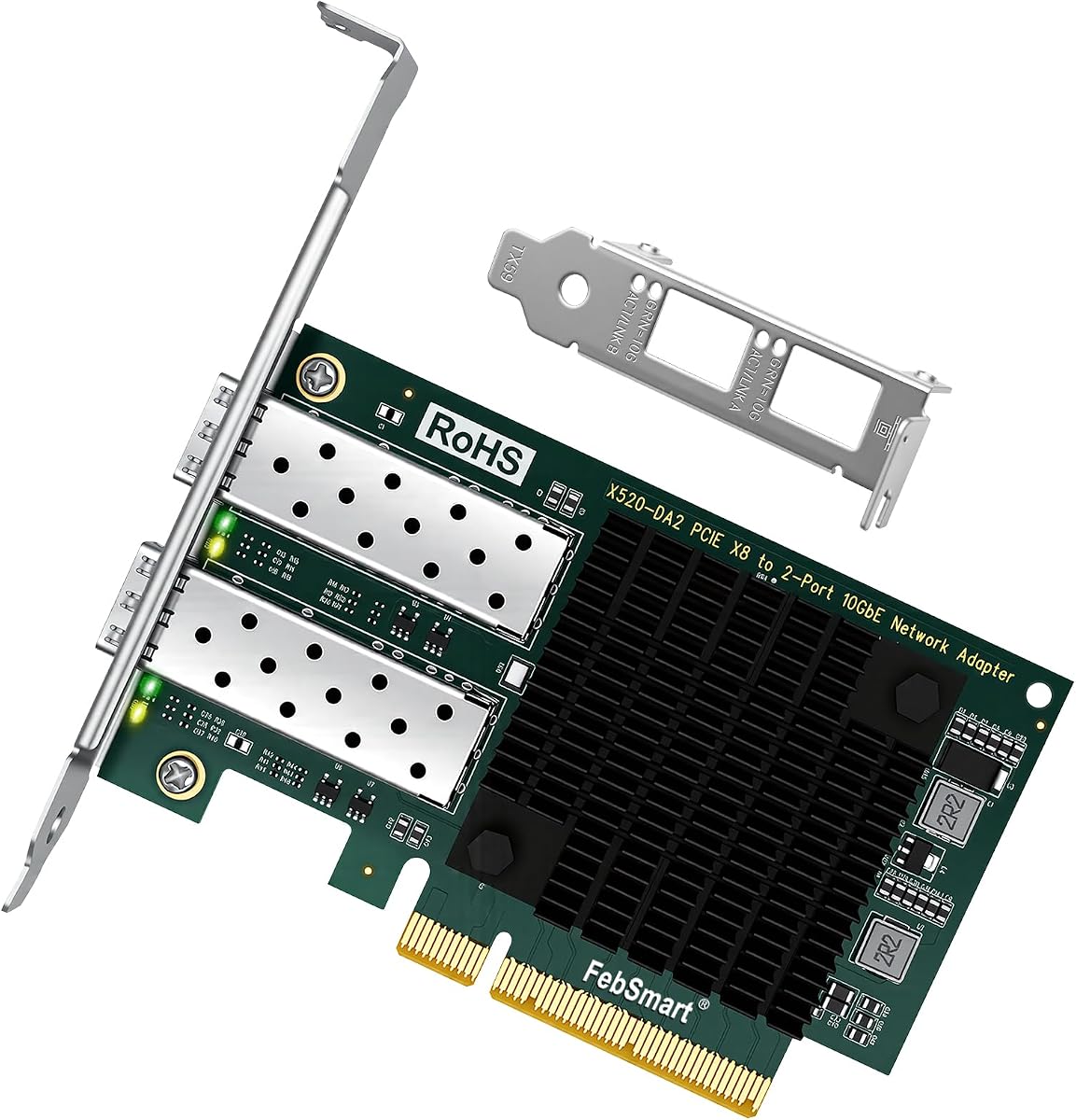
This FebSmart X520-DA2 provides two 10GbE SFP+ ports for robust LAN and SAN connectivity. It uses the Intel 82599ES dual controller for stable desktop and server performance. The PCIe 2.0 x8 interface delivers 40Gbps total bandwidth for full duplex 10Gb/s.
We may earn a commission when you buy through this link, at no additional cost to you.
It supports Intel Virtualization Technology for Connectivity including VMDq and SR-IOV. VLAN tagging and traffic management are supported for efficient network segmentation. Windows Server detects it automatically but desktop Windows requires driver installation.
SFP+ transceivers must be used with LC fiber or DAC/AOC cables. The dual brackets allow compatibility with standard and low profile PCs. Linux support is extensive including RHEL and Ubuntu LTS versions.
Ideal for workstations needing dual 10G links for redundancy. Ensure switches support 10GbE for optimal performance. Verify OS driver requirements before installation.
Two 10GbE ports provide link redundancy and failover capabilities for critical systems.
VMDq and SR-IOV features allow efficient network handling for multiple virtual machines.
We may earn a commission when you buy through this link, at no additional cost to you.
Selecting the right fiber optic network interface card involves understanding your speed needs and system compatibility.
Decide between single or dual ports based on redundancy requirements. Speeds range from 1GbE to 25GbE so match your switch capabilities.
Choose a card with enough ports for your current and future network expansion needs.
Intel and Mellanox chipsets offer stable drivers and broad compatibility. Realtek options may require more manual configuration.
Prioritize original silicon from known vendors for enterprise reliability.
Check driver availability for your specific OS version. Some cards need manual installation on newer Windows versions.
Linux compatibility varies so verify kernel support before purchasing.
Low profile brackets are essential for smaller server cases. Ensure your motherboard has enough PCIe lanes for the card.
Check physical dimensions to fit your computer chassis properly.
Confirm if the card includes SFP modules or requires separate purchases. Match the fiber type to your existing infrastructure.
Consider direct attach cables for shorter cost effective connections.
Look for SR-IOV and VMDq support if running virtual machines. This improves network performance in virtual environments.
Ensure your hypervisor supports the specific offload features.
A longer warranty indicates confidence in product durability. Check for accessible technical support channels.
Verify return policies in case of incompatibility.
Balance cost against needed features like dual ports. Premium cards offer better long-term stability.
Consider total cost including required transceivers and cables.
Install the card in a compatible PCIe slot ensuring it is fully seated. Power down the system and discharge static electricity before touching components.
Install the latest drivers from the vendor website. Connect fiber cables ensuring the LC connectors are securely locked in place.
Maintain proper airflow around the card to prevent overheating. Regularly check LED indicators for link status and activity signals.
Windows Server often has native drivers while desktop versions may need manual installation. Linux typically has kernel support but some cards require specific modules. Check the product page for supported versions.
Most cards do not include modules unless stated. Some packages offer an optical module as a bonus. Always verify product details to know what is included.
Fiber cards require optical transceivers or direct attach cables. You cannot use standard RJ45 copper cables without a specific DAC module. Ensure your cabling matches the port type.
Hot swapping is generally not supported for PCIe network cards. Always shut down your system before installing or removing hardware to avoid damage.
Fiber optic cables support much longer distances than copper. Single mode cables can reach up to 40km depending on the module used.
Check your motherboard manual for supported PCIe versions and lane counts. Most modern boards support the bandwidth needed for 10GbE.
High speed cards can reduce latency in gaming if your internet plan supports it. However they are mainly designed for data throughput in servers.
Multimode is for shorter distances while singlemode is for long haul. Ensure you match the transceiver to the cable type.
The StarTech 2-Port and LinksTek X520 DA1 offer excellent balance for most users. High speed options like the CX4121A serve demanding virtualization needs.
Prioritize chipset quality and OS support to ensure smooth operation. Check physical compatibility before ordering to avoid returns.
Prices and availability change often so verify current stock before purchasing. Confirming these details helps you make a confident network upgrade.