
Canon RF24-70mm F2.8 L IS USM Lens
4.8Editor score
Up to 5 stops image stabilization
Bright f2.8 aperture range
Nano USM autofocus system
Discover the top camera lens for product photography to capture crisp details. This guide compares ten leading lenses for sharpness, aperture, and versatility.
Choosing the right camera lens for product photography is essential for showcasing items with clarity and precision. A good lens ensures sharp details, accurate colors, and the right background blur to highlight your subject effectively.
We compared ten leading lenses based on optical quality, aperture range, build durability, and compatibility with various camera systems. Our analysis covers options for both professional studios and beginner setups to help you make an informed decision.
Each pick below highlights specific strengths like wide apertures, image stabilization, or affordable pricing for different needs. Keep in mind that prices and availability can change, so check current listings before making your final purchase.
4.8Editor score

4.7Editor score

4.8Editor score
The following table provides a side-by-side comparison of all ten selected lenses. Review the key specifications, image quality traits, and unique features to find the best match for your specific product photography workflow and camera body.




This Canon RF24-70mm F2.8 L IS USM Lens stands out as a top-tier zoom for product photography with its bright aperture and exceptional sharpness. Its high rating reflects the consistent quality delivered by the optical design and robust build. The lens offers great versatility for various product sizes without needing multiple glass changes.
We may earn a commission when you buy through this link, at no additional cost to you.
The key strength lies in the bright f2.8 aperture which allows for ample light intake and background separation. The optical image stabilization up to 5 stops helps ensure sharp images even when handholding. The Nano USM autofocus provides high speed and quiet operation critical for video reviews of products.
Honest trade-offs include the higher price tag compared to prime lenses and the larger physical size. These factors are acceptable for professionals needing a reliable workhorse that handles everything from small items to larger displays. The control ring adds direct setting changes enhancing workflow efficiency.
Professional photographers and serious enthusiasts should buy this lens for its versatility and optical performance. It is highly recommended for anyone using the Canon EOS R system who needs a high-quality standard zoom for product shoots.
The 24-70mm range covers wide angles for group shots and tighter framing for details.
Up to 5 stops of correction help in low light studio environments without a tripod.
We may earn a commission when you buy through this link, at no additional cost to you.
The Canon EF 50mm f/1.8 STM Lens is a classic choice for those starting in product photography on a budget. Its high rating confirms its popularity among users who appreciate its sharpness and speed. This lens delivers excellent image quality for its affordable price point making it accessible to many.
We may earn a commission when you buy through this link, at no additional cost to you.
Key strengths include the f1.8 aperture which allows great background blur and low light performance. The stepping motor delivers near silent continuous move servo AF ideal for smooth shots. It is compatible with many Canon DSLRs offering wide utility for existing camera users.
Trade-offs involve the APS-C crop factor which changes focal length on smaller sensors and the basic plastic build. These are acceptable given the low cost and high optical performance. It remains a staple for learning photography basics and capturing clean product shots.
Beginners and hobbyists should buy this lens for its ease of use and budget-friendly cost. It is perfect for those wanting to try prime lens photography without a significant financial investment.
The simple design helps photographers focus on composition and exposure basics.
The wide aperture creates a pleasing bokeh to isolate products from busy backgrounds.
We may earn a commission when you buy through this link, at no additional cost to you.
This Canon EF 75-300mm f/4-5.6 III Telephoto Zoom Lens is a budget-friendly option for capturing detailed shots from a distance. Its rating reflects user satisfaction with its reach and ease of use at a lower price. It is a renewed option that offers value for those needing a long focal length.
We may earn a commission when you buy through this link, at no additional cost to you.
The key strength is the 75-300mm range which allows for significant magnification of products without getting too close. The DC autofocus motor provides smooth operation and the improved mechanism makes zooming easier. Its small size and light weight make it convenient to carry around.
Trade-offs include the variable aperture which limits light intake at longer focal lengths and slower AF speed. These are acceptable for stationary product photography where speed is not critical. It serves well for specific close-up tasks on a tight budget.
Budget-conscious photographers and beginners needing a telephoto option should buy this lens. It is useful for capturing textures or small items from a distance without investing in expensive glass.
The 300mm end allows for close-ups without physical proximity to the subject.
The lightweight construction makes it easy to transport for on-site shoots.
We may earn a commission when you buy through this link, at no additional cost to you.
The EF 85mm f1.8 Portrait Lens – MF is a fully manual focus lens designed for photographers seeking precise control. Its design focuses on creative freedom and learning value rather than automation. Users appreciate the superb image quality and charming bokeh provided by the rounded aperture blades.
We may earn a commission when you buy through this link, at no additional cost to you.
Key strengths include the fusion of hybrid aspherical lens technology and ultra multi-coating which reduces aberrations and glare. The smooth large focus ring and internal focus mechanism ensure quiet operation. The lens is compatible with a wide range of Canon EOS cameras offering versatility.
Trade-offs involve the lack of electronic contacts and autofocus which requires switching to manual mode. This may trigger no lens errors on some cameras requiring menu adjustments. These factors are acceptable for those wanting to refine their manual focus skills.
Photographers pursuing artistic control and learning photography basics should buy this lens. It is ideal for those willing to manually adjust parameters for every shot to achieve unique results.
Manual control allows for unique shots that autofocus might miss or overcorrect.
Works with many Canon Rebel and professional bodies for broad use.
We may earn a commission when you buy through this link, at no additional cost to you.
The Canon RF50mm F1.8 STM Lens is a compact fixed focal length lens designed for EOS R series cameras. Its rating highlights its popularity among mirrorless users for its versatility and quality. The lens delivers outstanding color balance while minimizing ghosting and flare.
We may earn a commission when you buy through this link, at no additional cost to you.
Key strengths include the large F1.8 aperture which enables low-light photography and creative background blur. The stepping motor provides smooth and quiet continuous AF during video recording. The control ring allows direct setting changes adding convenience during shoots.
Trade-offs include the fixed focal length which limits framing flexibility without moving physically. This is acceptable for many product photography setups where the position is controlled. It remains a top choice for general purpose shooting on R cameras.
Owners of Canon EOS R cameras should buy this lens for its balance of size, speed, and quality. It is a highly recommended everyday lens for product and general photography needs.
The gear-type STM ensures noise-free operation while recording product video clips.
Optimized coatings deliver accurate colors essential for faithful product representation.
We may earn a commission when you buy through this link, at no additional cost to you.
The Sigma 135mm F1.8 DG HSM ART is a state-of-the-art prime lens offering stunning compression and exceptional sharpness. Its handcrafted build in Japan ensures individual evaluation and high standards. The lens is ideal for portraits and event photography with creative control over imagery.
We may earn a commission when you buy through this link, at no additional cost to you.
Key strengths include the new large Hyper Sonic motor which delivers ample torque for outstanding focus speed. The dust and splash proof mount ensures performance in any condition. The large aperture allows for more creative control and event photography versatility.
Trade-offs involve the significant weight and high price which may limit portability. These factors are acceptable for professionals prioritizing ultimate optical quality and durability. It remains a top choice for high-end studio or location shoots.
Professional photographers seeking premium image quality should buy this lens. It is ideal for those needing a telephoto prime for detailed product shots with beautiful bokeh.
The handcrafted nature ensures each lens meets strict quality standards before shipping.
The large aperture helps isolate subjects against complex backgrounds effectively.
We may earn a commission when you buy through this link, at no additional cost to you.
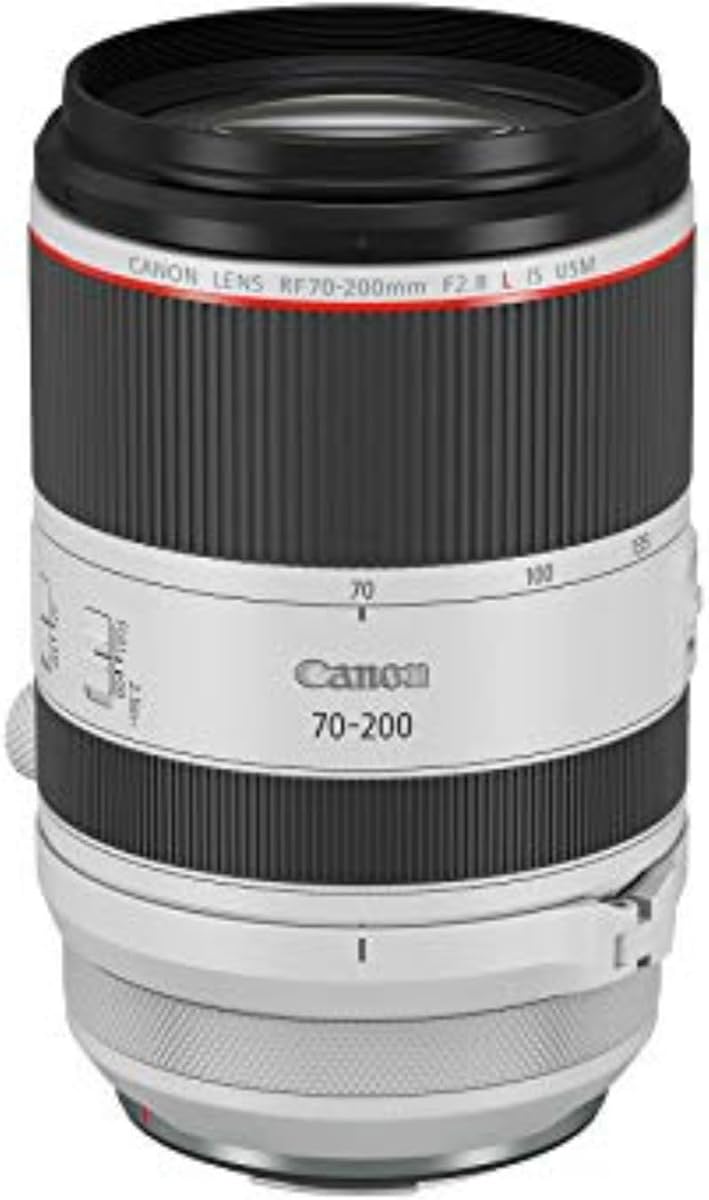
The Canon RF70-200mm F2.8 L IS USM Lens delivers high image quality in a compact and lightweight telephoto zoom design. Its rating reflects user satisfaction with its performance and usability. It is compatible with Canon Full Frame Mirrorless Cameras offering great versatility for professional shoots.
We may earn a commission when you buy through this link, at no additional cost to you.
Key strengths include the bright f2.8 aperture which is ideal for isolating products and low light work. The optical image stabilization with up to 5 stops provides excellent shake correction. The dual Nano USM autofocus ensures high speed, smooth, and quiet operation.
Trade-offs include the expensive price point and the requirement for an RF mount camera. These are acceptable for professionals needing a reliable telephoto zoom for studio or location use. It is a significant upgrade for EOS R users needing a premium lens.
Users of Canon EOS R cameras requiring a high-end telephoto zoom should buy this lens. It is recommended for serious photographers who need a reliable tool for demanding product photography.
The compact design makes it easier to handle for long shoots compared to older models.
Dual Nano USM provides rapid focus acquisition for time-sensitive product shots.
We may earn a commission when you buy through this link, at no additional cost to you.
The Xenvo Pro Lens Kit for iPhone and Android offers a wide and macro lens solution for smartphone photography enthusiasts. Its rating reflects user satisfaction with the clarity and accessories like the LED light. It is ideal for hobbyists and photography pros alike looking for mobile enhancements.
We may earn a commission when you buy through this link, at no additional cost to you.
Key strengths include the TruView wide angle lens capturing more picture without dark corners and the Clarus macro lens for precision focus. The TruGrip Lens Clip offers superior gripping power while the LED light provides continuous illumination for better results in darker settings.
Trade-offs involve its limited use to mobile devices only excluding DSLR compatibility. This is acceptable for those who only shoot with phones or want a quick option. It offers great value for mobile content creators needing versatile optics.
Mobile photographers and content creators should buy this kit for its versatility and ease of use. It is a great option for those who need a macro and wide lens for their phone.
Compatible with almost all phones allows for creative shots anywhere.
The built-in LED light helps avoid harsh shadows on small products.
We may earn a commission when you buy through this link, at no additional cost to you.
The Canon EOS Rebel T7 DSLR Camera Double Zoom Lens Kit is a complete setup for beginners looking to start product photography. Its rating highlights its value and ease of use for new users. The kit includes two lenses covering versatile focal lengths for different product types.
We may earn a commission when you buy through this link, at no additional cost to you.
Key strengths include the 24.1 Megapixel CMOS sensor providing high resolution detail. The improved Dual Pixel CMOS AF and eye detection AF assist in sharp focusing. Built-in Wi-Fi and NFC technology allow for easy image transfer and remote control options.
Trade-offs include the basic feature set compared to professional bodies and weight for travel. These are acceptable for those starting out with a budget. It remains a solid choice for entering the world of DSLR photography.
Beginner photographers should buy this camera kit for its all-in-one convenience and affordability. It is recommended for those who want to learn photography with versatile lenses.
The 18-55mm and 75-300mm lenses provide a wide range of focal lengths.
Wi-Fi and NFC simplify sharing product photos to social media quickly.
We may earn a commission when you buy through this link, at no additional cost to you.
The Canon EF 200mm f/2.8L II USM Telephoto Fixed Lens is a high-quality option for photographers needing a fixed focal length. Its rating reflects the consistent sharpness and build quality users appreciate. The lens construction features 9 elements in 7 groups for superior optical performance.
We may earn a commission when you buy through this link, at no additional cost to you.
Key strengths include the f2.8 aperture which is bright for a telephoto lens allowing for good light intake. The closest focusing distance of 1.5m provides decent flexibility. The L-series build ensures durability and reliability in various shooting conditions.
Trade-offs involve the lack of zoom which limits framing options without moving. This is acceptable for studio environments where camera position is static. It is a great choice for those prioritizing image quality over versatility.
Photographers seeking a robust fixed telephoto should buy this lens. It is highly recommended for professional use requiring precise optical performance and a fast aperture.
The 9 element design minimizes aberrations for crisp product details.
L-series standards ensure the lens withstands regular use without damage.
We may earn a commission when you buy through this link, at no additional cost to you.
Selecting the right camera lens for product photography involves considering factors like focal length, aperture, build quality, and camera compatibility to ensure your products look their best.
Focal length determines how close or far your product appears in the frame. Shorter focal lengths like 50mm provide a natural perspective while longer ones like 135mm offer compression for detailed shots. Choose based on your shooting space and the desired look.
Select a focal length that allows you to frame your product correctly without distortion or awkward angles.
A wide aperture like f1.8 or f2.8 allows for more light and background blur to isolate your product. This is crucial for professional looking shots that draw attention to the item. Narrower apertures offer more depth of field for product shots with multiple layers.
Prioritize lenses with bright apertures to maintain sharpness in low light and create depth.
Look for lenses with metal mounts and robust construction if you plan to use them frequently. Weather sealing helps protect against dust and spills which can occur in studios. A durable lens will last longer and maintain its optical integrity over time.
Choose a lens with a sturdy build to ensure it survives regular use and handling.
Ensure the lens mount matches your camera body such as RF for Canon mirrorless or EF for DSLRs. Using incompatible lenses can cause operational issues or reduced performance. Check the camera model list before purchasing to avoid fitment problems.
Verify compatibility with your specific camera model to guarantee proper function and autofocus.
Fast and quiet autofocus motors like STM or Nano USM are beneficial for video and stills. This ensures you do not miss shots due to focus lag. Manual focus lenses are great for creative control but require more time to adjust.
Look for smooth autofocus systems if you shoot video or need quick focus lock on products.
Balance the cost of the lens with the features you need for your photography style. Budget options often provide excellent optical quality without premium build features. Consider whether a kit or single lens offers better value for your specific needs.
Set a budget that allows for high optical quality while leaving room for other gear.
Optical image stabilization helps reduce camera shake especially at slower shutter speeds. This is useful for handheld product photography where tripods are not practical. Not all lenses have this feature so check if it is included for your chosen option.
Prioritize lenses with stabilization if you frequently shoot without a tripod or in low light.
Some lenses offer high magnification ratios which are essential for close-up product details. This allows you to capture textures and tiny features effectively. Standard zooms may require extension tubes for close focusing which affects image quality.
Select a lens with a close focusing distance if you need extreme detail in product shots.
To get the best results use a clean sensor and stable tripod to keep the product centered and steady. Adjust the aperture to balance depth of field with sharpness depending on your subject.
Clean the lens regularly with a soft microfiber cloth and air blower to remove dust and smudges. This ensures the glass remains clear and maintains optical performance over time.
Store the lens in a dry cool place with caps on both ends to prevent dust and moisture damage. Proper storage extends the lifespan of your equipment and ensures readiness for future shoots.
For most product photography a 50mm to 85mm lens offers a natural perspective with minimal distortion. Telephoto lenses like 100mm or more can provide compression for detailed shots. Your choice depends on your studio space and desired aesthetic.
Prime lenses often offer better sharpness and wider apertures which are ideal for detail focused work. Zoom lenses provide flexibility to adjust framing without moving. Many photographers prefer primes for consistency and zooms for variety.
Using an aperture between f5.6 and f11 often provides the best balance of sharpness and depth of field. Wider apertures like f1.8 create background blur while narrower ones keep the whole product in focus. Adjust based on your subject.
DSLR lenses can be used on mirrorless cameras with an adapter but native lenses perform better. Mirrorless specific lenses offer optimized autofocus and image stabilization. Always check compatibility before purchasing for your camera body.
Image stabilization is less critical when using a tripod which is common for product work. However it is helpful for handheld shooting or video where camera shake can occur. It provides extra safety for sharper images.
Use a soft air blower to remove dust and a microfiber cloth for fingerprints. Apply lens cleaner sparingly to the cloth rather than directly on the lens. Regular cleaning maintains clarity and protects the lens surface.
Smartphone lens kits are great for social media and casual content but lack the quality of dedicated cameras. They offer convenience but may not meet high resolution or detailed commercial needs. Consider them for budget entry or specific mobile tasks.
A fast aperture like f1.8 allows for better light control and background separation. This is useful for highlighting the product against a blurred background. It also helps in low light situations without a flash.
Choosing the right camera lens for product photography can transform the quality of your images and the success of your business. The top picks like the Canon RF24-70mm and the Canon EF 50mm offer versatile options for different budgets and setups.
Prioritize features like aperture speed and focal length to match your specific product types and studio environment. Investing in quality glass ensures sharp detail and professional results that clients and customers will appreciate.
Keep in mind that prices and availability change so verify current listings before making your purchase. Check the latest deals and reviews to confirm the lens meets your current needs before you buy.