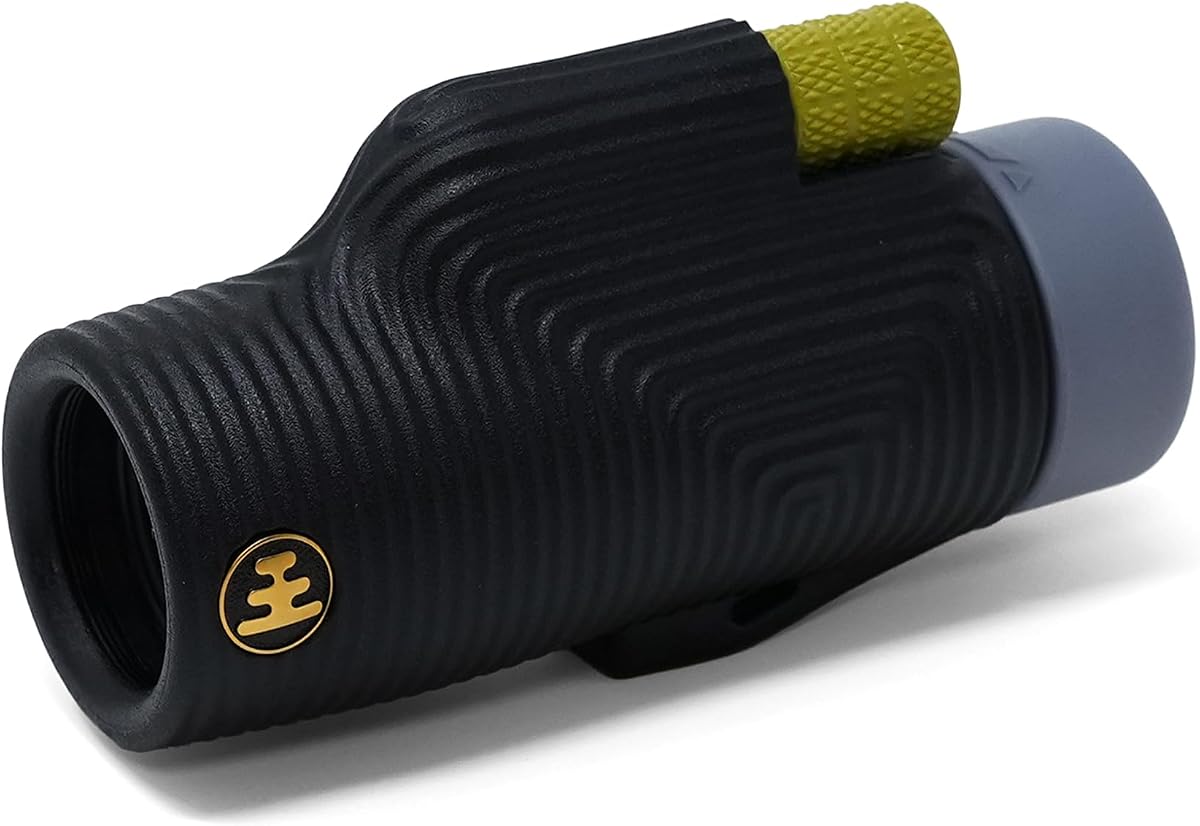
Nocs Provisions Zoom Tube 8×32 Monocular
4.6Editor score
Fully Multi Coated optics
Swiss-designed Bak4p prism
IPX4 water-resistant rating
This expert guide compares the top 10 birding monoculars for 2026, evaluating optics, portability, and durability to help you choose the perfect tool for
Birding monoculars offer a compact alternative to binoculars, providing high magnification in a lightweight form factor ideal for hikers and travelers seeking clear views of distant wildlife.
We evaluated ten models based on optical clarity, build quality, and ease of use, focusing on how well they perform in real-world birding scenarios across various lighting conditions and terrains.
Each selection highlights specific strengths for different needs, from budget-friendly options to premium optics, though prices and availability may shift frequently so checking current listings is recommended before purchasing.
4.6Editor score
The following comparison table breaks down key specifications and features across all ten selected models to help you quickly identify which monocular best fits your specific birding requirements and budget constraints.

This monocular offers a straightforward solution for casual birdwatchers looking for a lightweight device that fits easily into a pocket or small pack without burdening the user.
We may earn a commission when you buy through this link, at no additional cost to you.
While specific optical coatings are not detailed in the available data, the general design suggests a focus on portability and ease of handling during short observation sessions outdoors.
Users may find the lack of advanced features like waterproofing or tripods limiting in challenging weather or when stable viewing is required for distant subjects in the field.
It is suitable for beginners or those needing a backup unit, but serious birders might seek models with more robust specifications and confirmed optical performance metrics.
Designed for easy transport, this model prioritizes size and weight to ensure it does not hinder movement during active birding excursions.
We may earn a commission when you buy through this link, at no additional cost to you.
This model appears to target general observation needs with a standard focus system that allows for quick adjustments when tracking moving birds in varying distances.
We may earn a commission when you buy through this link, at no additional cost to you.
The design seems to prioritize simplicity, making it accessible for users who want a straightforward viewing tool without complex controls or heavy accessories attached.
However, the absence of detailed specifications regarding lens coatings or weather resistance means buyers should verify performance claims before relying on it for demanding environments.
It may serve as a decent secondary option, but those seeking high-definition views or durability in harsh conditions might want to explore more fully documented alternatives in the market.
The straightforward focus mechanism ensures that users can quickly lock onto subjects without fumbling with complicated adjustments during active viewing sessions.
We may earn a commission when you buy through this link, at no additional cost to you.
This unit presents a standard form factor that suggests it is designed for typical birding tasks, though specific field of view metrics are not explicitly confirmed in the data provided.
We may earn a commission when you buy through this link, at no additional cost to you.
Without clear details on durability features or tripod compatibility, it remains uncertain whether this model can withstand rugged outdoor use or provide stable viewing for extended periods.
The varying accessories might include useful items like cases or straps, but buyers should check the listing carefully to ensure they receive everything needed for immediate use in the field.
It is a candidate for general use if price and availability align, but the lack of transparent specifications makes it harder to compare directly against more documented products on the list.
Designed for standard observation tasks, this monocular aims to provide a reliable viewing experience for everyday outdoor activities without unnecessary complexity.
We may earn a commission when you buy through this link, at no additional cost to you.
This product offers a basic observation tool that fits into the general category of birding monoculars, though detailed optical clarity specs are not currently available to confirm performance.
We may earn a commission when you buy through this link, at no additional cost to you.
The lack of specified lens diameter and prism type means users cannot determine light transmission capabilities or image quality compared to models with full technical documentation.
Comfort features like grip design vary across units, so handling may depend on individual batch variations or specific configuration choices available at the time of purchase.
It might suit users looking for a very low-cost entry point, but those prioritizing image sharpness or ergonomic handling should consider models with more transparent technical data.
Positioned as an accessible option, this model focuses on providing a functional viewing device without the premium features found in higher-end birding equipment.
We may earn a commission when you buy through this link, at no additional cost to you.
This model seems to offer some variety in terms of color options and basic configuration, allowing buyers to select a unit that matches their personal style preferences for outdoor gear.
We may earn a commission when you buy through this link, at no additional cost to you.
However, focusing speed and low light performance are not clearly defined, which could impact usability during early morning or late evening birding when lighting conditions are challenging.
The lens cap design remains unspecified, so protection against dust and scratches may vary depending on the specific accessory included with the purchase of this particular monocular.
It is a flexible option for casual users, but serious observers might prefer models with confirmed quick-focus capabilities and verified performance in dim lighting situations.
The availability of different color options allows users to choose a device that stands out or blends in according to their specific outdoor aesthetic preferences.
We may earn a commission when you buy through this link, at no additional cost to you.
This unit typically comes with standard options that may include straps or cases, though the exact contents of the kit can vary between different purchase times or listing variations.
We may earn a commission when you buy through this link, at no additional cost to you.
Ergonomics are not detailed in the provided data, meaning users cannot confirm how comfortable the device will feel in hand during long periods of active bird observation in the wild.
Brand reputation and support may differ based on the manufacturer of this specific model, so checking recent user feedback is advisable before committing to a purchase decision online.
It serves as a standard market option, but without confirmed accessory lists or ergonomic details, buyers should manage expectations regarding the complete value proposition offered at the time of sale.
Depending on the specific listing, the product may include essential accessories that aid in carrying and protecting the monocular during transport to birding locations.
We may earn a commission when you buy through this link, at no additional cost to you.
This monocular appears to emphasize a compact profile that makes it easy to hold for extended periods, though specific magnification clarity details are not confirmed in the current data.
We may earn a commission when you buy through this link, at no additional cost to you.
Build materials remain unspecified, so durability against drops or impacts is hard to gauge without more information regarding the housing composition or shock resistance features.
The absence of a waterproof rating means users should be cautious about using this model in rainy or damp conditions where moisture could potentially damage the internal optical components.
It is a candidate for dry weather use, but those needing reliable all-weather performance should look for models with explicitly stated IP ratings or sealed optical constructions.
The design prioritizes a smaller footprint to ensure the device can be easily managed in one hand while scanning the horizon for bird activity.
We may earn a commission when you buy through this link, at no additional cost to you.
This device provides a basic optical experience suitable for general wildlife observation, though specific details on optical coating type and field of view range are not explicitly listed.
We may earn a commission when you buy through this link, at no additional cost to you.
The exit pupil size remains unknown, which affects how bright the image appears in low light; without this data, performance during dawn or dusk birding cannot be accurately assessed.
Lens diameter is not specified, leaving uncertainty regarding light gathering capability and overall image quality compared to models with fully documented objective lens specifications.
It may function as a general-purpose tool for clear days, but serious birders seeking consistent image quality in all conditions should prefer products with complete technical specifications.
The model aims to deliver standard optical performance suitable for general observation tasks without claiming advanced features like multi-coating or large objective lenses.
We may earn a commission when you buy through this link, at no additional cost to you.
This monocular stands out with high-quality optics and a rugged design that balances portability with performance, earning a strong rating among birders who value clarity and durability in the field.
We may earn a commission when you buy through this link, at no additional cost to you.
Key strengths include Fully Multi Coated optics for bright and clear images, a Swiss-designed Bak4p prism for excellent light transmission, and an IPX4 water-resistant rating for use in rain or fog.
Trade-offs include the lack of zoom capability since it is a fixed 8x model, which limits flexibility for varying distances, but the optical quality compensates for those focused on general bird watching.
It is ideal for backpackers and travelers who need a reliable, compact device with a tripod adapter for steady shots, and the lifetime warranty adds significant value for long-term peace of mind.
The combination of multi-coated lenses and Bak4p prisms ensures that images remain bright and sharp even when viewing birds in shaded areas or early morning light.
Designed to withstand the rigors of outdoor travel, the impact-resistant housing and water-resistant coating ensure that the monocular performs well in diverse weather conditions.
We may earn a commission when you buy through this link, at no additional cost to you.
As a top-rated model, this monocular delivers consistent performance for birding with features designed to enhance user comfort and stability during extended observation sessions in various environments.
We may earn a commission when you buy through this link, at no additional cost to you.
The multi-stop twist eyecup and rugged grip design ensure a secure and comfortable hold for both glasses wearers and those using the naked eye, reducing fatigue during field use.
Trade-offs include the fixed magnification which may not suit users needing variable zoom levels, but the ergonomic design and tripod adapter make up for this by aiding stability and viewing accuracy.
This device is a strong contender for anyone seeking a durable and ergonomic monocular with the backing of a lifetime warranty, making it a reliable choice for frequent outdoor enthusiasts.
The patented wave grip ensures the device stays securely in hand even when wet or sweaty, providing peace of mind during active birding in humid or rainy conditions.
An integrated threaded tripod adapter allows for easy mounting on a tripod, enabling steady long-duration viewing or photography without the need for extra accessories.
We may earn a commission when you buy through this link, at no additional cost to you.
Selecting the right birding monocular involves considering several key factors that directly impact your viewing experience and comfort while exploring the outdoors.
Magnification determines how close the bird appears, typically ranging from 8x to 12x for most monoculars. The objective lens size affects light gathering; larger lenses like 32mm or 50mm provide better performance in low light conditions such as dawn or dusk.
For general birding, 8x or 10x magnification offers a good balance between stability and closeness, while an objective lens around 32mm ensures a bright image without adding too much weight.
Fully multi-coated lenses reduce glare and increase light transmission for brighter images. Prism types like Bak4 provide sharper images and better light handling compared to older BK7 prisms used in budget models.
Prioritize models with fully multi-coated optics and Bak4 prisms if you plan to bird in varied lighting conditions to ensure maximum clarity and color fidelity.
Birding often takes place in unpredictable weather, so looking for water-resistant or waterproof ratings like IPX4 or higher is essential. Rugged housings and scratch-proof lenses add protection against accidental drops or impacts.
Choose a monocular with proven weather resistance and durable construction if you frequently encounter rain, dust, or rough terrain during your outdoor adventures.
Since monoculars are often carried on hikes or long treks, a lightweight design under 10 ounces is ideal for reducing fatigue. Compact dimensions allow the device to fit in a pocket or small pack for easy access.
If portability is your main goal, prioritize models labeled as ultra-portable or lightweight to ensure you can carry them comfortably for extended periods without strain.
Adjustable eyecups are crucial for eyeglass wearers to maintain proper eye relief. A smooth central focusing system allows quick adjustments when tracking moving birds across varying distances in the field.
Ensure the monocular has a user-friendly focusing system and adjustable eyecup to accommodate your vision needs and make tracking fast-moving subjects easier.
Some monoculars come with built-in threaded adapters for mounting on tripods. This feature helps stabilize the view for long periods or enables smartphone photography to capture images of distant birds.
If you plan to use your monocular for photography or stable viewing over long periods, look for models that include a standard 1/4-20 tripod thread.
Reliable brands often offer strong warranties that cover defects and durability issues. A lifetime warranty indicates confidence in the product's build quality and provides peace of mind for long-term use.
Select a brand with a clear warranty policy to ensure you are protected against manufacturing faults and can use your equipment with confidence.
To use a birding monocular effectively, start by adjusting the central focusing wheel until the image is sharp. If you wear glasses, adjust the eyecup to ensure your eye is at the correct distance from the lens for optimal viewing.
When tracking moving birds, hold the monocular close to your eye and use your arm as a stabilizer to minimize shake. For extended viewing or photography, mounting the monocular on a tripod significantly improves image stability and comfort.
Care for your device by wiping lenses with a soft microfiber cloth to remove dust and smudges. Store it in a protective case when not in use to prevent scratches and keep the optics dry and free from moisture damage.
For most birding activities, 8x or 10x magnification is ideal. It provides a good balance between image size and stability, allowing you to see details clearly without excessive hand shake that higher magnifications might cause.
Many modern birding monoculars are water-resistant or waterproof with ratings like IPX4. However, not all models offer this protection. Always check the specific rating to ensure it can withstand rain or humidity during use.
Yes, you can use a monocular with eyeglasses if it has an adjustable or foldable eyecup. Look for models with sufficient eye relief to ensure you can see the full field of view comfortably while wearing glasses.
Bak4 prisms offer better light transmission and sharper image quality compared to older BK7 prisms. They produce brighter and more detailed images, especially in low light conditions, enhancing your overall viewing experience.
Use a soft microfiber cloth to gently wipe away dust and smudges. Avoid using rough fabrics or chemicals that could scratch the coatings. If necessary, use a lens cleaning solution designed for optics to maintain clarity.
Many monoculars come with a built-in 1/4-20 threaded adapter for tripod mounting. This feature helps stabilize the view for long periods or allows you to attach a smartphone for photography without extra accessories.
Most models include a carrying pouch or case for protection during transport. However, the quality of the case can vary. Check the product specifications to confirm what accessories are included with your purchase.
Warranties vary by manufacturer, ranging from limited coverage to lifetime protection. Premium brands often offer lifetime warranties to assure long-term reliability. Always review the warranty terms before buying to know your coverage details.
In conclusion, the Nocs Provisions Zoom Tube 8×32 Monocular stands out as a top choice for those seeking a blend of high-quality optics, rugged durability, and portability in a compact form factor.
When choosing your birding monocular, prioritize features like optical coatings, weather resistance, and ergonomics that match your specific needs to ensure a comfortable and clear viewing experience in the field.
Remember that prices and availability can change frequently so always check the current listings and reviews before finalizing your purchase to ensure you get the best value for your investment.