
2Pcs Nano V3.0 Board ATmega328P/CH340G Chip Microcontroller Kit Compatible with Arduino IDE/PWM/SPI 5V 16M(USB C Port with 2Pcs USB Cable)
4.5Editor score
Dual board value pack
USB-C connectivity support
CH340G driver chip
This guide compares the top Arduino Nano Board options for 2026, evaluating performance, connectivity, and compatibility to help you choose the right microcontr
The Arduino Nano Board remains a staple for makers and engineers needing compact power. It offers versatile I/O pins and seamless IDE integration for prototyping and embedded projects. Selecting the right version depends on your specific project needs and budget constraints.
We analyzed ten leading Nano boards based on chip performance, connectivity options, and community support. Each product was evaluated for compatibility with the Arduino IDE and ease of use in various development scenarios. Our list covers classic ATmega models and newer ESP32 or Renesas variants.
Each pick highlights key specs, pros, and cons to guide your decision-making process. Prices fluctuate regularly so please verify current listings before purchasing. We aim to provide honest insights based on available data rather than personal testing claims.
4.5Editor score
4.6Editor score

4.6Editor score
The following table provides a side-by-side comparison of all ten products. It highlights key specifications like microcontroller type, connectivity options, and unique features to help you quickly identify the best fit for your needs.


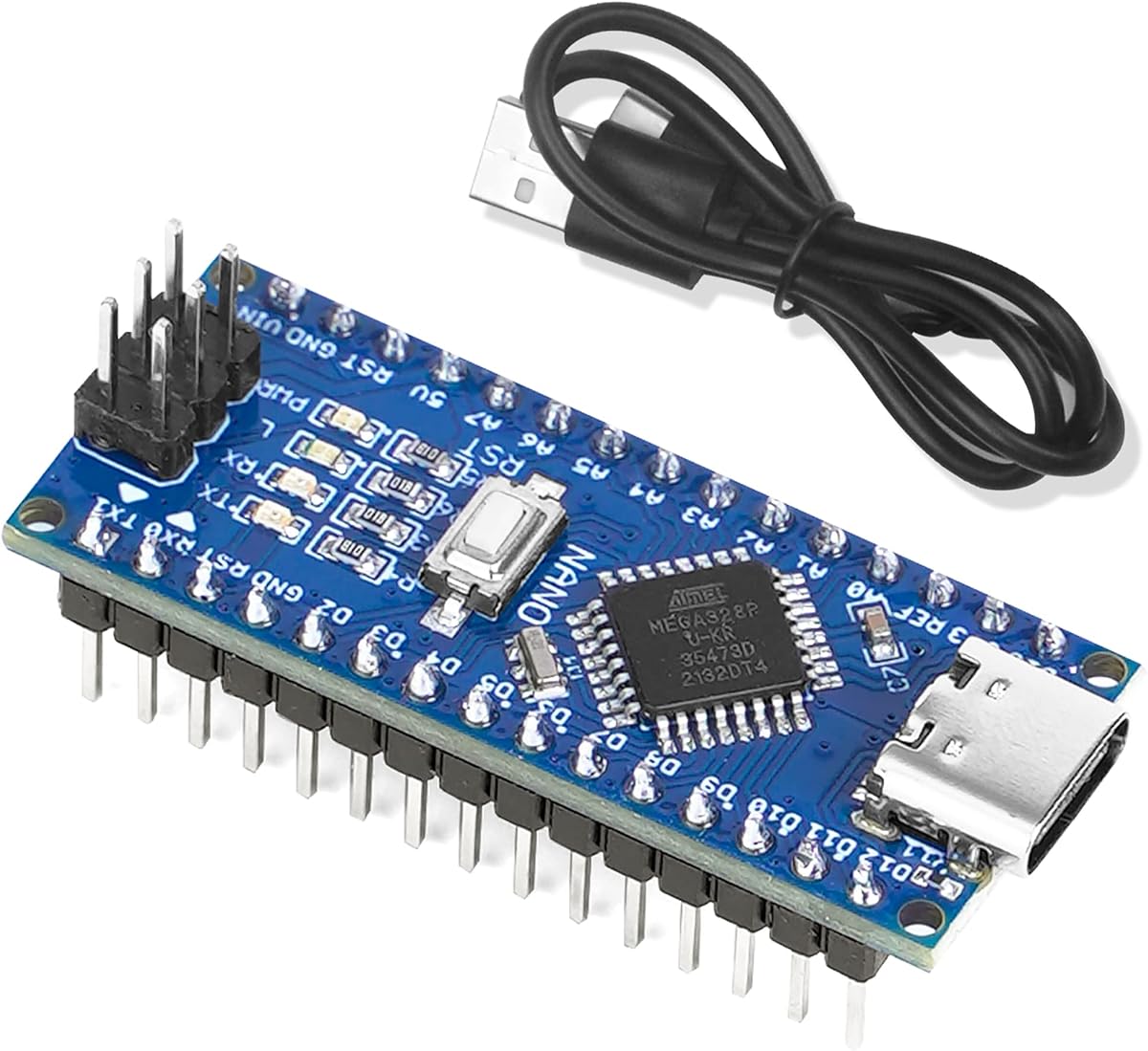
The LAFVIN Nano V3.0 offers exceptional value with a three-pack of boards featuring the classic ATmega328P chip. It maintains compatibility with the Arduino IDE while utilizing the CH340G USB driver for seamless connectivity across operating systems.
We may earn a commission when you buy through this link, at no additional cost to you.
This board is designed for makers who need multiple units for different projects without breaking the bank. The inclusion of USB-C ensures modern connectivity standards are met. It supports ISP programming and provides reliable power management through its onboard voltage regulator.
While cost-effective, it is a third-party clone which means manufacturing consistency can fluctuate between batches. However, the majority of users report stable performance for typical sensor and motor control tasks.
Buyers looking for a cost-efficient solution for bulk projects or classrooms should consider this kit. It provides all necessary features for standard prototyping work while keeping costs minimal per unit.
The USB-C port allows for reversible connection and better durability compared to older micro-USB designs found on previous clones.
Replacing the older FT232RL with CH340G simplifies driver installation on modern Windows systems while maintaining Linux and macOS compatibility.
We may earn a commission when you buy through this link, at no additional cost to you.
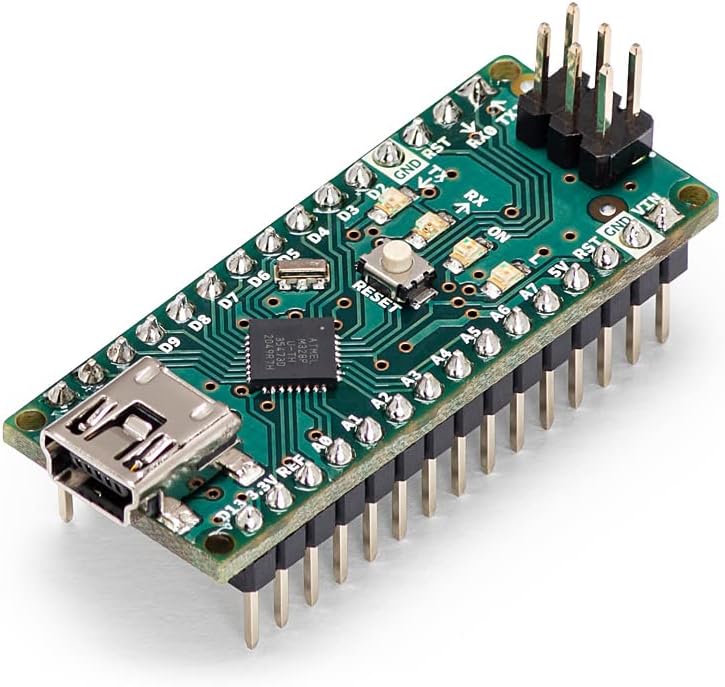
This official Arduino Nano remains the gold standard for reliability and community support. It features the trusted ATmega328P chip and works flawlessly with the Arduino IDE and its vast ecosystem of libraries and examples.
We may earn a commission when you buy through this link, at no additional cost to you.
Users appreciate the consistent quality control that comes with purchasing directly from Arduino. The board is widely compatible with shields and accessories due to its standard pinout layout. It offers robust performance for robotics, IoT prototypes, and educational projects.
The main drawback is the use of the older micro-USB port which is less durable than modern USB-C alternatives. Additionally, the price is higher than third-party clones which may deter budget-conscious buyers.
This board is ideal for professionals or students who need guaranteed compatibility and long-term support. It is a safe choice for projects where reliability is more important than saving a few dollars.
As an official product, it receives priority support from the Arduino community ensuring tutorials and code examples always work as expected.
The standardized layout allows for easy stacking of Arduino shields expanding capabilities without complex wiring solutions.
We may earn a commission when you buy through this link, at no additional cost to you.
ELEGOO provides a highly convenient kit with three presoldered Nano boards that include USB-C cables. This setup eliminates the need for soldering headers making it perfect for rapid prototyping and beginners.
We may earn a commission when you buy through this link, at no additional cost to you.
The presoldered headers ensure immediate plug-in readiness which reduces setup time significantly. The inclusion of USB-C cables means you can start coding and uploading sketches without purchasing additional accessories.
Like the standard V3.0 clone this board lacks advanced wireless features but excels in wired applications. The build quality from ELEGOO is generally consistent and highly regarded in the hobbyist community.
This kit is an excellent choice for makers setting up multiple workstations or those who prefer working with solder-ready boards. It balances convenience and performance effectively for typical Arduino projects.
Pre-mounted headers allow immediate insertion into breadboards which is crucial for educational settings or time-sensitive prototypes.
Accessories like cables are included which simplifies the buying process and ensures all components are compatible.
We may earn a commission when you buy through this link, at no additional cost to you.
The Arduino Nano Every upgrades the classic formula with the ATmega4809 microcontroller offering more memory and better efficiency. It retains the familiar form factor but delivers improved performance for complex embedded applications.
We may earn a commission when you buy through this link, at no additional cost to you.
With 48KB Flash and 6KB SRAM this board handles larger codebases and data tasks more comfortably than the original Nano. The USB-C port ensures modern connectivity compatibility with contemporary computers and chargers.
Transitioning from older Nano boards is smooth as it maintains IDE compatibility. Some users note slight differences in peripheral handling due to the new chip architecture which may require minor code adjustments.
This board is recommended for projects needing more memory or processing headroom without moving to a larger form factor. It serves as a modern middle ground between legacy and high-end solutions.
The expanded RAM and Flash allow for more complex logic and data buffering which benefits advanced automation tasks.
The new architecture offers improved power management making it suitable for battery-powered projects requiring longer operation.
We may earn a commission when you buy through this link, at no additional cost to you.
The Arduino Nano ESP32 represents the cutting edge of the Nano family with integrated Wi-Fi and Bluetooth connectivity. Powered by the ESP32-S3 chip it offers substantial performance improvements over traditional AVR-based boards.
We may earn a commission when you buy through this link, at no additional cost to you.
Developers can program this board using the familiar Arduino IDE or switch to MicroPython for rapid prototyping. The dual-core processor handles multitasking and network communication simultaneously without impacting basic control tasks.
While powerful the board operates at 3.3V logic which differs from the 5V standard of classic Nano boards. This requires level shifters when interfacing with older 5V sensors or modules to prevent damage.
Buyers seeking advanced connectivity features should prioritize this board for IoT and wireless applications. It effectively bridges the gap between traditional microcontroller ease of use and modern smart device capabilities.
Native Wi-Fi and Bluetooth support eliminate the need for external shields reducing complexity in connected device projects.
MicroPython compatibility makes this board accessible for developers who prefer scripting languages over C++ for development.
We may earn a commission when you buy through this link, at no additional cost to you.
This kit offers two Nano V3.0 boards with USB-C ports providing essential features for hobbyist projects. The boards utilize the CH340G chip which simplifies driver installation on modern Windows operating systems.
We may earn a commission when you buy through this link, at no additional cost to you.
The boards support automatic power source switching meaning users do not need to jump external power inputs manually. This feature makes it easier to deploy boards in environments where USB power may fluctuate or be unavailable.
As a clone, the build quality may not match official standards but performance remains consistent for most tasks. It is an economical choice for those needing backup units or multiple nodes for distributed sensor arrays.
This product is suitable for budget-conscious makers who prioritize functionality over official branding. It delivers the core Nano experience with modern USB-C updates.
Automatic voltage detection simplifies wiring by removing the need for manual power selection jumpers on the board.
The CH340G chip is widely supported which reduces installation headaches compared to older USB-to-serial chips.
We may earn a commission when you buy through this link, at no additional cost to you.
A three-pack of USB-C compatible Nano boards provides ample inventory for large-scale prototyping or classroom labs. These boards mirror the functionality of the original Nano while offering modern connectivity convenience.
We may earn a commission when you buy through this link, at no additional cost to you.
The design includes an automatic power switch which reduces manual configuration effort when connecting external power. This makes the boards easier to manage in multi-board setups where power routing might be complex.
While not official, these clones maintain pin compatibility ensuring they work with standard shields and breakout boards. The CH340G chip ensures reliable serial communication provided drivers are installed correctly.
This set is a practical choice for educators or businesses needing multiple units at a low price point. It supports a wide range of projects from simple LED control to complex sensor integration.
Having three units allows for simultaneous development or testing of different project iterations without hardware sharing.
The reversible USB-C connector reduces wear on the port and simplifies cable management compared to older USB types.
We may earn a commission when you buy through this link, at no additional cost to you.
The Nano R4 introduces the Renesas RA4M1 microcontroller offering significant performance and memory upgrades. It maintains the compact Nano form factor while enabling advanced features like Qwiic connectivity and programmable LEDs.
We may earn a commission when you buy through this link, at no additional cost to you.
The pre-soldered headers allow for immediate breadboarding which speeds up the prototyping process. The programmable RGB LED helps in debugging by allowing users to set custom colors or states to indicate system status.
With 256KB Flash and 32KB RAM this board can handle complex code and large data sets efficiently. It runs on the familiar Arduino IDE ensuring existing code can often be adapted with minimal effort.
This board is ideal for developers looking to move beyond legacy AVR limitations without switching to a completely different platform. It offers a modern blend of performance and ease of use.
The integrated Qwiic connector simplifies I2C sensor connections allowing for quick and reliable cable-free interfacing.
The RGB LED can be programmed to show status changes providing immediate visual feedback during development.
We may earn a commission when you buy through this link, at no additional cost to you.
This variant of the Nano R4 offers the same powerful Renesas RA4M1 chip but arrives without pre-mounted headers. It is designed for users who want to solder pins themselves or mount the board directly onto a custom PCB.
We may earn a commission when you buy through this link, at no additional cost to you.
The castellated edges enable surface mounting which is perfect for embedded systems where space and height are constrained. This option gives more control over how the board is integrated into a final device design.
It comes with loose male header pins for standard breadboarding if soldering is preferred for prototyping. The included Qwiic connector ensures modern sensor connectivity remains available regardless of mounting choice.
This board suits engineers or hobbyists comfortable with soldering tools who need customized integration options. It provides the same core capabilities as the soldered version but with greater flexibility.
Castellated edges allow direct soldering onto PCBs which is ideal for compact custom device development.
Users need soldering skills to attach headers which might not be suitable for absolute beginners or quick setups.
We may earn a commission when you buy through this link, at no additional cost to you.
The OSOYOO Nano Module provides a budget-friendly entry point into the Arduino ecosystem. It features the trusted ATmega328P chip and supports USB-C power which aligns with modern connectivity standards.
We may earn a commission when you buy through this link, at no additional cost to you.
This board supports automatic power source switching meaning users can switch between USB and external power without jumpers. It is fully compatible with Windows, Mac, and Linux operating systems for seamless development.
Its compact footprint makes it easy to fit into tight spaces where larger controllers would not fit. Despite being a third-party clone it maintains functional compatibility with standard Arduino libraries.
This module is best for single project use or hobbyists needing a reliable clone without paying for official branding. It offers the essential Nano experience at a very accessible price point.
The smaller footprint allows for integration into tight enclosures or space-constrained prototypes.
Automatic voltage detection simplifies power management which reduces wiring complexity during setup.
We may earn a commission when you buy through this link, at no additional cost to you.
Choosing the right Arduino Nano Board involves evaluating microcontroller capabilities connectivity options and compatibility requirements. This guide outlines key factors to help you make an informed decision.
The microcontroller defines the board's processing power memory and peripheral support. Classic Nano boards use the ATmega328P which is sufficient for most tasks. Newer models like Nano Every or R4 offer better performance and memory for complex applications.
For simple projects choose ATmega328P boards but for advanced logic consider Nano Every or R4.
Connectivity ports affect how you power and program the board. USB-C offers reversible plugs and better durability. Older Mini-USB ports are still common on official boards but may require specific cables.
Prioritize USB-C for future-proofing and easier cable management in modern setups.
Official Arduino boards guarantee quality and consistent support while clones from brands like ELEGOO or LAFVIN offer lower prices. Official boards may have better soldering and component reliability.
Choose official boards for critical projects and clones for casual or bulk prototyping needs.
Standard Nano boards lack built-in Wi-Fi or Bluetooth so external modules are required for wireless projects. The Nano ESP32 includes these features which simplifies IoT development significantly.
Select Nano ESP32 if wireless connectivity is a core requirement for your application.
Most traditional Nanos operate at 5V logic while newer ESP32 versions use 3.3V. Connecting 5V sensors to 3.3V logic can damage components without level shifters.
Check sensor voltage requirements carefully to ensure compatibility with your chosen board.
Flash memory stores your program and RAM stores temporary data. Larger code or data logging tasks require more space. The Nano Every and R4 provide significantly more memory than the original Nano.
Opt for models with higher memory if your project involves large data handling or complex algorithms.
All Nano boards share the same pin layout which ensures shield compatibility. This uniformity makes swapping boards easy without rewiring entire circuits.
This standard format simplifies upgrades and allows you to reuse existing shields and modules.
Some kits include USB cables or multiple boards which adds value. Others sell single boards requiring you to purchase cables separately. Presoldered headers also save significant setup time.
Look for complete kits if you need everything in one purchase to avoid extra costs.
Install the Arduino IDE on your computer and connect the Nano via USB. Ensure drivers are installed properly before attempting to upload code to the board.
Verify that the correct board and port are selected in the IDE menu. Upload a simple Blink sketch to confirm the board is functioning correctly.
For extended use keep the board in a dry cool environment. Avoid exposing it to excessive moisture or heat to maintain electronic integrity.
The main difference lies in the microcontroller. The classic Nano uses ATmega328P while Nano Every uses ATmega4809. The latter offers more memory and better performance while maintaining similar form factors and IDE compatibility.
Third-party Nano boards typically use the CH340G driver which may need installation on Windows. Linux and macOS usually detect them automatically. Drivers ensure your computer recognizes the serial port for uploading code.
Yes most Nano boards follow the standard pinout allowing them to work with standard Arduino shields. Ensure the voltage levels match especially when using newer 3.3V logic boards with older 5V shields.
USB-C is a newer standard offering better durability and reversible connection. Mini-USB is found on older or official boards. Newer models adopt USB-C to align with current technology standards.
Nano ESP32 is better for wireless projects because it includes built-in Wi-Fi and Bluetooth. It also offers a faster dual-core processor. However standard Nano is simpler and cheaper for non-wireless tasks.
You can power the Nano through the VIN pin using a 7 to 12 volt supply or the USB port. The onboard regulator manages voltage so you do not need external regulators for small projects.
We have reviewed ten distinct Nano options ranging from budget clones to high-end official boards. Each model serves specific needs whether for education IoT or professional embedded projects.
Prioritize official boards if you need guaranteed support and clones for cost-effective bulk purchases. For wireless needs the Nano ESP32 stands out as the top modern choice.
Prices and availability change frequently so please verify current listings on Amazon before purchasing. We hope this guide helps you find the perfect board for your next project.