
Professional 2/3-Way Stereo & 4-Way Mono Audio Crossover
4.3Editor score
Versatile stereo and mono modes
Independent output gain controls
Balanced XLR inputs and outputs
This guide compares ten audiophile active crossover options for precise frequency control and superior sound separation in home and professional audio systems.
Finding the right active crossover is essential for audiophiles seeking precise frequency separation and optimal speaker performance. These devices split audio signals into distinct bands, allowing each driver to operate within its ideal range for clearer sound.
We evaluated ten top-rated models based on build quality, flexibility, and sonic transparency. From analog purity to digital precision, our list covers diverse needs including studio monitoring, live sound, and high-fidelity home listening environments.
Each pick highlights specific strengths such as filter slopes, input options, and ease of setup. Keep in mind that availability and pricing may fluctuate, so verify current stock before making your final decision for your audio chain.
4.3Editor score

5.0Editor score

3.9Editor score
The following table provides a side-by-side comparison of all ten active crossover units. We highlight key specifications and operational modes to help you quickly identify the model that best fits your specific audio routing and processing needs.




The Marchand XM66 stands out as the premier choice for pure analog signal processing. With a perfect rating, it delivers unmatched transparency for audiophiles who refuse to compromise on signal integrity.
We may earn a commission when you buy through this link, at no additional cost to you.
Its fully analog architecture ensures zero digital artifacts while the digital display provides precise crossover frequency control. The availability of balanced inputs and outputs makes it versatile for high-end stereo systems.
While it is limited to 2-way configurations and requires a custom lead time, these trade-offs are acceptable for users prioritizing sonic purity over versatility. The robust construction ensures long-term reliability.
High-end stereo enthusiasts will find this crossover indispensable. Its ability to maintain signal fidelity through the crossover point makes it a top recommendation for critical listening environments.
The absence of digital conversion ensures that the audio signal remains pristine throughout the crossover process.
The digital display allows for exact frequency settings ensuring consistent performance across different speaker setups.
We may earn a commission when you buy through this link, at no additional cost to you.
This model offers exceptional value by providing versatile 2/3-way stereo and 4-way mono modes. It earns a strong rating for its ability to adapt to various audio environments from studios to live venues.
We may earn a commission when you buy through this link, at no additional cost to you.
The balanced XLR I/O ensures clean signal transmission over long cable runs. Independent gain and phase controls allow precise tuning of frequency bands for optimal system balance and sound quality.
While it lacks the refined filtering of audiophile-specific units it is highly effective for professional sound reinforcement. The rugged build handles the demands of touring and installation setups with ease.
Mobile audio professionals will appreciate this crossover flexibility and affordability. It provides the essential tools needed for clean frequency distribution without the premium price tag of high-end units.
Selectable modes allow users to switch between stereo and mono configurations depending on the specific audio setup.
Balanced XLR connections ensure noise rejection which is critical in live sound and installed PA environments.
We may earn a commission when you buy through this link, at no additional cost to you.
This crossover offers three distinct modes of operation including 2-way stereo 3-way stereo and 4-way mono. Its LED matrix provides immediate visual confirmation of the active mode for streamlined setup.
We may earn a commission when you buy through this link, at no additional cost to you.
The dedicated low-cut switch simplifies subwoofer management by blocking unwanted low frequencies. Phase reverse switches allow users to resolve polarity issues quickly without needing external test gear.
While designed primarily for PA systems the build quality ensures long-lasting durability. However audiophiles may find the filtering less precise compared to dedicated high-fidelity units.
Event planners and mobile DJs will find this unit practical for its ease of use. It ensures that sound is correctly routed to amplifiers enhancing overall system performance effectively.
The front-panel LED matrix instantly shows the active mode reducing setup time and potential configuration errors.
The low-cut switch protects drivers by filtering out infrasonic signals that can cause distortion or damage.
We may earn a commission when you buy through this link, at no additional cost to you.
This unit focuses exclusively on high-pass filtering for tweeters with a 2200Hz to 20kHz frequency range. It earns a top rating for its ability to protect drivers while delivering crystal-clear vocals and details.
We may earn a commission when you buy through this link, at no additional cost to you.
The use of premium capacitors ensures a smooth high-frequency roll-off that eliminates harshness. The heavy-duty inductor minimizes signal loss preserving the integrity of the audio signal throughout the passband.
While it is a simple one-way design it is highly effective for specific applications. It requires no soldering making installation quick and accessible for hobbyists with basic technical skills.
Anyone upgrading a car or home HiFi system with separate tweeters will benefit from this device. It greatly improves sound quality by ensuring tweeters only reproduce frequencies they can handle safely.
By blocking mid and low-frequency interference the crossover ensures that tweeters are never overdriven.
Premium components maintain signal quality ensuring that high-frequency details remain clear and natural.
We may earn a commission when you buy through this link, at no additional cost to you.
This processor is designed specifically for vehicle sound systems to optimize amplifier performance. It provides basic 2-way and 3-way splitting along with essential tools like remote bass control for enhanced convenience.
We may earn a commission when you buy through this link, at no additional cost to you.
The phase shift switch allows users to adjust subwoofer output relative to other speakers improving integration. Level adjustments enable precise tuning of speaker output to match different listening positions in a car.
While it lacks advanced features found in premium units it covers the essentials for car audio tuning. Users may find the control surface basic but it gets the job done for standard setups.
Car audio enthusiasts looking for an affordable way to manage subwoofer levels should consider this model. It simplifies the process of balancing front and rear speakers with a subwoofer.
The included remote bass control allows drivers to adjust subwoofer volume from the dashboard without interruption.
Phase shift controls help align the timing of subwoofer output with main speakers for smoother bass integration.
We may earn a commission when you buy through this link, at no additional cost to you.
This unit offers six-way active splitting with variable frequency control for extreme precision. It is rated highly for its ability to deliver high-quality sound across complex multi-driver speaker configurations.
We may earn a commission when you buy through this link, at no additional cost to you.
The multiplier switch allows continuous adjustment of the crossover frequency providing unparalleled control over audio signals. Separate inputs for front rear and subwoofer allow for customized sound experiences tailored to specific room acoustics.
While the feature set is robust it may be too complex for basic two-way systems. Users should ensure they have the knowledge to tune multiple bands effectively to avoid phase cancellation issues.
Car audio enthusiasts seeking granular control over their system will appreciate this model. The remote bass knob and compact design make it a practical choice for custom installations in vehicles.
The multiplier switch provides precise frequency adjustment allowing users to match the crossover point exactly to driver capabilities.
Separate inputs for front rear and subwoofer ensure that each channel is optimized independently for better clarity.
We may earn a commission when you buy through this link, at no additional cost to you.
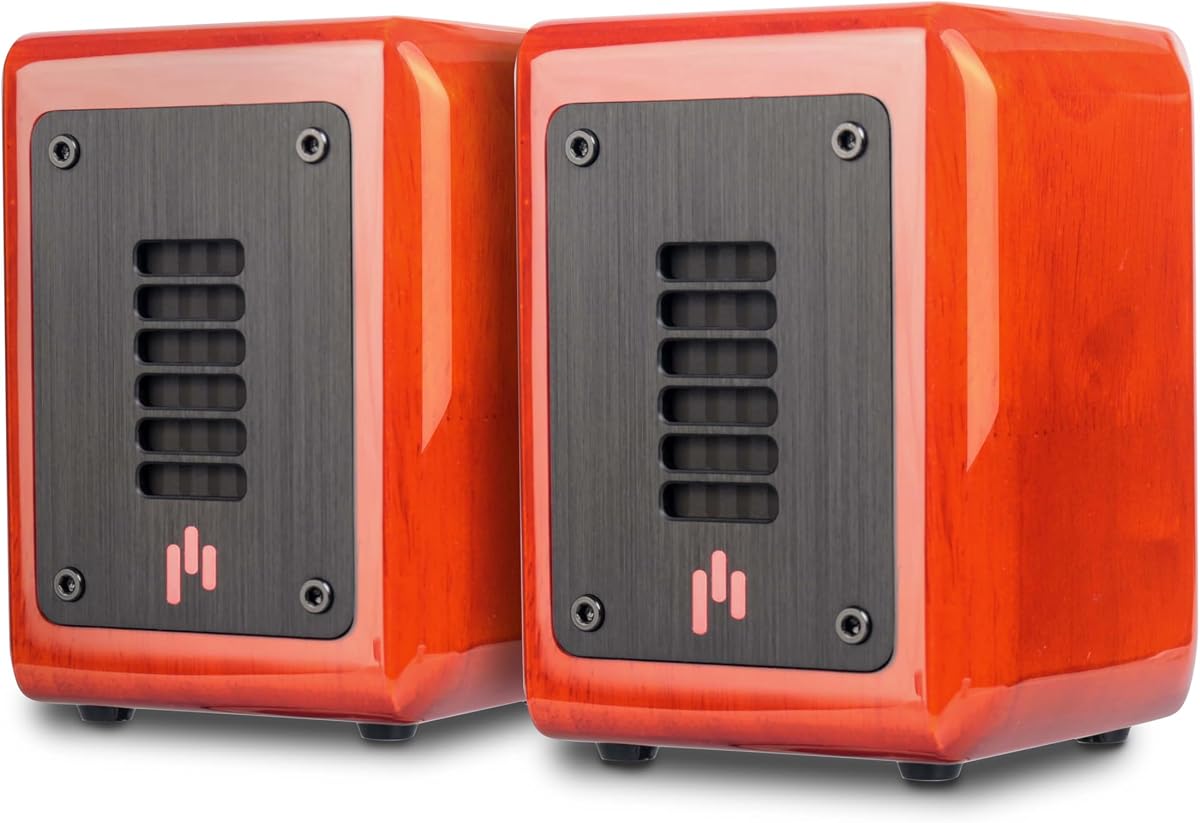
This super tweeter adds a high-fidelity compliment to any home audio system by extending the frequency response up to 40kHz. It brings a new dynamic to the sound field with a delicate planar magnetic design.
We may earn a commission when you buy through this link, at no additional cost to you.
Unlike horn tweeters it handles high frequencies subtly to avoid harshness. The built-in high-pass filter offers five preset crossover points allowing easy integration with existing speakers without external equipment.
While it is not designed to be extremely loud it effectively adds air and sparkle to the upper register. Users must ensure their speakers have sufficient efficiency to drive these units effectively.
Home theater enthusiasts seeking to extend the high-frequency range of their system will find this pair invaluable. It blends seamlessly with many brands improving the overall realism of the audio experience.
The planar magnetic design ensures smooth and natural high-frequency reproduction without distortion or harshness.
Five preset crossover points simplify setup allowing users to quickly match the super tweeter to their system.
We may earn a commission when you buy through this link, at no additional cost to you.
This crossover is designed for powerful home theater setups capable of handling up to 400 watts. It features a dual high and low crossover design that ensures precise frequency separation for better sound quality.
We may earn a commission when you buy through this link, at no additional cost to you.
The use of oxygen-free copper inductors and solderless terminals facilitates hassle-free installation. Users can plug and play without prior soldering experience making it accessible for home audio enthusiasts.
While it offers high power handling the filtering is less refined compared to audiophile-grade units. It is suitable for general entertainment but may lack the transparency required for critical listening.
Those building a powerful home theater system will find this crossover practical for its capacity. It provides the necessary tools to route frequency bands effectively without complex wiring procedures.
With 400 watts of power handling this unit can support high-efficiency drivers without thermal or mechanical stress.
Solderless terminals simplify the installation process allowing for quick adjustments and system modifications.
We may earn a commission when you buy through this link, at no additional cost to you.
This compact electronic crossover delivers four-channel processing for precise audio distribution in car systems. It is well-rated for its balance of functionality and size making it ideal for tight installation spaces.
We may earn a commission when you buy through this link, at no additional cost to you.
Users can make customizable adjustments to tailor sound to their preferences. The RCA inputs and 8-volt RMS processing ensure compatibility with standard head units and amplifiers.
While it lacks advanced features like digital displays the core functionality is reliable. The compact design ensures it fits easily into existing car audio setups without requiring major modifications.
Car audio enthusiasts looking for a compact and affordable solution will appreciate this model. It provides essential crossover functionality while maintaining a small footprint for clean installations.
The compact dimensions allow the unit to fit into tight spaces where larger processors cannot be installed easily.
RCA channels simplify integration with standard automotive audio components without needing specialized wiring.
We may earn a commission when you buy through this link, at no additional cost to you.
This unit is a classic high-precision crossover known for its 24 dB octave Linkwitz-Riley filters. It provides zero phase difference between outputs ensuring a flat summed amplitude response across all bands.
We may earn a commission when you buy through this link, at no additional cost to you.
Individual limiters per output protect drivers from overload while phase reverse switches address polarity issues easily. The switchable subsonic filter protects low-frequency drivers from harmful infrasonic signals.
While the design is older compared to digital units its analog precision remains a reliable choice. Users accustomed to manual configuration will find the straightforward layout intuitive and functional.
Studio engineers and live sound technicians will appreciate its reliable performance. It is a solid standard for applications requiring precise frequency separation and consistent output levels.
The Linkwitz-Riley filters ensure that when bands are summed together the total response remains flat without peaks.
Individual limiters on every output help prevent clipping and protect speakers from damage due to excessive power.
We may earn a commission when you buy through this link, at no additional cost to you.
Selecting the right active crossover depends on your specific system requirements and the level of control you need. We break down the critical factors to consider before making a purchase to ensure optimal performance.
The number of bands determines how many frequency ranges the crossover can split. Common options include 2-way 3-way and 4-way designs each suited for different speaker setups and complexity levels.
Choose a model with enough bands to match your speaker configuration and ensure you can route frequencies correctly to drivers.
Filter slopes dictate how steeply the crossover attenuates frequencies outside the passband. Steeper slopes like 24 dB per octave provide more precise separation but may affect phase response.
Select a slope that balances isolation with phase coherence to avoid cancellations between drivers in your system.
Connectivity options such as RCA or XLR impact how the unit integrates with your gear. Balanced XLR connections are preferred for professional setups to reduce noise over long cable runs.
Ensure the crossover matches your source and amplifier connectors to maintain signal integrity and avoid adapter issues.
Adjustability features like variable frequency knobs and independent gain controls allow fine-tuning of the system. More control enables better adaptation to specific room acoustics and speaker characteristics.
Look for units with sufficient controls to tweak the response without relying solely on external processors or equalizers.
Build quality affects long-term reliability and signal transparency. Units with high-quality components and robust chassis minimize noise and ensure consistent performance over years of use.
Prioritize models with sturdy construction especially if the unit will be moved frequently or used in demanding environments.
Phase reverse switches allow you to correct polarity issues between drivers ensuring they work together rather than cancel each other out. This is critical for achieving a coherent soundstage.
Always verify the unit includes phase controls to simplify setup and optimize acoustic alignment across the spectrum.
Active crossovers require dedicated amplifier channels for each driver. Ensure you have enough amps to match the crossover output bands before purchasing to avoid bottlenecks in your signal chain.
Plan your amplifier count carefully to leverage the full potential of the active crossover without leaving bands unpowered.
Consider whether the unit is optimized for home audio studio monitoring or live sound. Some models excel in high-fidelity reproduction while others prioritize power handling and robust connectivity.
Select a crossover designed specifically for your environment to ensure it meets the demands of your listening or performance needs.
Start by connecting your source device to the input and ensuring all outputs are linked to appropriate amplifier channels. Verify that every connection is secure to avoid intermittent signal issues or noise during playback.
Adjust the crossover frequency and gain settings based on your speaker specifications. Use reference measurements or listen critically to find the sweet spot where drivers blend seamlessly without audible transitions.
Periodically check your connections and settings to maintain optimal performance. Dust the chassis regularly and avoid placing the unit in humid or hot environments to protect sensitive internal components.
Yes active crossovers output separate signals for each frequency band meaning you need a dedicated amplifier channel for each output. This setup ensures precise power delivery to every driver for optimal performance.
Active crossovers split the signal before amplification allowing for greater control and efficiency. Passive units split the signal after amplification often resulting in power loss and less precise tuning options.
Absolutely many active crossovers are designed specifically for live sound applications. They provide the necessary inputs and outputs along with robust construction to handle the demands of touring and installation.
Filter slope selection depends on your driver capabilities and desired phase response. Steeper slopes offer better isolation but require careful alignment while gentler slopes may be more forgiving for basic setups.
Balanced connectivity reduces noise and interference during signal transmission especially over long cable runs. It is essential for professional environments where clean audio quality is a priority.
Yes most active crossovers include dedicated low-frequency outputs for subwoofers. They allow you to integrate a sub seamlessly into your stereo or multi-way system for enhanced bass.
The Marchand XM66 stands out for audiophiles seeking pure analog transparency while budget-conscious users may prefer the versatile Professional 2/3-Way Stereo & 4-Way Mono model.
Prioritize factors like filter slopes and connectivity options to ensure your chosen unit integrates smoothly with your amplifiers and speakers for a seamless audio experience.
Always verify the current availability and pricing of these options as market conditions change. Confirm your specific system needs before finalizing your purchase to ensure satisfaction.