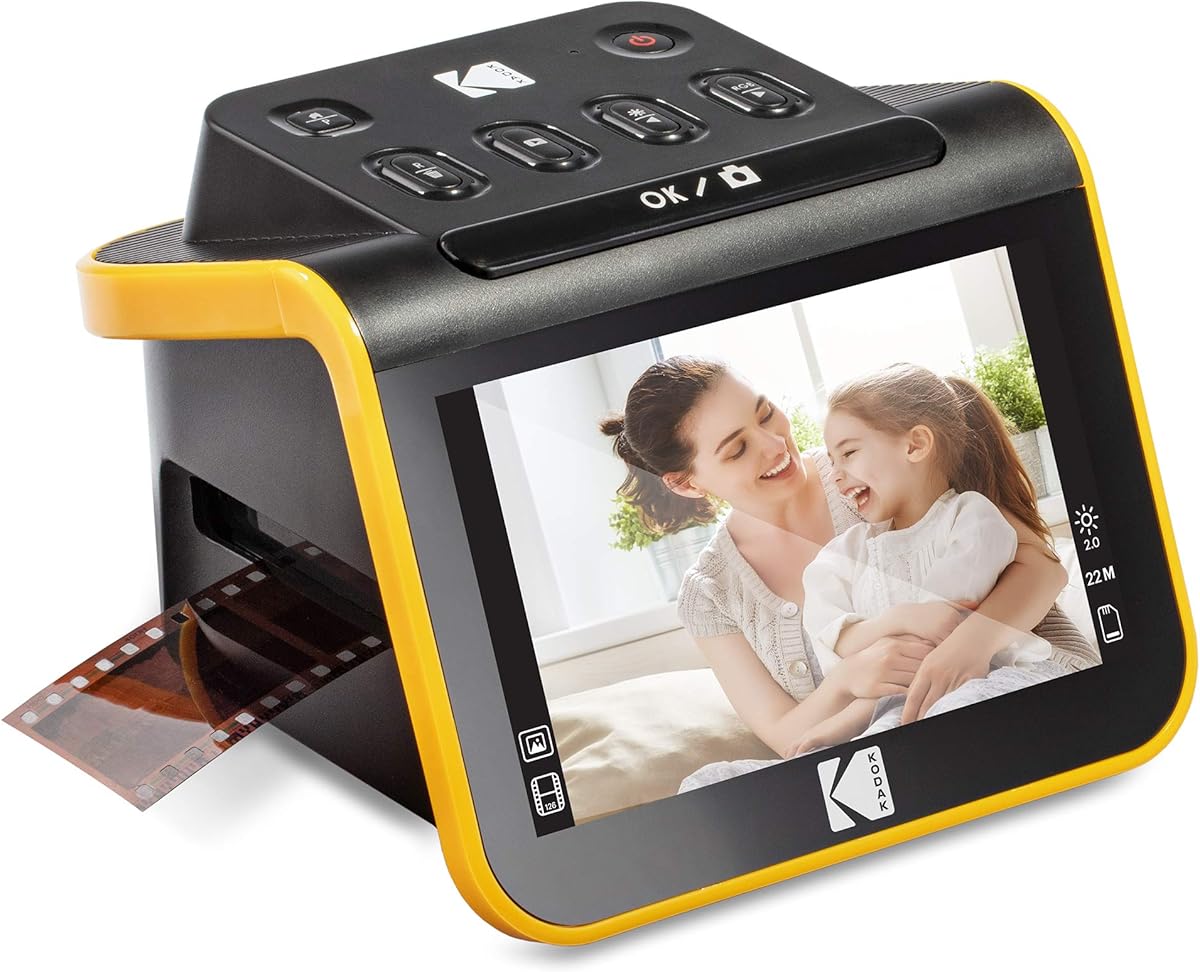
KODAK Slide N Scan Film & Slide Scanner
4.3Editor score
22MP resolution output
5 inch LCD screen
SD card direct save
Preserving your physical photo collection requires high quality digitization tools that can handle delicate media types like film and slides effectively without causing any damage during the process.
We evaluated ten leading flatbed scanners based on resolution accuracy transparency unit capabilities ease of use and software features to ensure you find the right device for your specific archiving requirements.
Each pick below highlights key strengths and ideal user profiles so you can make an informed decision while keeping in mind that product availability and pricing may vary over time.
4.3Editor score

4.0Editor score

4.4Editor score
As an Amazon Associate we earn from qualifying purchases.
The following comparison table breaks down the core specifications and capabilities of each scanner to help you quickly identify which model aligns best with your scanning frequency and quality expectations.


The KODAK Slide N Scan offers an accessible entry point for anyone looking to digitize old family memories without a heavy financial investment or technical expertise.
We may earn a commission when you buy through this link, at no additional cost to you.
Its 22MP resolution and 5 inch LCD screen allow you to preview and edit images directly on the device using a simple button interface that eliminates complex software workflows.
While it lacks the high-resolution capabilities of professional scanners it supports common 135 110 and 126mm film types making it versatile for casual users with standard slides.
Ideal for grand parents or hobbyists wanting quick digital copies this scanner saves directly to SD cards so you can share photos instantly without needing a computer connection.
The built-in 5 inch display lets you adjust color and brightness before saving so you get the best possible image from the start.
With one-touch scanning and SD card storage you avoid driver installation issues and can start digitizing your collection immediately after unboxing.
We may earn a commission when you buy through this link, at no additional cost to you.
The Epson Perfection V600 stands out as a versatile all-rounder for home archivists who need to scan both prints and film with high accuracy and professional software tools.
We may earn a commission when you buy through this link, at no additional cost to you.
Its 6400 dpi optical resolution paired with Digital ICE technology ensures that dust and scratches are automatically removed during the scanning process saving significant manual editing time.
The scanner supports medium format film up to 6x22cm and includes holders for multiple 35mm slides so you can process several frames in one session without constant reloading.
Best for home photographers and collectors this unit offers reliable performance with ReadyScan LED technology that requires no warm up time and uses less power than traditional lamps.
This feature uses infrared scanning to detect surface imperfections and remove them digitally ensuring clean results from aged or damaged film negatives.
The included film holders allow you to scan 6x9cm negatives which is uncommon for budget scanners and provides greater detail for larger prints.
We may earn a commission when you buy through this link, at no additional cost to you.
The Epson Perfection V850 Pro delivers top-tier image quality for serious photographers and professionals who need to digitize valuable negatives with maximum detail and color fidelity.
We may earn a commission when you buy through this link, at no additional cost to you.
Its exclusive dual lens system automatically switches between lenses to optimize resolution for slides versus film ensuring that every frame gets the best possible optical performance available.
With a 4.0 Dmax rating the scanner captures deep shadow details and smooth gradations that are often lost in lesser devices making it ideal for high contrast film types.
Best for studio professionals this model includes advanced software integration and supports both Mac and Windows operating systems so it fits seamlessly into diverse professional workflows.
This unique technology selects the optimal lens for your media type automatically reducing the need for manual adjustments and improving overall scanning consistency.
The high Dmax value ensures that dark areas in negatives retain detail without crushing blacks which is critical for high quality archival restorations.
We may earn a commission when you buy through this link, at no additional cost to you.
The Epson Perfection V550 combines high-resolution scanning with smart software features that automate much of the tedious work involved in digitizing large batches of photos.
We may earn a commission when you buy through this link, at no additional cost to you.
Its auto edge detection crops and saves each image separately so you can scan a sheet of prints at once and let the scanner organize them for you automatically.
Digital ICE technology removes dust and scratches while Easy Photo Fix restores faded colors with a single click making this a strong choice for restoring old family albums.
Ideal for home users with mixed needs it handles documents and film equally well and includes OCR software to convert scanned text into editable formats for easy archiving.
This feature automatically finds the borders of each photo on the glass and saves them as individual files so you do not have to crop them later.
LED technology means the scanner starts instantly without waiting for a lamp to warm up saving time when you need to scan a few documents quickly.
We may earn a commission when you buy through this link, at no additional cost to you.
The Epson Perfection V800 brings professional-level image quality to home studios with features designed to extract the maximum detail from negatives and slides.
We may earn a commission when you buy through this link, at no additional cost to you.
Its dual lens system selects the right optics for your media automatically ensuring that you get the best resolution without having to manually adjust settings each time.
With 16-bit depth and 4.0 Dmax you capture subtle color shifts and fine shadow details that are often lost in lower-end devices which is vital for archival work.
Best for photo restoration experts this scanner offers the precision needed for high-end prints while remaining compatible with Mac and Windows systems for flexible workflow integration.
16-bit depth allows for more color variations during editing so you can adjust tones without losing quality or introducing banding in the final image.
The internal and external grayscale capabilities ensure that black and white films are digitized with accurate tones for archival-quality reproductions.
We may earn a commission when you buy through this link, at no additional cost to you.
The Epson Perfection V700 is engineered for users who demand exceptional precision and color accuracy when digitizing slides and negatives for professional use.
We may earn a commission when you buy through this link, at no additional cost to you.
It features an innovative dual lens system that automatically selects the best lens for your desired resolution ensuring you get the clearest image possible every time.
The 4.0 Dmax rating provides exceptional image quality by capturing deep blacks and subtle grays which is essential for preserving the true look of original film.
Best for serious photographers this scanner delivers professional-grade results on prints and transparency media though it requires patience due to slower scan speeds compared to newer models.
The system chooses between two lenses to match your media type so slides get one resolution while films get another optimized for their texture and detail.
This model emphasizes clarity for large prints so even minor scratches or imperfections are visible if you want to restore or correct them manually.
We may earn a commission when you buy through this link, at no additional cost to you.
The Epson Perfection 4870 PRO is a legacy model that still holds value for professionals who appreciate older scanner technology and specialized software integration.
We may earn a commission when you buy through this link, at no additional cost to you.
It offers a 4800 dpi optical resolution with an interpolated 12800 dpi option that allows for extreme magnification and detailed scans of small negatives.
With 48-bit color depth and 16-bit grayscale you have extensive control over color adjustments which helps preserve the look of vintage photographs during restoration.
Best for users needing Firewire connectivity this model works well with older Mac systems and includes LaserSoft SilverFast Ai software for advanced image processing capabilities.
The high interpolation rate lets you enlarge small negatives significantly without visible pixelation which is useful for large format printing needs.
48-bit color means the scanner captures more color data than standard 24-bit devices giving you more flexibility when editing later in professional software.
We may earn a commission when you buy through this link, at no additional cost to you.
The Epson Expression 12000XL is designed for users who need to scan large documents and prints alongside their film collection without switching between different devices.
We may earn a commission when you buy through this link, at no additional cost to you.
Its large glass bed accommodates media up to 12.2 by 17.2 inches so you can scan posters or large prints directly without having to stitch multiple images together manually.
The Color II imaging system combines fast warm-up LED lamps with Epson MatrixCCD technology to produce bold and vibrant scans that remain true to the original source.
Best for designers or art collectors this model balances resolution with size allowing you to handle a variety of media types though it prioritizes bed area over maximum detail.
The extended bed lets you fit full pages or large art prints which saves time and effort when digitizing mixed media collections efficiently.
Epson MatrixCCD technology ensures that color reproduction is consistent and rich so prints look the same on screen as they did in person.
We may earn a commission when you buy through this link, at no additional cost to you.
The Epson V550 Photo represents a straightforward option for users who want high resolution scanning without the need for advanced editing or restoration tools.
We may earn a commission when you buy through this link, at no additional cost to you.
It delivers 6400 dpi optical resolution with 48-bit color depth to capture fine details and accurate colors across a range of media types including film and prints.
While it lacks the advanced automation features of newer models it provides reliable performance for basic digitization tasks and meets standard compliance requirements.
Best for budget conscious users this model offers solid core scanning capabilities and works with standard USB connections for easy setup on most computers.
48-bit color ensures that the scanner captures more color data for better editing potential in post processing software.
Using standard USB connectivity means you do not need special adapters or cables and the scanner works with most computers easily.
We may earn a commission when you buy through this link, at no additional cost to you.
The Epson Expression 10000XL is a wide-format scanner designed for graphic artists and professionals who need to capture large media with consistent color density.
We may earn a commission when you buy through this link, at no additional cost to you.
Its A3-sized scanning surface handles originals up to 12.2 by 17.2 inches so you can digitize posters or large documents without needing to stitch multiple images together.
With 2400 dpi optical resolution and 3.8 Dmax it provides decent detail and deep shadow capture making it suitable for archival work on large-format materials.
Best for graphic design studios this model supports Firewire connectivity and offers zoom features for detailed inspection though it may feel dated compared to modern alternatives.
The wide bed and high Dmax make it ideal for scanning prints where color consistency and shadow detail are critical for reproduction quality.
Firewire and USB support ensure that you can connect to a wide range of computers including older systems that may not support USB 3.
We may earn a commission when you buy through this link, at no additional cost to you.
Selecting the right scanner requires balancing resolution needs budget constraints and workflow preferences so that your digitization process is efficient and yields high-quality results.
Optical resolution determines how much detail the scanner can capture from your negatives and slides so look for models that offer at least 6400 dpi for high quality prints and archival storage.
Higher resolution means larger file sizes but ensures that fine textures and colors remain intact when you need to enlarge or restore old images.
A built-in transparency unit allows you to scan light-based media like slides and film negatives without needing external accessories or holding them up to a light box.
Check that the transparency unit supports the film formats you own such as 35mm medium format or specific slide holders to avoid compatibility issues later.
Included software can significantly impact your workflow by offering tools like dust removal color correction and auto-cropping that save hours of manual editing time.
Look for units that bundle professional software like SilverFast or comprehensive restoration tools if you plan to digitize damaged or faded images regularly.
Modern scanners typically use USB 2.0 or 3.0 but some professional models still offer Firewire for legacy Mac systems or specialized workstations.
Ensure the scanner includes the right cables and drivers for your current computer operating system to avoid setup complications.
Color depth refers to how many color shades the scanner can capture while Dmax measures its ability to handle dark shadows which is crucial for film negatives.
Aim for 48-bit color and a Dmax rating of at least 3.8 to ensure that you capture subtle tonal variations in your original photos.
LED-based scanners like those with ReadyScan technology offer instant warm-up and faster processing compared to traditional lamp units which save time during large batch scans.
If you plan to scan hundreds of images in a session prioritize models that advertise quick startup and efficient processing times.
The physical footprint of the scanner matters if you have limited desk space so check the dimensions and weight before purchasing to ensure it fits your workspace.
Also consider whether the scanner includes automatic edge detection or batch scanning features that reduce the physical handling of films during processing.
Always handle film and slides by the edges or wear gloves to avoid transferring oils or dirt onto the surface which can cause permanent marks on your scans.
Clean the scanner glass before each session using a microfiber cloth and lens cleaner to ensure no dust or smudges interfere with the image quality.
After scanning organize your files immediately with clear naming conventions and backup them to an external drive or cloud service to protect your digital archive.
Most regular flatbed scanners can scan prints but you need a built-in transparency unit or external accessory to scan slides and negatives. Look for scanners specifically labeled for film use to ensure they handle light-based media correctly.
For long-term archival quality a resolution of at least 6400 dpi is recommended. This captures enough detail for large prints and preserves fine textures that might be lost at lower settings.
You can view scanned images with standard image viewers but restoration software helps with color correction and dust removal. Many scanners include basic editing tools that are sufficient for most users.
Most quality scanners include Digital ICE or similar infrared technology that removes dust and scratches automatically. If not manual tools in photo editing software can help clean up the images further.
Not all scanners support medium format film. Check the product specs for compatibility with 6×6 or 6x9cm sizes. Some models include specific holders or adjustable beds for these larger formats.
Optical resolution is the physical detail the scanner captures while interpolated is software-enhanced resolution. Optical is more accurate for quality so focus on that number when choosing a device.
Whether you choose the budget-friendly KODAK option or the professional-grade Epson V850 Pro the key is finding a scanner that matches your volume needs and budget constraints.
Prioritize optical resolution and transparency unit quality to ensure that your digitized memories retain the detail and color fidelity of the original film.
Always check current availability and verify driver compatibility before purchasing to ensure a smooth setup process for your home or professional studio.