
ZP450 Zebra Direct Thermal Label Barcode Printer
4.7Editor score
Five inches per second print speed
Multiple connectivity options included
Durable double-walled construction
Finding the right barcode label printer can transform how you manage inventory, shipping, and organization. A good device should offer reliable connectivity, clear printing resolution, and flexible label compatibility without locking you into expensive proprietary supplies.
We evaluated ten popular models based on print speed, ease of setup, software features, and overall value. Our list includes desktop thermal printers, portable Bluetooth units, and industrial options to suit various workspace needs and labeling requirements.
Each pick highlights key strengths and potential trade-offs to help you decide quickly. Note that prices and availability change frequently, so check the latest details before making your final purchase decision for your specific business or home use case.
4.7Editor score

4.1Editor score

4.3Editor score
As an Amazon Associate we earn from qualifying purchases.
This side-by-side comparison highlights the key specifications and capabilities of each model to help you find the perfect fit for your labeling tasks and workspace environment.


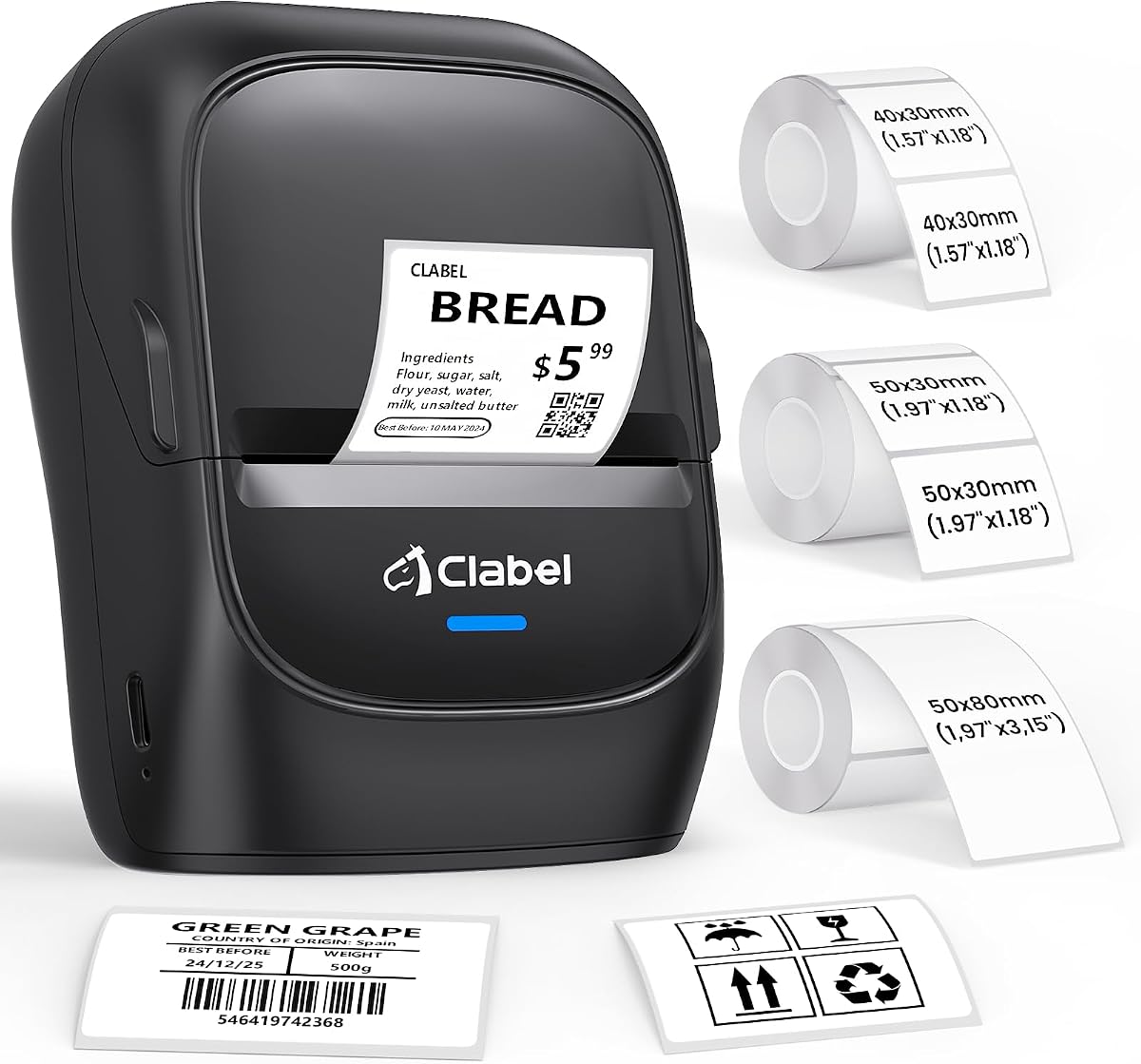


The CLABEL 221D stands out as a versatile choice for small businesses needing reliable barcode printing without vendor lock-in. Its 203 DPI resolution ensures crisp, scannable barcodes and address labels for retail or office use. The device supports a wide range of label sizes from 25 to 50mm, making it adaptable for many item-level tagging tasks.
We may earn a commission when you buy through this link, at no additional cost to you.
Its standout feature is the absence of RFID chips or brand locks, allowing you to use affordable third-party thermal rolls freely. This significantly reduces long-term costs compared to models that enforce proprietary supplies. The Clabel trade app offers intuitive design tools with templates for retail, inventory, and more. It supports Excel batch printing to streamline repetitive labeling workflows.
Connectivity is handled well through USB for desktop use or Bluetooth for mobile convenience. Users note quick pairing times and reliable printing once connected. However, it is not designed for shipping labels like 4×6 formats, so verify your needs before purchasing. The printer focuses on compact, efficient desktop performance rather than heavy-duty shipping volumes.
Overall, the CLABEL 221D is an excellent pick for anyone prioritizing flexibility and cost savings. It balances performance, software features, and open-label support to deliver strong value. If you need scannable barcodes and flexible labeling for items or retail goods, this model delivers consistent results.
The lack of brand locks means you can source cheaper thermal rolls from various suppliers without risking printer errors.
Bluetooth connectivity lets you print directly from phones, ideal for on-the-spot tagging without needing a computer nearby.
We may earn a commission when you buy through this link, at no additional cost to you.
The Phomemo M110 offers a budget-friendly entry into thermal labeling with strong mobile integration. Its compact size makes it ideal for home organization or light office tasks. The built-in display and Bluetooth 4.0 ensure quick pairing and reliable printing from Android or iOS devices. Users appreciate the ease of use and the ability to create labels on the go.
We may earn a commission when you buy through this link, at no additional cost to you.
Its Print Master app includes diverse templates and fonts, allowing customization for clothing, jewelry, or file labels. The OCR feature recognizes text from images, speeding up input when copying existing labels. This is helpful for small businesses needing quick asset tagging. Despite its small size, print quality is adequate for item-level barcodes and QR codes.
Some users note that certain templates and icons are locked behind a membership, which may require extra spending for full customization. It also does not support color printing or large shipping labels. Still, for personal or light commercial use, its portability and feature set make it a top contender in the budget category.
If you want a simple, mobile-first printer without high costs, the M110 delivers. It balances design flexibility, connectivity, and price to suit hobbyists and small shops alike.
The OCR tool converts text from photos into editable fields, saving time when replicating existing label content.
Small footprint and battery operation allow labeling anywhere, from workshops to retail shelves without power access.
We may earn a commission when you buy through this link, at no additional cost to you.
The ZP450 from Zebra represents industrial-grade performance in a compact desktop form. Designed for efficiency, it prints at up to 5 inches per second with 203 DPI resolution for sharp barcodes. Its multi-interface support including USB, serial, and parallel makes it adaptable for legacy systems or diverse business environments. Reliability is a key strength, suited for daily operations.
We may earn a commission when you buy through this link, at no additional cost to you.
The double-walled construction ensures durability in busy workspaces. It handles direct thermal printing, eliminating the need for ribbons and reducing consumable costs. Setup is straightforward thanks to plug-and-play integration with common drivers. Users find it consistent for inventory management and receiving tasks where speed and accuracy are critical.
While it is pricier than consumer models, the build quality and connectivity options justify the cost for professional use. It has a fixed media width, so verify label sizes match your workflow. This model lacks Bluetooth but prioritizes stable wired connections for uninterrupted output during high-volume runs.
If you require fast, dependable labeling with robust connectivity, the ZP450 is a premium solution. It excels in retail and logistics environments needing consistent performance over long periods.
At 5 inches per second, it reduces downtime when processing large batches of labels for shipments or stock.
The double-walled design withstands frequent use and movement, ensuring longevity in active workspaces.
We may earn a commission when you buy through this link, at no additional cost to you.
The iDPRT SP310 is a powerful desktop thermal printer that supports labels from 1 to 3.35 inches wide. This versatility makes it suitable for file folders, address labels, and barcodes. Its open system bypasses proprietary microchip limitations, reducing ongoing costs. Users appreciate the fast 4 ips print speed and stable USB connection for heavy use.
We may earn a commission when you buy through this link, at no additional cost to you.
Built-in smart sensors ensure precise alignment after manual calibration during media changes. This minimizes waste and misprinted labels, crucial for shipping and inventory. The free HereLabel software allows custom layouts and bulk file imports, enhancing efficiency. It works across Windows, macOS, and Linux systems with dedicated drivers.
While primarily a desktop unit without wireless options, its performance and label flexibility make it ideal for offices handling moderate to high volumes. Setup requires downloading drivers, but once configured, it delivers consistent, crisp prints. The focus on compatibility and speed offers strong value for small businesses.
Choose this printer if you need reliable USB-based labeling with broad label size support. It balances cost savings, speed, and precision for professional desktop workflows.
Bypassing proprietary chips allows use of various label brands, keeping consumable costs low for long-term use.
Auto-detection of label size and gap reduces alignment errors, saving time and material during print runs.
We may earn a commission when you buy through this link, at no additional cost to you.
This CLABEL model prioritizes ease of use and compact design for small workspaces. Setup takes under five minutes with straightforward software installation. Its lightweight body allows easy movement around desks. It supports labels from 20 to 50mm wide, covering most item-level needs. The app offers extensive customization including templates, icons, and batch Excel printing.
We may earn a commission when you buy through this link, at no additional cost to you.
A standout feature is the ability to reuse existing rolls, reducing consumable expenses. The app includes a scan function to improve workflow efficiency. Users can design layouts offline and batch print to save time. It handles barcodes, price tags, and product labels well without requiring expensive supplies.
While it lacks advanced connectivity like Bluetooth in this version, USB reliability suits fixed workstations. The focus is on cost-saving and simplicity rather than speed. It is ideal for offices or home setups needing occasional professional labeling without complexity.
If you want a compact, affordable printer with reusable roll support, this CLABEL model works well. It delivers consistent quality and straightforward operation for routine labeling.
The ability to use existing label stock reduces waste and cost over time compared to locked systems.
Regular software updates keep features current, ensuring users can design varied labels for different needs.
We may earn a commission when you buy through this link, at no additional cost to you.
The CLABEL 221B combines wireless convenience with durable label output for retail or bakery settings. It prints up to 2 inches wide and supports standard thermal rolls without brand restrictions. The app enables quick design and Excel batch printing. Bluetooth pairing is instant for iOS and Android phones, enabling counter-side labeling.
We may earn a commission when you buy through this link, at no additional cost to you.
Included matching labels are waterproof, oil-proof, and scratch-resistant, ensuring clarity in harsh conditions. Users can print scannable barcodes, address tags, and jewelry labels with consistent results. Setup involves no complex drivers for mobile, just open and print. The design simplifies workflows for staff needing fast item tagging.
Limitations include no support for tablets or POS systems, and computer use requires USB. It is not designed for shipping labels but excels at product-level identification. For small shops wanting wireless flexibility with rugged labels, this model delivers practical value.
If you need portable labeling with durable stickers and zero brand locks, the 221B is a strong choice. It balances ease of use, print quality, and flexibility effectively.
Waterproof and oil-proof labels ensure clarity even in kitchens or busy retail environments where durability matters.
Bluetooth pairing in seconds reduces delays, allowing staff to label items immediately without setup hassles.
We may earn a commission when you buy through this link, at no additional cost to you.
This CLABEL printer merges desktop reliability with wireless flexibility, using both USB and Bluetooth. It supports 25 to 50mm wide labels for retail, jewelry, and more. The open design avoids RFID sensors, allowing budget-friendly paper use. The Clabel trade app simplifies design with templates and Excel batch printing to reduce errors.
We may earn a commission when you buy through this link, at no additional cost to you.
Setup takes under two minutes for most users, ensuring quick deployment. High-volume tasks run well via USB, while Bluetooth allows on-the-spot design at counters or shelves. This dual-mode approach increases workflow efficiency. Scanners read the crisp 203 DPI barcodes quickly, preventing checkout delays.
It excludes support for large shipping labels or receipt rolls, keeping focus on item-level tagging. Still, its versatility across connection types and label formats makes it practical for small businesses needing adaptability. Users praise its balance of performance, cost, and ease of use.
If you want one printer handling both desktop batch jobs and mobile instant prints, this CLABEL model fits well. It delivers consistent quality and broad compatibility.
USB ensures high-volume reliability while Bluetooth provides on-the-move convenience for immediate labeling tasks.
Zero brand locks let you choose cheaper thermal paper, reducing ongoing expenses for your business.
We may earn a commission when you buy through this link, at no additional cost to you.
The SUPVAN T50M Pro offers intuitive, free app editing ideal for home organization and small business labels. It prints from 0.75 to 2 inches wide and comes with three tapes for immediate use. The app includes over 660 icons and 50 plus frames without registration or fees. Auto recognition of label sizes streamlines the design process.
We may earn a commission when you buy through this link, at no additional cost to you.
Users can upload images and customize text to create polished labels for jars, bins, or folders. Enhanced image processing ensures high-resolution output. This printer is perfect for organizing kitchens or offices where aesthetics matter. It handles round, square, and cable labels to meet diverse needs.
Though not built for high-volume industrial use, its simplicity and creative options make it stand out for personal tasks. The lack of registration barriers encourages quick adoption. While business features are basic, its ease of use and design flexibility satisfy most home users.
If you prioritize creative freedom and easy setup, this SUPVAN model excels. It turns labeling into a hassle-free and visually appealing activity.
Hundreds of icons and frames allow unique, personalized labels that look professional and appealing.
No account or registration required means you can start designing and printing labels right away.
We may earn a commission when you buy through this link, at no additional cost to you.
The iDPRT iD880 is built for demanding environments, supporting labels from 1 to 4.64 inches wide. Its print speed reaches up to 6 inches per second for efficient throughput. With 32MB RAM and 128MB flash, it handles complex data tasks smoothly. Quick print head removal simplifies maintenance to minimize downtime.
We may earn a commission when you buy through this link, at no additional cost to you.
Setup is guided by QR codes for easy driver access. It works on Windows, Mac, and Linux systems with plug-and-play options. Users appreciate its balance of professional-grade speed and reliability for shipping, inventory, or retail tagging. The included package has power adapters and cables for immediate use.
Power connection requires firm insertion to avoid recognition issues. It is heavier than desktop units due to industrial build but offers robust performance. If you need fast, wide-format labeling with ample memory, this model delivers strong value.
Choose the iD880 for medium-scale operations needing speed and durability. It combines flexibility, high throughput, and user-friendly maintenance features.
The 32MB RAM allows buffering complex print jobs, preventing delays during data-intensive labeling tasks.
Fast print head removal reduces service time, keeping operations running smoothly with minimal interruptions.
We may earn a commission when you buy through this link, at no additional cost to you.
The DYMO LabelWriter 550 focuses on precision and waste reduction for labeling tasks. It uses only authentic DYMO labels made from FSC certified material, ensuring consistent feed and quality. Direct thermal printing eliminates ink, and the system is optimized to print exact quantities to reduce waste.
We may earn a commission when you buy through this link, at no additional cost to you.
This model avoids the hassle of sheet labels by printing precise amounts. Users note reliable performance for address labels and file tags. However, it does not support third-party rolls, which can raise consumable costs. Setup is straightforward with recognition of label types.
While eco-friendly packaging and optimized workflows are positives, the proprietary requirement may deter budget-conscious buyers. Still, for those prioritizing reliability and minimal waste in office settings, it offers a streamlined experience.
Choose this printer if you value eco-certified paper and hassle-free operation. It suits environments where label consistency outweighs cost concerns.
Printing exact quantities reduces leftover label sheets, minimizing material waste and cost over time.
FSC certified labels support sustainable sourcing, aligning with eco-conscious business practices and preferences.
We may earn a commission when you buy through this link, at no additional cost to you.
Selecting the right barcode label printer involves evaluating compatibility, connectivity, and long-term costs. Below are the key factors to consider.
Check if the printer uses proprietary or open thermal rolls. Open systems allow affordable third-party options, reducing ongoing expenses. Verify supported label widths and sizes to match your needs like item tags or shipping labels.
Prioritize models without RFID chips or brand locks for maximum flexibility and lower consumable costs.
Bluetooth enables mobile printing, while USB provides stable desktop connections. Consider if you need both modes for different workflows. Ensure driver support matches your operating system for seamless setup.
Choose connectivity that fits your workspace setup and preferred devices.
Higher speeds like 5 inches per second suit high-volume tasks, while slower rates suffice for light use. Balance speed with print resolution needs to avoid bottlenecks. Review benchmarks for your expected daily output.
Match print speed to your workload to maintain efficiency without overspending.
A 203 DPI resolution ensures clear, scannable barcodes. This is vital for retail or inventory scanners to prevent errors. Review output quality in test reports before purchase.
Select 203 DPI or higher for reliable barcode performance.
Look for free design apps with templates, batch printing, and OCR support. Excel integration streamlines repetitive labeling. Check for regular updates to maintain functionality.
Opt for apps that simplify design and batch tasks.
Industrial models offer robust construction for daily use, while desktop units suit lighter tasks. Check warranty terms and build materials. Durable designs reduce downtime in active environments.
Pick a build that withstands your specific workspace conditions.
Factor in label roll prices and replacement head costs. Open-label printers save money long-term. Compare initial price versus total cost of ownership for value.
Focus on models with low ongoing expenses for better ROI.
Ensure access to drivers, manuals, and responsive customer support. Good documentation simplifies troubleshooting. Check community reviews for real-world reliability and help availability.
Verify support resources match your technical comfort level.
Begin by loading compatible thermal rolls and connecting via USB or Bluetooth. Install any required drivers and download the app. Run a calibration test to ensure alignment.
Use the app to design labels using templates or custom inputs. Select print settings matching your needs and batch print as required. Monitor label feed to prevent jams.
Keep the printer clean from dust and debris. Store label rolls in a dry place. Update software regularly and follow manufacturer maintenance guidelines for best results.
Most modern thermal barcode printers use direct thermal technology, which does not require ink or ribbons. Instead, they apply heat to thermal paper to create labels. This reduces consumable costs and maintenance. However, ensure you buy compatible thermal rolls for your model to avoid printing issues.
Many open-system printers support third-party rolls without restrictions. Look for models without RFID chips or brand locks. Proprietary systems like some DYMO printers may limit you to branded supplies, which can increase costs over time.
Bluetooth is reliable for moderate volumes but may have dropouts in areas with interference. USB offers more stability for high-volume workflows. Choose based on your workspace connectivity and speed requirements.
Select widths matching your needs. 2-inch is common for item labels, while wider options suit address labels. Verify printer support before buying rolls to ensure compatibility and avoid waste.
Run a calibration test using the printer or app settings. Ensure the label roll is seated properly and gap sensors are clean. Repeating the calibration after media changes usually resolves misalignment.
Most 2-inch printers handle item tags but not large shipping labels. For 4×6 shipping, choose a model supporting those dimensions. Verify capabilities to ensure the printer meets your shipping needs.
Our top picks offer diverse strengths across budget, premium, and versatility categories. The CLABEL 221D leads in open compatibility and value, while the ZP450 Zebra excels in performance and durability for professional use.
Focus on label flexibility, connectivity, and software features to match your workflow. Open-label systems reduce long-term costs, and dual-mode connectivity increases convenience for varied tasks.
Prices and models update regularly. Check current details before purchasing to ensure you select the best fit for your evolving business needs.