
Solid State Logic Super 9000 Analogue Channel Strip
5.0Editor score
Dual mic pre with VHD option
4-band EQ with parametric mids
Input flip for saturation processing
Explore top channel strips for recording comparing preamps, EQ, compression, and hardware features to help you choose the ideal signal processor for your
Channel strips are essential tools for capturing professional audio quality in any recording environment. They combine preamps, equalization, and dynamics processing into one unit for streamlined workflow and consistent sound.
We compared ten top-rated channel strips based on build quality, sonic characteristics, feature sets, and user feedback. Our analysis covers everything from budget-friendly units to premium analog classics used in major studios.
Each pick highlights unique strengths like tube warmth, analog saturation, or digital integration. Note that availability and pricing fluctuate regularly, so verify current stock before making your final purchasing decision for your studio.
5.0Editor score

4.5Editor score

2.0Editor score
This side-by-side comparison evaluates ten distinct channel strips offering diverse architectures and workflows. We analyze their preamp top, EQ flexibility, dynamics processing, and connectivity to help you find the perfect match for your specific recording needs.




The dbx DBX286SV offers a comprehensive channel strip solution ideal for vocals and instruments. It combines compression, de-ssing, enhancement, and gating in one 1U unit with clear LED metering and professional outputs.
We may earn a commission when you buy through this link, at no additional cost to you.
Its standout quality is the versatility of its four independent effects. The classic dbx compression tightens dynamics effectively. The enhancer adds clarity without harshness. The loop-out lets you integrate external processors easily.
Trade-offs include a basic EQ compared to parametric designs and solid-state rather than tube warmth. These are acceptable given its affordable price and broad feature set for home studios needing immediate vocal control.
Buy this if you want a plug-and-play vocal processor under $300. It suits singers, podcasters, and streamers seeking polished sound without complex routing or high-end analog gear.
The built-in enhancer and de-esser work together to bring vocals forward with clarity and presence, reducing harsh sibilance while maintaining natural tone in your mixes.
The loop-out insert jack allows you to place external processors between the preamp and effects section, enabling hybrid analog chains while keeping the workflow streamlined.
We may earn a commission when you buy through this link, at no additional cost to you.
The PreSonus STUDIOCHANNEL delivers classic tube warmth through its 12AX7 vacuum-tube mic and instrument preamplifier. It integrates a 3-band EQ with semi-parametric mid control and a variable VCA compressor with auto release.
We may earn a commission when you buy through this link, at no additional cost to you.
Its key strengths lie in the rich harmonic saturation the tube provides, ideal for vocals, guitars, and bass. The variable-Q mid control and shelving low-high bands offer flexible tone shaping while the compressor adds punch.
Honest trade-offs include needing tube maintenance and limited midband parametric control. These are acceptable given its price, as the analog character and robust build make it a favorite among budget-conscious engineers seeking authentic tube tone.
Buy this if you crave tube coloration without spending thousands. It fits home studios needing a single unit to capture warm, polished sound with reliable routing and durable construction.
The high-voltage Class A tube stage adds pleasing harmonic richness and smooth compression that enhances recordings with warmth, presence, and depth without requiring extra plugins.
With dedicated instrument, line, and mic inputs, plus polarity reverse and phantom power, the STUDIOCHANNEL handles diverse sources smoothly in one compact 1U rack space.
We may earn a commission when you buy through this link, at no additional cost to you.
Solid State Logic brings its legendary 9000 Series sound to a compact channel strip. The Super 9000 offers dual mic pre choices—SuperAnalogue or VHD—and a high-performance THAT 2181A VCA compressor section with flexible routing options.
We may earn a commission when you buy through this link, at no additional cost to you.
Its key strengths are sonic precision and the input flip feature, allowing saturation in the line path. The 4-band EQ with fully parametric mids provides surgical control. Build quality ensures reliability in professional studio environments demanding top-tier results.
Trade-offs include its premium price and rack mounting needs. These are acceptable as the analog authenticity, workflow, and mix-ready tone justify the investment for engineers who prioritize sound quality and tactile control.
Buy this if you seek iconic SSL character for critical recordings. It suits tracking rooms needing top-tier mic preamps, EQ, and compression in one reliable analog unit.
Choose between SuperAnalogue or VHD mic pres for distinct tonal flavors, or use input flip to route line signals through the pre for creative saturation effects.
Sidechain two Super 9000 units to work as a stereo pair for perfectly matched compression on stereo sources like keyboards, bus processing, or room mics.
We may earn a commission when you buy through this link, at no additional cost to you.
The Solid State Logic SiX brings professional tone to the 500 Series format. It features a switched 12 dB/oct high pass filter at 75 Hz, a single-knob channel compressor with variable threshold, and front-panel TRS line input with Hi-Z switch.
We may earn a commission when you buy through this link, at no additional cost to you.
Its key strengths include the iconic SSL sound and compact design for modular systems. The single-knob compressor simplifies workflow. The front panel TRS line input with 1MO Hi-Z switch is ideal for direct recording and live tracking with guitars or keyboards.
Trade-offs include limited EQ flexibility compared to full strips and dependency on a 500 chassis. These are acceptable as the sound quality, build, and workflow efficiency suit engineers integrating analog gear into hybrid setups.
Buy this if you need SSL quality in a 500 format. It fits modular studios and project rooms seeking premium analog processing without full rack space.
The single-knob compressor and minimal controls reduce menu diving, letting you focus on performance and tone while achieving consistent compression results quickly.
Front-panel TRS line input with a Hi-Z switch supports instruments directly, enabling clean recording of guitars and synths without needing an external DI box.
We may earn a commission when you buy through this link, at no additional cost to you.
ART's Pro Channel III delivers tube warmth at an affordable price. This mono tube channel strip features switchable microphone impedance, selectable Opto/FET compression voicings, and a 4-band semi-parametric EQ section for basic tone shaping.
We may earn a commission when you buy through this link, at no additional cost to you.
Its key strengths include tube saturation for vocals and instruments without high costs. The dual compression voicings offer flexibility for gentle leveling or punchier control. Switchable impedance helps match different microphones for optimal signal transfer and frequency response.
Honest trade-offs include lower reliability reported by some users and basic feature sets compared to premium units. These are acceptable for budget studios needing analog warmth and simple controls without spending heavily on full rack units.
Buy this if you want affordable tube tone. It suits home producers and podcasters seeking character and dynamics processing without large budgets for high-end hardware.
The vacuum tube stage imparts warm harmonic richness and natural compression to vocals and instruments, enhancing presence and depth without expensive rack gear.
Switch between Opto and FET compression for different transient responses, allowing gentle leveling for vocals or punchier control for drums and guitars.
We may earn a commission when you buy through this link, at no additional cost to you.
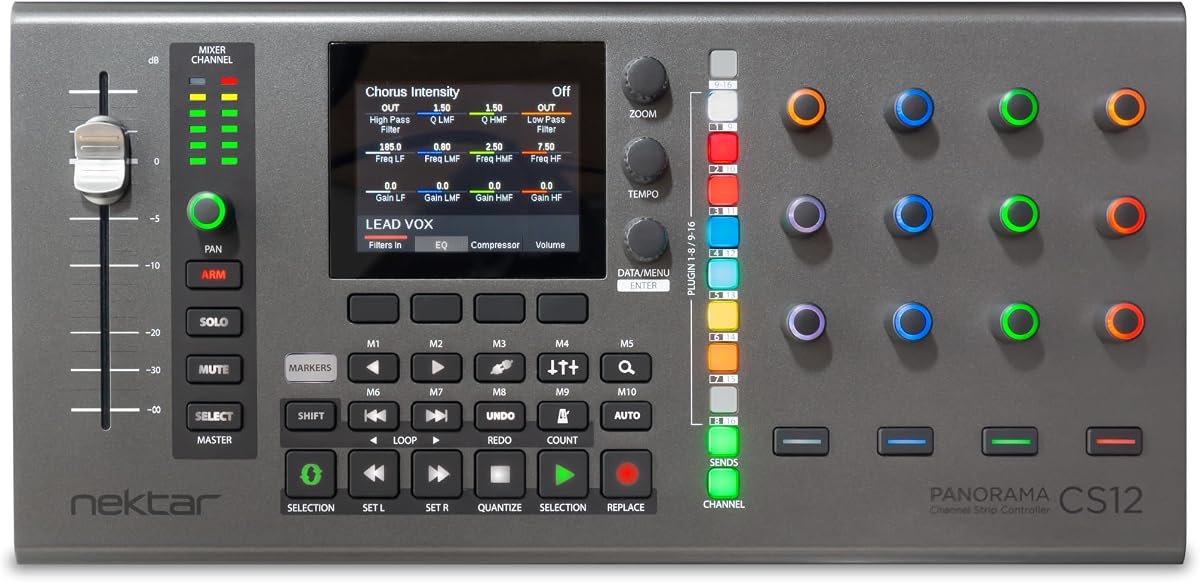
The Nektar Panorama CS12 is a channel strip plug-in controller designed to streamline digital mixing. It integrates with your DAW via transport buttons, rotary encoders, and a motorized fader for intuitive plugin control.
We may earn a commission when you buy through this link, at no additional cost to you.
Its key strengths lie in hands-on plugin parameter control and real-time DAW integration. The motorized fader and TFT display enable precise adjustments, speeding up mix workflows without constant mouse usage.
Honest trade-offs include lack of analog audio processing and reliance on software. These are acceptable if you prioritize mixing efficiency and plugin control in a DAW environment rather than analog signal chains.
Buy this if you mix primarily in-the-box. It suits digital producers needing tactile control over plugins to speed up mixing and performance automation.
The motorized fader and rotary encoders map to DAW parameters, allowing precise tactile control of volume, pan, and plugin settings without touching the mouse.
The 3.5 TFT display shows channel data and automation in real time, ensuring you always see current levels and parameters during critical mixing sessions.
We may earn a commission when you buy through this link, at no additional cost to you.
The YAMAHA MG10XU combines ten inputs with built-in SPX digital effects and USB recording capability. Each channel features studio-grade D-PRE preamps with inverted Darlington circuits, 3-band EQ, and 1-knob compressors for streamlined dynamics processing.
We may earn a commission when you buy through this link, at no additional cost to you.
Its key strengths include versatile multi-channel handling and high-quality D-PRE preamps. The 1-knob compressors offer simple control. SPX digital effects add reverb and delay, while USB connectivity enables direct recording to your computer.
Honest trade-offs include not being a single-channel strip and basic EQ compared to parametric units. These are acceptable for live setups, podcasting, or home studios needing multi-input control and effects without separate gear.
Buy this if you need multi-channel mixing with analog warmth. It suits live sound, podcast recording, and home studios capturing multiple instruments simultaneously.
The discrete Class A D-PRE preamps deliver fat, natural bass and smooth highs, ensuring clean capture of vocals and instruments with minimal noise.
SPX digital effects provide reverb and delay on the fly, adding spatial depth and polish to tracks without needing external effects processors or plugins.
We may earn a commission when you buy through this link, at no additional cost to you.
Solid State Logic's Revival 4000 channels the legendary analog sound of their iconic 4000 Series into a compact 1U mic channel strip. It delivers classic analog warmth and signature processing expected from SSL hardware.
We may earn a commission when you buy through this link, at no additional cost to you.
Its key strengths are the authentic 4000 Series tone and compact format. The all-analogue signal path ensures natural processing. Its sound is revered for clarity and punch, ideal for capturing premium vocal and instrument tones in professional setups.
Honest trade-offs include limited user reviews and premium price. These are acceptable as the iconic analog heritage and sound quality suit engineers prioritizing classic SSL tone and authentic analog signal paths.
Buy this if you seek classic SSL analog character. It fits studios needing iconic tone for tracking vocals, drums, or instruments with authentic warmth and clarity.
Inspired by the legendary 4000 Series, the Revival delivers signature warmth and punch that defined countless classic records, providing authentic analog sound in one channel.
The 1U rack format fits easily into tight studio spaces, ensuring premium analog tone without requiring large rack units, preserving workflow efficiency and desk space.
We may earn a commission when you buy through this link, at no additional cost to you.
Universal Audio's LA-610 Mk II brings classic tube warmth and an optical compressor into one channel strip. The vacuum tube mic, instrument, and line preamp integrates with a precise EQ and gentle optical dynamics for pristine capture.
We may earn a commission when you buy through this link, at no additional cost to you.
Its key strengths include rich tube saturation and the smooth optical compression ideal for vocals. The EQ section offers tonal shaping, while the multi-source inputs ensure versatility. Build quality reflects its premium status and long-term reliability.
Honest trade-offs include high price and rack requirements. These are acceptable as the classic analog warmth, optical compressor, and studio-grade performance justify the investment for professional vocal and instrument tracking.
Buy this if you need classic tube warmth and optical compression. It suits vocalists and engineers prioritizing rich, smooth dynamics and pristine analog capture.
The optical compressor provides natural, transparent dynamics that preserve transients while gently controlling peaks, ideal for vocals and acoustic instruments needing smooth leveling.
The vacuum tube stage imparts harmonic richness and depth to signals, adding warmth and presence that enhance recordings with rich, organic tone.
We may earn a commission when you buy through this link, at no additional cost to you.
The Neve 1073SPX-D combines the legendary 1073 preamp/EQ with USB audio interface capabilities. It offers Class A circuitry, 24-bit/192kHz AD/DA conversion, insert send/return, headphone amp, and ADAT I/O for expanded channel count.
We may earn a commission when you buy through this link, at no additional cost to you.
Its key strengths include the iconic Neve preamp sound and digital integration. The Class A design ensures purity and headroom. Insert loops allow external processing. ADAT I/O expands input options without additional hardware for versatile studio setups.
Honest trade-offs include very high price and complex setup. These are acceptable as the Neve tone, high-resolution conversion, and hybrid workflow suit professional studios needing premium analog warmth with modern digital connectivity.
Buy this if you want premium Neve sound in an interface. It suits professional engineers needing analog warmth, expandable I/O, and high-quality conversion in one unit.
The legendary 1073 preamp and EQ deliver rich harmonic character and punch that defined countless classic tracks, giving your recordings warmth, presence, and depth.
Built-in ADAT I/O lets you connect additional preamps or expanders, increasing channel count for multi-mic setups and ensuring scalable workflows without multiple interfaces.
We may earn a commission when you buy through this link, at no additional cost to you.
Selecting the right channel strip depends on your budget, desired sound, and workflow. This guide outlines key factors to evaluate to find a unit that matches your studio needs and recording goals.
The preamp stage is the heart of any channel strip. Choose between solid-state for clean clarity, vacuum tube for warmth and harmonic saturation, or hybrid designs blending both. Consider your genre, source types, and tonal goals.
Select a preamp type that complements your microphones and instruments for optimal signal transfer and desired coloration.
Evaluate the EQ bands, ranges, and whether mids are parametric, semi-parametric, or fixed. Parametric mids allow precise frequency control, while shelving low and high bands offer broad tonal shaping.
Choose EQ that matches your mixing style for effective tone shaping without limiting creative control.
Look for compressors and de-ssers that offer adjustable threshold, attack, and release. Some units include optical or VCA compression for different transient responses. Additional features like limiters expand dynamics control options.
Prioritize dynamics sections that match your workflow and source material to ensure smooth, natural leveling.
Check for insert jacks, loop-outs, or sidechain inputs that allow external processing integration. Some strips include dedicated line inputs with Hi-Z switches for instruments. Flexible routing keeps your workflow adaptable.
Opt for routing that supports your mixing and recording setup without needing extra hardware.
Robust chassis, reliable connectors, and quality components ensure longevity. Rack-mountable units often feature steel frames. High-end units use premium transformers and components to maintain signal integrity over time.
Choose units with solid construction to avoid noise and hardware issues during critical sessions.
Consider analog versus digital integration. Some strips are analog-only for pure signal paths, while others include USB or ADAT interfaces for direct DAW recording. Hybrid models bridge analog warmth and digital workflow.
Select integration based on your studio setup to streamline recording and mixing efficiently.
Channel strips range from affordable budget models to premium professional units. Set a realistic budget, prioritize must-have features, and evaluate value for money. Higher cost doesn't always mean better suitability for your needs.
Balance price with features and sound quality to find the best fit for your studio.
Research user feedback for real-world performance and reliability insights. Ratings reveal strengths like tonal clarity or weaknesses like limited EQ. Consider long-term durability and customer support experiences.
Use reviews to validate product claims and ensure reliability before purchasing.
Start by connecting your microphone or instrument to the appropriate input, ensuring proper gain staging for clean signal capture without distortion. Use the preamp controls to set optimal levels before engaging dynamics or EQ.
Engage compression and EQ gradually, listening for how they shape the source sound. Adjust parameters to enhance tone, reduce harshness, or control dynamics without over-processing. Keep settings balanced for natural-sounding recordings.
Care for your channel strip by keeping it dry and dust-free. Avoid overheating tubes if applicable. Regularly inspect cables and connectors. Store in a stable environment to ensure longevity and consistent performance during sessions.
A channel strip combines preamp, EQ, and dynamics processing in one unit. It simplifies workflow by capturing and shaping sound before recording. Channels strips reduce reliance on plugins, offering tactile control and analog warmth for vocals, instruments, and mixed tracks.
Channel strips can be analog, digital, or hybrid. Analog strips process signals continuously for natural warmth. Digital strips include converters and may integrate DAW control. Hybrids blend both for analog sound with modern connectivity options.
Not always, but channel strips add analog character, tactile control, and reduce latency. They streamline recording by shaping tone before digital processing. For hybrid workflows, channel strips provide foundational warmth that plugins can complement.
Prioritize preamp quality, EQ flexibility, and dynamics options matching your needs. Consider routing, build quality, and integration. Features like tube warmth or compressor styles affect tone. Evaluate must-haves to ensure efficient, effective recording.
Keep tubes clean and free from dust. Allow warming up before use and cool down after. Replace tubes as needed based on performance. Ensure proper ventilation to prevent overheating. Regular inspections ensure reliable operation.
Yes, most channel strips output to interface line inputs. Some include USB outputs for direct integration. Check impedance and signal levels for compatibility. This setup captures analog processing directly into your DAW for streamlined recording.
Channel strips include preamps plus EQ and dynamics, offering more control. Preamps only amplify signal. For shaping tone during tracking, channel strips are advantageous. For minimal signal paths, standalone preamps may suffice.
Start with input gain low, gradually increase until peaks hit optimal levels without clipping. Use meters to monitor. Engage compression to control peaks. Ensure clean gain staging for natural, distortion-free recordings and headroom.
Channel strips combine preamps, EQ, and dynamics to streamline recording and enhance tone. Top picks like the dbx DBX286SV, SSL Super 9000, and ART Pro Channel III offer diverse options for home and professional studios.
Prioritize preamp quality, feature flexibility, and build reliability. Choose tube warmth for character or solid-state clarity. Match routing and integration to your workflow. Consider reviews and sound tests to ensure suitability.
Prices and stock change regularly. Verify availability before purchasing to ensure timely delivery and current warranties. These channel strips provide tools for polished, professional recordings tailored to your sonic vision and studio needs.