
ELEGOO UNO R3 Project Most Complete Starter Kit, Compatible with Arduino
4.7Editor score
30+ guided electronics projects
Beginner without soldering required
Flexible power and setup options
This guide compares the top electronics kits for teens in October 2026, evaluating features, ease of use, and educational value to help you choose the perfect
Finding the right electronics kit for teens can transform a hobby into a lifelong skill. These kits provide hands-on experience with coding, circuitry, and engineering principles. A good kit offers clear instructions, quality components, and projects that grow with the learner.
We evaluated these products based on component quality, project variety, and educational value. Our comparison covers beginner-friendly options to advanced robotics and soldering kits. Each product was selected for its ability to engage teens in meaningful STEM learning experiences.
Each pick shows unique strengths whether you need coding basics, robot building, or soldering practice. Prices change frequently so verify current listings before purchasing. Use this guide to match the right kit to your teen's interests and skill level.
4.7Editor score

4.7Editor score
4.8Editor score
This table provides a side-by-side view of all ten kits. Compare component counts, project types, and skill requirements to find the best match for your needs.


The ELEGOO Mega 2560 R3 Project stands out as the top electronics kit for teens seeking depth and variety. With a strong rating of 4.7 stars, it offers a comprehensive learning path that goes beyond basic LED blinking. The kit includes over 200 components and supports 35+ guided projects ranging from RFID access to motor control.
We may earn a commission when you buy through this link, at no additional cost to you.
This kit excels because it provides significant hardware capabilities. The Mega 2560 R3 board offers 54 digital I/O pins and 16 analog inputs, allowing teens to build complex projects that other kits cannot support. The inclusion of modules like the LCD1602 display, RC522 RFID reader, and various sensors ensures that learners can experiment with real-world applications like environmental monitoring and interactive displays.
While the price is higher than basic kits, the value justifies the cost. The components are organized in a storage case which reduces setup time and keeps parts safe between projects. However, absolute beginners might find the sheer volume of components and the complexity of some projects slightly overwhelming without parental or teacher guidance.
This kit is ideal for teens who want to pursue serious STEM learning or coding clubs. It provides the flexibility to modify code and adjust thresholds, turning structured lessons into original creations. For a robust foundation in electronics and programming, this remains the top recommendation.
The Mega board allows for connecting more sensors and displays simultaneously than standard Uno boards, enabling complex multi-function projects like home automation systems.
Pre-soldered modules and a breadless breadboard reduce setup time, letting teens focus on logic and coding rather than struggling with complex wiring.
We may earn a commission when you buy through this link, at no additional cost to you.
The ELEGOO UNO R3 Project Most Complete Starter Kit delivers excellent value for teens starting their electronics journey. With a 4.7-star rating, it balances affordability with essential features. The kit includes over 200 components across 63 types, allowing for a wide range of projects without requiring soldering skills upfront.
We may earn a commission when you buy through this link, at no additional cost to you.
This kit is particularly strong for beginners because it removes the barrier of soldering. Pre-soldered modules and a solderless breadboard mean teens can focus on wiring and coding immediately. The included 9 V power supply and battery options ensure the board is ready to use right out of the box without needing to source additional accessories.
While the UNO board has less memory and fewer pins than the Mega, it is sufficient for most standard projects like traffic lights, weather stations, and simple robots. The only trade-off is that complex projects with many simultaneous sensors might require more advanced planning or board upgrades later.
For families or classrooms needing a cost-effective solution that still offers high quality, this is the best budget choice. It provides a solid introduction to the Arduino IDE and electronics logic. Teens can easily transition to more complex kits after mastering these fundamentals.
Beginners can jump straight into logic and programming without needing to learn soldering techniques immediately, making the first experience smoother and less intimidating.
The inclusion of a power supply and battery allows for untethered operation which encourages portable projects like handheld games or remote controls.
We may earn a commission when you buy through this link, at no additional cost to you.
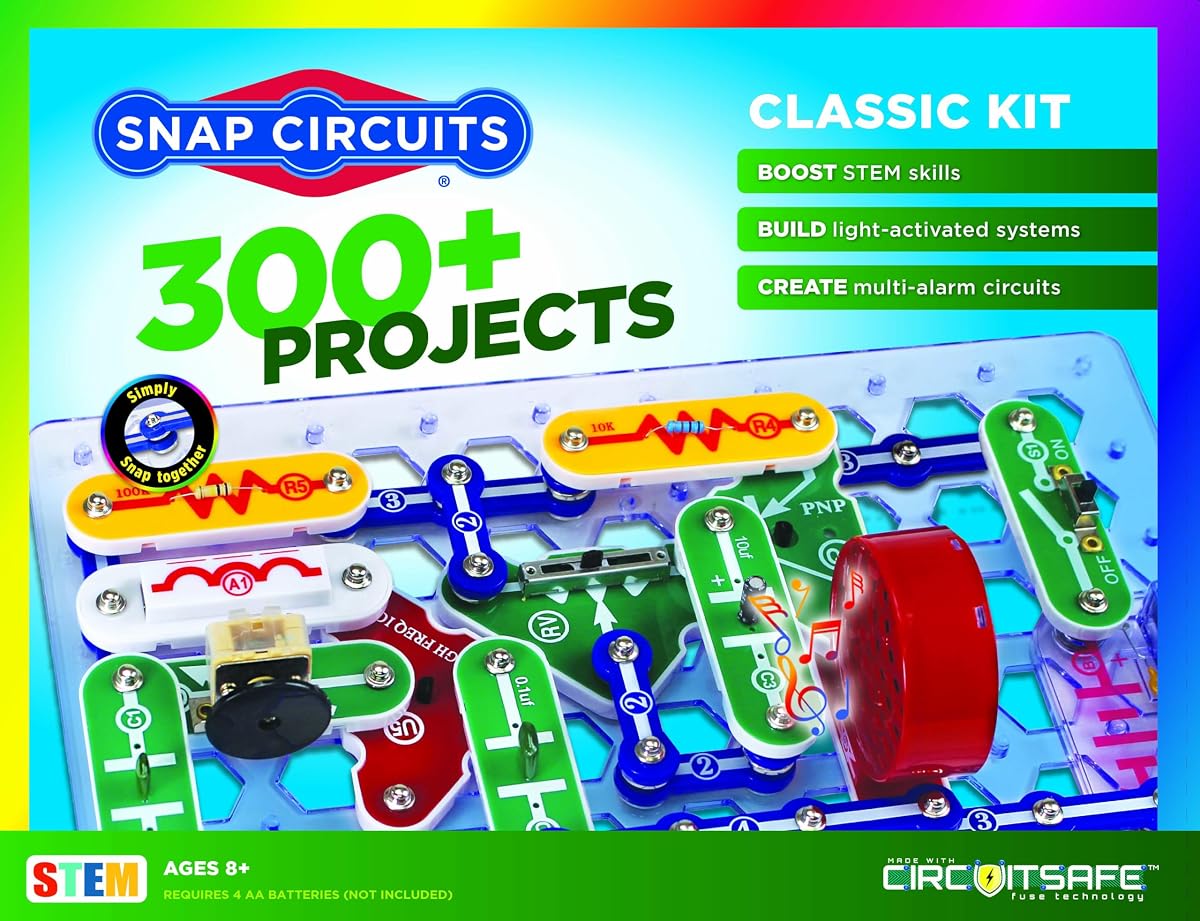
The SNAP CIRCUITS Classic SC-300 is a premium choice for teens who want to master electrical principles without the complexity of coding. With a high 4.8-star rating, it focuses on analog electronics and circuit theory. The kit allows building over 300 projects using a snap-together system that is both safe and intuitive for young learners.
We may earn a commission when you buy through this link, at no additional cost to you.
This kit stands out for its educational value and durability. It has won numerous awards for its ability to engage children in engineering concepts. The snap assembly means no soldering or tools are needed, making it perfect for quick experiments like building AM radios or burglar alarms. It is designed to keep teens busy and learning all year round.
The limitation here is the lack of coding capabilities. Teens looking to learn programming alongside electronics may find this restrictive. However, for pure electrical engineering and circuit understanding, it offers a depth that many coding kits miss. It is also highly compatible with other Snap Circuits sets for expanded play.
For a premium, safe, and highly educational experience, this kit is unmatched. It is ideal for teens interested in the physics of electricity or those who prefer hands-on building over typing code. The awards and quality assurance make it a reliable investment in STEM education.
Teens learn core electrical concepts like voltage current and resistance through physical circuit building which builds a strong foundation for future electronics work.
The snap system ensures no exposed wires or hot tools making it a safe environment for experimentation without risk of burns or electrical shock.
We may earn a commission when you buy through this link, at no additional cost to you.
The ELEGOO UNO R3 Smart Robot Car Kit V4 turns coding and electronics into a dynamic robotics project. With a 4.5-star rating, it allows teens to build, code, and drive their own robot car. The kit includes a camera for FPV video viewing and supports features like line tracking and obstacle avoidance which make learning engaging.
We may earn a commission when you buy through this link, at no additional cost to you.
This kit excels by combining hardware assembly with software logic. Keyed connectors reduce wiring mistakes for beginners while the illustrated tutorial guides teens through chassis assembly and module connection. The ability to control the car via app or remote adds immediate fun and rewards the learning process with a working vehicle.
The trade-offs include battery life management and initial assembly time. While the rechargeable battery is convenient, heavy use may require recharging sessions. Additionally, the assembly process takes patience compared to plug-in kits. However, the engineering skills gained during assembly are a valuable part of the experience.
For teens interested in robotics and interactive projects, this is a top choice. It teaches motor control, sensor integration, and programming in a way that feels like play. The camera feature adds a modern touch that appeals to tech-savvy teens looking to build something functional.
Building a moving robot provides immediate visual feedback on coding logic which reinforces programming concepts more effectively than static screen tasks.
The app and remote control options allow teens to interact with their creations from a distance which mimics real-world engineering scenarios.
We may earn a commission when you buy through this link, at no additional cost to you.
The MiOYOOW DIY Bluetooth Speaker Kit offers a practical introduction to soldering for teens who want to build something they can actually use. With a 3.9-star rating, it is focused on hands-on practice. The kit includes everything needed to build a portable Bluetooth speaker with dual 3W speakers and LED lights.
We may earn a commission when you buy through this link, at no additional cost to you.
This kit is valuable for mastering soldering techniques. The amplifier board comes pre-soldered to reduce difficulty while the LED board requires assembly practice. Teens learn about amplifier circuits and electronic components through real-world application. It is a fun gift for those ready to move past breadboards into permanent assemblies.
The lower rating reflects that beginners may find it challenging without prior soldering knowledge. Some users report variations in component batches which can affect assembly instructions. While not perfect, it serves as a good bridge between theory and real-world electronics construction for motivated learners.
For teens ready to take the next step into soldering, this is an affordable entry point. The end result is a working speaker that can be used in dorm rooms or bedrooms. It combines utility with skill development making it a meaningful project for DIY enthusiasts.
Soldering teaches fine motor skills and precision which are valuable for any future work in engineering or technical fields.
Having a usable speaker at the end of the project provides immediate gratification that keeps teens motivated to complete the build.
We may earn a commission when you buy through this link, at no additional cost to you.
The ELEGOO UNO R3 Project Super Starter Kit is designed specifically to make coding into real-world results. With a 4.7-star rating, it includes 22+ guided lessons that cover everything from blinking LEDs to moving motors. The kit comes with a PDF tutorial and organized component list to simplify the learning process.
We may earn a commission when you buy through this link, at no additional cost to you.
This kit stands out for its beginner-friendly approach. The LCD is pre-soldered so teens can focus on coding logic without worrying about delicate pins. It includes a variety of inputs like joysticks and IR receivers which adds interactive elements to projects. The inclusion of both servo and stepper motors provides good variety for movement experiments.
While it has slightly fewer projects than the Mega version, it covers all the essential concepts for a solid foundation. The trade-off is that it may lack the advanced sensors found in other kits but for beginners this level of focus is often better than overwhelming variety.
For first-time builders or homeschool units, this is an excellent choice. It balances price with comprehensive features. The clear setup support ensures that teens can start learning immediately without spending hours troubleshooting assembly issues before writing a single line of code.
Pre-wired components allow teens to focus on programming and logic which helps build confidence quickly before moving to complex assembly.
The inclusion of different motors and sensors teaches how to interface hardware with software which is essential for future electronics projects.
We may earn a commission when you buy through this link, at no additional cost to you.
The DIY Bluetooth Speaker Kit with LED Light Show is a fun project that combines audio with visual feedback. With a 4.7-star rating, it features a built-in 10-LED light show that pulses with music. The kit includes a purple PCB circuit board and dual speakers inside a transparent acrylic case.
We may earn a commission when you buy through this link, at no additional cost to you.
This kit is particularly engaging because of the visualizer feature. Teens get immediate feedback from their build when the lights react to sound. The acrylic case allows them to see the components inside which adds a premium look to the finished product. It requires foundational soldering skills making it suitable for teens ready for hands-on challenges.
The manual is high clarity which helps with assembly but some users note version updates in module connection methods. While this can cause minor confusion, the visual nature of the manual generally makes troubleshooting easier. It serves well as a practical project for hobbyists.
For teens interested in aesthetics and audio, this is a great choice. It transforms basic soldering practice into a creative project. The result is a personalized device that can be used for music or decoration making it a rewarding experience for DIY enthusiasts.
The LED visualizer adds excitement and immediate gratification keeping learners motivated through the soldering process.
The acrylic enclosure provides a clean polished look that encourages teens to take pride in their work and display it.
We may earn a commission when you buy through this link, at no additional cost to you.
The MicroKits Theremin Electronics Kit offers a unique experience by letting teens build their own electric field instrument. With a 4.5-star rating, it focuses on sound and physics. The kit is easy to follow with a colorful 22-page instructional booklet that explains how the circuit works while building.
We may earn a commission when you buy through this link, at no additional cost to you.
This kit is special because it explores electrical capacitance in a fun way. Teens can create music by waving hands around electric fields which makes the physics tangible. No soldering is needed so assembly is fast. The batteries are included making it ready to play right out of the box.
The trade-off is that it is a niche project compared to general kits. It focuses on one type of instrument so teens wanting broader coding may find it limited. However, for understanding specific concepts like capacitance it is excellent. It is a great science kit for curious kids.
For teens interested in music or physics this is an innovative choice. It turns abstract science concepts into a creative musical project. The simplicity allows for quick success which can spark further interest in electronics and engineering.
Hands-on experiments with electric fields make abstract concepts real which helps teens understand physics beyond textbooks.
Building an instrument allows teens to express creativity while learning technical skills bridging the gap between art and science.
We may earn a commission when you buy through this link, at no additional cost to you.
The ELEGOO 37-in-1 Sensor Modules Kit is the perfect companion for teens who already have a main controller. With a 4.7-star rating, it provides a wide range of modules including motion, light, sound, and temperature sensors. It serves as a lab for adding capabilities to UNO or Mega projects.
We may earn a commission when you buy through this link, at no additional cost to you.
This kit excels at expanding the range of experiments. It includes modules like ultrasonic ranging and tilt detection which are essential for robotics and monitoring. The tutorial materials and example code help teens learn how to integrate each new sensor into their existing code. It encourages customization.
The limitation is that it does not include a controller board. Teens must have a separate Uno or Nano to use these modules. While this increases utility it means it is not a standalone solution. It is best viewed as an add-on to a primary starter kit.
For teens ready to customize their projects this is an essential purchase. It removes the barrier of finding individual sensors which can be expensive. The affordability and variety make it a top choice for those looking to build more sophisticated automated systems.
Adding sensors allows teens to turn simple code into complex systems like automatic lights or security alarms.
Buying a bundle is much cheaper than purchasing each sensor individually saving money while learning more.
We may earn a commission when you buy through this link, at no additional cost to you.
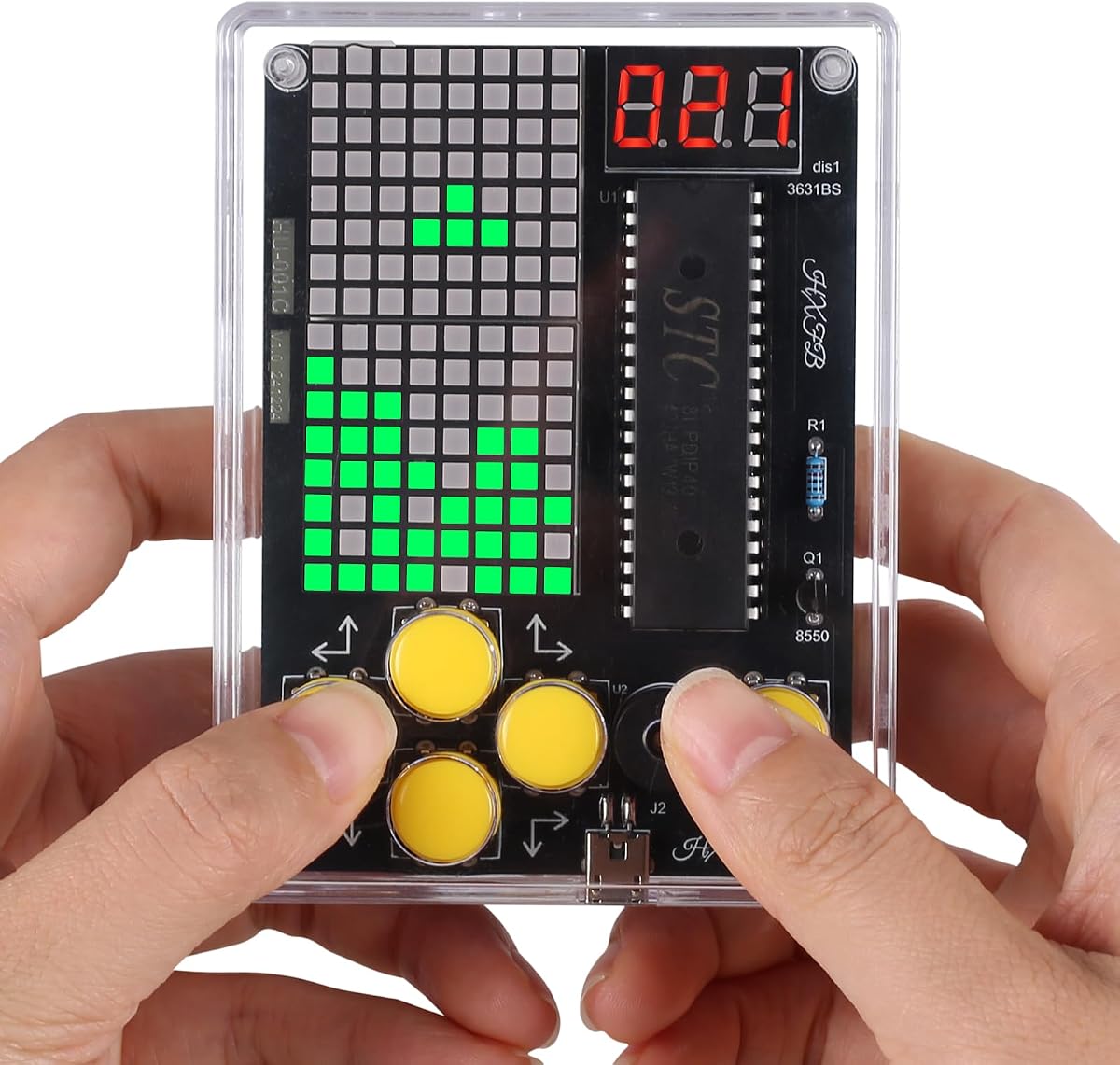
The PEMENOL 7-in-1 DIY Game Soldering Kit offers a fun interactive learning experience. With a 4.1-star rating, it allows teens to build a complete project with seven built-in functions. It is designed for teens aged 15 and above providing a structured approach to electronics and soldering skills.
We may earn a commission when you buy through this link, at no additional cost to you.
This kit focuses on progressive learning with three difficulty levels. Teens can choose a level that matches their experience and improve over time. The manual includes step-by-step instructions and video guidance to support assembly. It helps develop hands-on skills through making and testing in a gamified way.
The component set is basic but functional. While it does not offer much room for expansion beyond the included games it provides a solid foundation for understanding circuit logic. Some users may find the component quality simpler than other kits but it suffices for the intended purpose.
For teens looking to practice soldering while having fun with interactive games this is a strong choice. It is ideal for individual practice or school workshops. The focus on hands-on assembly ensures teens learn real-world electronics skills.
The difficulty levels allow teens to advance at their own pace reducing frustration and keeping the learning curve smooth.
The seven game functions provide engaging feedback on the circuit design which keeps teens interested throughout the build process.
We may earn a commission when you buy through this link, at no additional cost to you.
Choosing the right kit depends on your teen's interests skill level and learning goals. This guide outlines key factors to consider before purchasing.
For teens with zero experience, start with snap-based kits or those without soldering. As they gain confidence, move to soldering kits or programmable boards. Match the kit to current abilities to avoid frustration or boredom.
Select a kit that matches their current skill level to ensure a successful first experience.
Decide if the focus is on coding, analog electronics, or robotics. Arduino kits teach programming and logic while snap kits focus on circuit theory. Robotics kits combine both hardware assembly and software control.
Pick a focus that aligns with their interests to keep them engaged.
Higher quality components resist wear and tear and provide better electrical connections. Kits with more components and variety allow for a wider range of projects. Check if spare parts or replacement modules are available for future needs.
Prioritize kits with durable components that can withstand frequent use.
Look for kits that offer guided projects with increasing difficulty. A good kit should start simple and challenge the learner over time. This structure helps build confidence and prevents giving up too early in the learning process.
Choose kits with a clear learning path to sustain long-term interest.
Clear instructions are critical for success. Detailed tutorials with diagrams help teens troubleshoot problems independently. Some kits include video resources or online communities that add significant value during the learning process.
Ensure the manual is clear and well-illustrated to reduce assembly errors.
Consider how the kit gets power. Some include batteries while others need a USB connection. Rechargeable batteries are convenient for portable projects. Check if power supplies are included or need to be purchased separately.
Look for kits with flexible power options to enable portable builds.
Price varies by features and quality. Higher cost kits often include more sensors or better materials. Consider the long-term value and potential for expansion rather than just the initial price. Sometimes spending more saves money in the long run.
Balance the initial cost with the expected use and durability.
Ensure components work with boards they already own or plan to buy. Many kits use standard Arduino boards. Check compatibility with popular IDEs or apps. Avoid proprietary kits that lock you into one specific ecosystem.
Choose kits with open standards to allow future upgrades and modifications.
Before starting any project read the manual thoroughly. Check that all components are present using the included inventory list. Organize small parts into containers to avoid loss during assembly. Keep the workspace clean and well-lit for safety.
When soldering, use proper ventilation and safety gear. Keep tools hot and handle components carefully to avoid burns. Follow diagrams exactly to prevent short circuits. Test circuits with a multimeter before connecting power to avoid damage.
Store kits in their original cases after use. Keep batteries in a safe place and remove them if not used for long periods. Clean components periodically to remove dust. If components fail, check wiring and documentation before replacing parts.
Not all kits require soldering. Many beginner kits use breadboards or snap assemblies. Soldering kits are available for those ready to learn permanent connections. Check the product description to see if it is solder-free or requires soldering skills.
Yes, many kits are designed specifically for beginners. They include step-by-step instructions and guided projects. Look for options that emphasize 'no prior knowledge' in their descriptions. Advanced kits may require some programming experience.
You need a flat table surface with enough light to see small components. A workspace of about two by two feet is usually enough. Keep extra space for tools and component storage. Good lighting is essential for wiring accuracy.
Most components are reusable. Sensors and modules work with various boards. Some parts like wires may be consumed over time. Soldered boards require desoldering to reuse parts. Keep all parts safe for future experiments.
Arduino kits often use free open-source software. Other kits may have proprietary apps available on app stores. Always check the manual for software links. Ensure your device meets system requirements for compatibility.
Most kits target teens 13 and older. Some simpler snap kits are for ages 8+. Check age ratings to match maturity and skill. Adult supervision may be needed for soldering or complex builds.
Many kits include online resources or forums. Manufacturers often host tutorials or example projects. Communities like Reddit also have helpful groups. Search for the kit name plus 'help' to find guides.
The top picks offer strong value across different skill levels. From snap circuits to Arduino robotics, there is an option for every interest. Choose based on whether coding, soldering, or circuit theory is the priority.
Prioritize safety and educational value when making a choice. A kit that balances fun with learning will keep teens engaged longer. Look for durability and quality to ensure the investment pays off over time.
Remember to check current prices and availability as stock changes. Prices fluctuate based on sales and demand. Verify the latest listings before purchase to ensure you get the best deal.